
 Business License
Blog Categories

Synthetic Underlayment for Tropical and Desert Roofing Projects
Two projects in the same product family can fail for opposite reasons. A tropical roof underlayment in Southeast Asia can be ruined by moisture that never dries, while a desert climate underlayment in the Gulf can be ruined by the sun that dries everything. The sheet has to answer whichever problem the site presents.
This article sets out what each climate demands from a synthetic underlayment, how the specification changes between them, and where the two requirements overlap. It covers tropical roof underlayment, desert climate underlayment and the southeast asia roofing membrane specification, with the installation and storage practices that decide whether the sheet performs as intended.
1. What a Tropical Roof Underlayment Must Handle
The dominant load in a tropical climate is moisture, delivered as frequent rain and sustained high humidity. A tropical roof underlayment sits on a deck that is often wet, under a roof that is rarely dried out by sun, and any water that reaches the sheet may stay there for weeks rather than evaporating in a day.
The consequence is that the water resistance of the sheet matters less than its ability to tolerate being wet without degrading. A product that performs well dry and badly wet is the wrong choice, and buyers in Southeast Asia should ask for the water absorption behaviour as well as the water resistance result.
Vapour movement is the second issue. In a hot humid climate the vapour drive is often inward during the day and outward at night, so an assembly needs a path for moisture to escape rather than a barrier on both faces. A southeast asia roofing membrane that traps vapour raises the humidity inside the roof build-up.
2. What a Desert Climate Underlayment Must Handle
The dominant load in a desert climate is solar radiation, delivered at high intensity for most of the year with surface temperatures well above the air temperature. A desert climate underlayment must survive UV exposure that would degrade a lightly stabilised polymer in a single season.
Thermal cycling is the second issue. Day and night temperatures in the Gulf and in parts of North Africa swing widely, and the sheet expands and contracts with the deck. A product with poor dimensional stability can wrinkle in the heat and then tear at the wrinkle when the deck moves back.
The third issue is dust. Fine sand accumulates on the deck and works its way under the sheet, abrading the underside as the deck moves. Buyers in desert markets should confirm that the underside of the sheet tolerates that abrasion rather than assuming that a UV-stable product is also abrasion tolerant.
3. Tropical Roof Underlayment Moisture and Ventilation Detail
A tropical roof underlayment should be detailed so that water reaching it can drain rather than pond. That means a positive fall on the deck, laps that run with the water rather than against it, and no pockets where water can collect. A ponding area under a sheet is where a tropical roof fails first.
Ventilation is the second detail. A roof space with restricted outflow holds the humidity that leaks in, and the answer is an airflow path from the eave to the ridge rather than a tighter sheet. Buyers in Southeast Asia should confirm that the roof build-up includes that path before specifying a heavier underlayment as a substitute.
| Requirement | Tropical | Desert |
|---|---|---|
| Primary load | Rain and sustained humidity | Solar radiation and heat |
| Key property | Wet tolerance, vapour path | UV stability, thermal cycling |
| Detailing focus | Drainage and ventilation | Lap security and abrasion |
| Storage risk | Rain during unloading | Direct sun before installation |
| Inspection focus | Staining, mildew, ponding marks | Chalking, cracking, wrinkling |
4. Desert Climate Underlayment UV and Thermal Performance
UV performance is quoted as an exposure period, and the figure means little unless the conditions are attached. A supplier that claims a thirty-day exposure with no mention of latitude, season or surface temperature has not said much, and buyers should ask for the basis rather than the number.
Thermal stability is the related property. A sheet that softens in high surface temperature can take a permanent set and wrinkle, and a wrinkle becomes a stress concentration when the deck cools and contracts. Buyers in the Mid East should look for a product whose dimensional stability is stated over the service temperature range.
Colour also matters more than buyers expect. A dark sheet absorbs more solar energy and runs hotter than a light one, which accelerates both the ageing of the polymer and the thermal cycling. A reflective or light-coloured surface reduces the surface temperature and extends the exposure window in practice.
5. Southeast Asia Roofing Membrane Installation Practice
Installation practice in humid regions should keep the sheet off the wet deck for as long as possible. A roll stored on site absorbs moisture at the cut edge, and a sheet installed wet between two surfaces may never dry. Crews should install from a covered store and avoid leaving rolls exposed overnight.
Fastening pattern matters as much as material in high wind and rain. The southeast asia roofing membrane should be fastened at the lap and at intermediate points according to the wind zone, and the fasteners should be the type that does not corrode in a coastal atmosphere. Corrosion under the sheet is a common cause of premature failure in coastal projects.
Lap sealing is the third point. In a tropical downpour, water that reaches the lap is driven upward by wind, so a lap sealed with a pressure-sensitive tape or a heat-welded seam performs better than one relying on gravity alone. Buyers should confirm the sealing method that the supplier recommends for the product.
6. Tropical Roof Underlayment and Desert Storage Practice
Storage in a tropical market should protect the roll from rain and from ground moisture, which means pallets rather than direct contact with the yard and a cover that lets air circulate. A roll stored under a sealed plastic sheet in the sun can build condensation on the inside of the cover and arrive wetter than when it was packed.
Storage in a desert market should protect the roll from direct sun. UV degradation starts on the surface of the roll as well as on the installed sheet, and a roll left uncovered in the yard for a month can lose exposure performance before it reaches the roof.
Handling is the same in both climates: avoid dragging the roll across a rough surface and avoid dropping it on the end, because edge damage at the roll end becomes a defect in the first course laid. Buyers should include handling instructions in the delivery documentation rather than leaving it to the crew.
7. Selecting a Desert Climate Underlayment or Tropical Product
Selection should begin with the climate problem that dominates the site, then add the secondary requirement. A tropical project leads with wet tolerance and vapour detail; a desert project leads with UV stability and thermal stability. A project that has both, such as a coastal site in a hot region, needs a product with both claims documented.
The second step is to state the requirements in the enquiry rather than naming a product. A supplier who receives a description of the site, the exposure period and the roof assembly can propose a weight and a reinforcement that fit, while a supplier who receives a gsm figure and nothing else can do no more than quote it back.
The third step is to test the sample under the condition that matters. A buyer in a desert market can leave a sample in the sun for a few weeks and look for chalking; a buyer in a tropical market can soak a sample and check for swelling. Both tests cost almost nothing and reveal a great deal.
8. Tropical Roof Underlayment Supplier Profile
Jinan United Perfect Building Materials Corporation produces synthetic underlayments alongside foil laminates, breathable membranes and laminated foil facings from its base in Shandong, China. The company was established in 2017 and supplies buyers in North America, South America, Eastern Europe, Southeast Asia, Africa, Oceania, the Mid East, Eastern Asia, Western Europe, Central America, Northern Europe and Southern Europe.
Jinan United Perfect Building Materials supports tropical roof underlayment, desert climate underlayment and southeast asia roofing membrane specifications, and states the weight per unit area and the exposure claim with the conditions attached. The company supplies samples so a buyer can test the product against the site condition before ordering.
Buyers sending an enquiry to United Perfect should include the climate, the roof assembly, the exposure period before cladding, the target weight and the destination port. United Perfect replies with a matched specification and the container loading plan.
9. FAQ About Tropical and Desert Underlayment
9.1 What is different about a tropical roof underlayment?
A tropical roof underlayment faces moisture as its dominant load, delivered as frequent rain and sustained humidity rather than as an occasional wetting. The sheet has to tolerate being wet without degrading, which is a different requirement from resisting a single water event. The roof space also needs an airflow path so that humidity escaping from the building can leave rather than condensing inside the build-up. Detailing should give water a drainage route, with laps running with the fall and no pockets where it can collect, so buyers in Southeast Asia should ask for the water absorption behaviour as well as the water resistance result, since a product that performs well dry and badly wet is the wrong choice for the region.
9.2 How important is UV exposure for a desert project?
UV exposure is the deciding property in a desert climate, because the sheet sits under solar radiation at high intensity for most of the year and surface temperatures run well above air temperature. An exposure period claim means little unless the conditions are attached, so buyers should ask for the latitude, season and surface temperature basis rather than accepting a bare number. Dimensional stability over the service temperature range matters alongside it, since a sheet that takes a permanent set when hot will wrinkle and then tear as the deck contracts. A light or reflective surface runs cooler than a dark one and extends the useful exposure window, and confirming both claims in writing is the minimum for a desert specification.
9.3 Can one underlayment serve both tropical and desert projects?
A single product can serve both climates if it carries documented performance on moisture, UV exposure and thermal stability rather than a single one of the three. The requirements do overlap, since a coastal site in a hot region has both a wet season and strong solar radiation. Buyers should state the site conditions and the roof assembly in the enquiry and let the supplier propose a weight and reinforcement that covers both, instead of naming a product from one climate and expecting it to work in the other. A sample tested in the condition that matters, whether soaked or sun-exposed, reveals more than a data sheet alone, and asking for both claims in writing is the simplest safeguard.
9.4 How should underlayment be stored on a tropical site?
Storage on a tropical site should keep the roll off the ground and out of standing water, using pallets and a cover that allows air to circulate. A roll stored under a sealed plastic sheet in the sun can build condensation on the inside of the cover and arrive wetter than when it was packed. The cut edges are the vulnerable part, because moisture enters along the exposed reinforcement and can travel between layers. Crews should install from a covered store and avoid leaving rolls exposed overnight during a wet season, and handling should avoid dragging the roll across rough ground and dropping it on the end, since edge damage at the roll end becomes a defect in the first course laid.
9.5 What should an enquiry for a hot-climate project include?
An enquiry for a hot-climate project should state the climate type, the roof assembly, the exposure period before cladding, the target weight and the destination port. Stating the site condition lets the supplier propose a weight and reinforcement based on the load rather than on habit. Buyers should also state whether the project is coastal, because a coastal atmosphere adds a corrosion requirement for the fasteners and can change the recommended fixing pattern. Naming the market matters because local practice and code differ between regions, and buyers planning a formal evaluation should request a production sample rather than a swatch, and a supplier with the full picture can propose a product that installs without on-site workarounds.
Recently Posted
-
From Felt to Synthetic Underlayment in North American Roofing
November 3, 2026A roofing supplier in North America once kept both felt and synthetic underlayment on the same rack and watched the split shift wi Read More
-
QC Checklist for Synthetic Underlayment Before Shipment
November 3, 2026A buyer in North America once received a shipment in which the lengths on the packing list were correct and the rolls at the centr Read More
-
Synthetic Underlayment Slitting Winding and Roll Diameter Control
November 2, 2026A buyer in North America once rejected a container of synthetic underlayment because the rolls at one end had flattened into an ov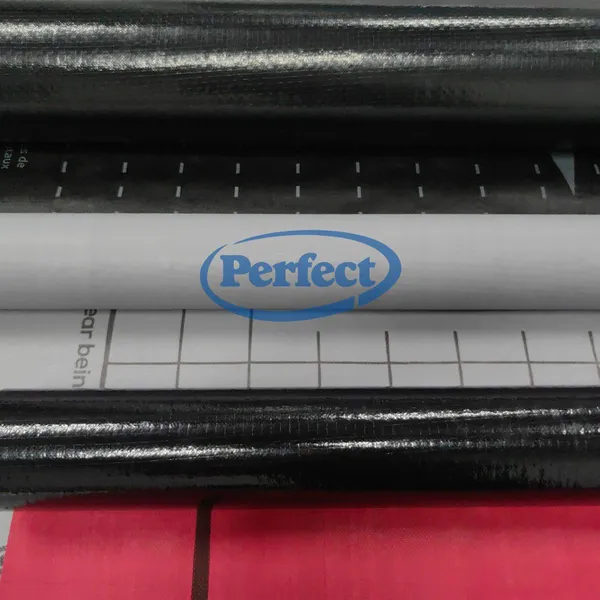 Read More
-
Synthetic Underlayment for Commercial Roofs in Cold and Windy Regions
November 2, 2026A roofing contractor in a cold region of North America once installed a commercial roof underlayment in midwinter and found the la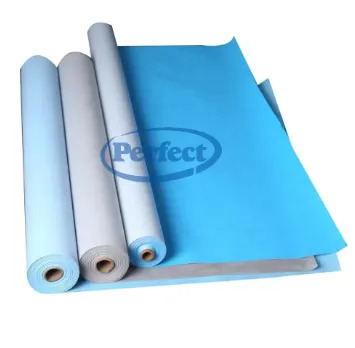 Read More

Contact Us
Recommended Products
-
 Glasswool Blanket With FSK FacingNegotiableMOQ: 100 Rolls
-
Rockwool Blanket With Wire MeshNegotiableMOQ: 100 Rolls
-
Rockwool Blanket With FSK FacingNegotiableMOQ: 100 Rolls
-
CE Certified Glass Wool Insulation, Glasswool Fiberglass, Low Thermal Conductivity, Noise Reduction for Wall, Roof and Industrial EquipmentNegotiableMOQ: 100 Rolls
-
KSK Foil Facing Roll, Laminated Aluminum Foil + Scrim + Kraft Paper, Anti-Tear Thermal Barrier, Suitable for Commercial HVAC and Roof InsulationNegotiableMOQ: 500 Rolls
-
FSK Foil Scrim Kraft, FWF MSK MWV KSK Laminate Foils, Metalized PET MPET Vapor Barrier Facing for Insulation Glasswool RockwoolNegotiableMOQ: 100 Rolls
-
Reinforced Aluminium Foil Tape, Waterproof Anti-aging Tape, Widely Used in HVAC and Building Insulation ProjectsNegotiableMOQ: 500 Cartons
-
HVAC Aluminum Foil Sealing Tape, Strong Adhesion Heat Resistance for Pipe, Glass Wool and Rockwool InsulationNegotiableMOQ: 500 Cartons
-
Factory Supply Metalized PET MPET Laminate Foils, Aluminum Coated PET Film for Roof Wall InsulationNegotiableMOQ: 10000 Cubic Meters
-
Custom MPET Metalized PET Laminate Foils, VMPET Metallized Polyester Facing Film for Thermal InsulationNegotiableMOQ: 10000 Cubic Meters
-
Glass Wool Insulation Series, Glasswool With FSK/FWF/MSK/MWV/KSK Facing, Metalized PET Laminate Foils, Heat & Sound Insulation for Commercial BuildingNegotiableMOQ: 100 Rolls
-
Rockwool Blanket With Black Firber GlassNegotiableMOQ: 100 Rolls
-
Glasswool Insulation Blanket & Board, FSK FWF MSK MWV KSK Foil Laminate, MPET Metalized PET Faced Glass Wool for HVAC, Roof, Wall, Air DuctNegotiableMOQ: 100 Rolls
-
Rockwool Insulation Roll, FSK Foil Faced Mineral Wool for Building Thermal & Acoustic Insulation, Fire Resistant Roof Wall Insulation MaterialNegotiableMOQ: 100 Rolls
-
FWF MSK FSK Foil Laminated Rock Wool Glass Wool Blanket, Metalized PET Laminate Foils Faced Insulation for HVAC and ConstructionNegotiableMOQ: 100 Rolls
-
Rockwool Insulation Board, Mineral Wool Rock Wool Slab for Building Thermal & Fire Insulation, Soundproof Rockwool Panel for Roof, Wall, HVAC SystemNegotiableMOQ: 100 Rolls
-
Rockwool Pipe Section, Mineral Wool Rock Wool Tube Insulation, Fire & Heat Resistant Rockwool for Steam Pipes, Industrial Pipeline Insulation ProjectNegotiableMOQ: 100 Rolls
-
Rockwool Board With FSK FacingNegotiableMOQ: 100 Rolls
-
Rockwool Insulation Slab With FSK Facing, Fireproof Rock Wool Board, Thermal & Sound Insulation Rockwool for Roof, Wall and Ductwork ApplicationNegotiableMOQ: 100 Rolls
-
Fireproof Foil Laminated Glass Wool, Laminate Foils MPET Faced Glasswool Insulation Roll & Sheet for Roofing, Wall, Duct and Pipe InsulationNegotiableMOQ: 100 Rolls