
 Business License
Blog Categories

Synthetic Underlayment for Commercial Roofs in Cold and Windy Regions
A roofing contractor in a cold region of North America once installed a commercial roof underlayment in midwinter and found the laps brittle enough to crack when the roll was unrolled. The sheet had been stored on a cold trailer overnight, and the material behaved differently at the temperature it was handled at.
A commercial roof in a cold and windy region asks two things of the underlayment that a residential roof in a mild climate does not. The first is flexibility at a low temperature, because a sheet that becomes brittle cannot be unrolled or folded without cracking. The second is resistance to wind uplift, which on a large open roof reaches a load that a small residential roof does not see. This article covers a cold climate underlayment and how a wind resistant roof membrane is specified for both conditions.
1. Cold Climate Underlayment and Low Temperature Behaviour
A cold climate underlayment has to remain flexible at the temperature at which it is installed, and that figure is stated separately from the service temperature.
A polymer sheet becomes stiffer as the temperature falls. Below a certain point it becomes brittle, and a brittle sheet cracks when it is unrolled, folded at a corner or walked on. The temperature at which that happens is a property of the polymer and of the grade.
| Temperature | Behaviour | Site Consequence |
|---|---|---|
| Warm | Fully flexible | Easy handling |
| Cool | Stiffer | Slower handling |
| Cold | Brittle at the limit | Cracks at folds |
| Very cold | Below the limit | Not to be installed |
The material temperature is the figure that matters rather than the air temperature. A roll stored on a cold trailer overnight holds the cold, and a sheet that would be flexible in the afternoon air is still brittle when it is first unrolled in the morning. Bringing the rolls into a warm space before installation is a practical measure that costs time and prevents the cracking.
The low-temperature figure should be stated by the grade and checked against the installation conditions. A sheet rated to a temperature above the site minimum cannot be installed at that temperature, whatever its figures in service.
2. Wind Resistant Roof Membrane and Uplift
A wind resistant roof membrane is judged on how it resists uplift, and uplift is a load on the sheet rather than on the covering alone.
Wind passing over a roof creates a pressure difference between the outside and the space beneath the layers. The pressure lifts the underlayment at the laps and at the edges, where the restraint is weakest. On a large commercial roof the area exposed is greater and the load on each fastener rises with it.
| Factor | Effect on Uplift |
|---|---|
| Roof area | Larger area, higher total load |
| Building height | Higher wind speed at the roof |
| Edge and corner zones | Highest local pressure |
| Sheet weight | Lighter sheet, less resistance |
| Fastener spacing | Closer spacing, lower load each |
The edge and corner zones are where the pressure concentrates, and a commercial roof has a large perimeter relative to its area. The fastening pattern should be tightened at the edges and corners rather than applied uniformly across the field.
The membrane's own tear resistance decides whether it survives the load at the fastener. A sheet that holds the load and tears at the fastener has failed at the point where the load is applied, which is why tear resistance and the fastening pattern are considered together.
3. Commercial Roof Underlayment Selection
A commercial roof underlayment is selected on four figures: the low-temperature limit, the tear resistance, the exposure period and the water resistance.
The low-temperature limit follows from the installation season. A roof that will be wrapped in a cold month needs a grade that remains flexible at that temperature, and a roof that will be wrapped in a mild month does not.
| Figure | Set By |
|---|---|
| Low-temperature limit | Installation season |
| Tear resistance | Wind exposure and traffic |
| Exposure period | Schedule to the covering |
| Water resistance | Slope and ponding risk |
The exposure period is often the deciding figure on a commercial project, because the covering may be delayed while other trades finish. A sheet rated for a longer period gives the programme room, and a commercial roof in a cold region may also be wrapped ahead of the season rather than during it.
The water resistance matters on the low-slope areas that a commercial roof usually has. A low slope drains slowly, and the sheet has to hold a head of water at the laps for longer than it would on a steep roof. That requirement raises the grade beyond what a steep residential roof would need.
4. Commercial Roof Underlayment Installation in Wind and Cold
Installation in a cold and windy region calls for a different practice from the same work in a mild climate.
The rolls should be brought to a workable temperature before they are unrolled. A warm space near the roof, or bringing the rolls up the day before, prevents the brittleness that leads to cracking.
| Measure | Reason |
|---|---|
| Warm the rolls | Restore flexibility |
| Work upwind | Stop the sheet lifting |
| Fasten immediately | Reduce the exposed area |
| Tighten edge zones | Resist local uplift |
| Watch the forecast | Avoid wrapping before a gale |
The wind practice matters as much as the temperature. A sheet that is rolled out and left unfastened on an open commercial roof is exposed to the full wind load, and it will lift. The work should proceed in short runs, with each run fastened before the next is started, so that the exposed area stays small.
The direction also matters. Working from the upwind edge means that a gust lifts the unfastened portion away from the crew rather than toward them, and it keeps the sheet pressed against the deck while it is being fastened.
5. Case Notes on Cold Climate Underlayment
A contractor in a cold region of North America installed a commercial roof underlayment in midwinter and found the laps cracking when the roll was unrolled. The rolls had been stored on a cold trailer overnight. Bringing the rolls into a warm space for a day restored the flexibility and the cracking stopped, and the grade was unchanged.
A second project wrapped a large commercial roof and left a long run unfastened while the crew broke for the day. A gale that night lifted the run at the laps and tore several courses. The practice was changed to complete and fasten each run before starting the next, and the lifting stopped. The sheet met its wind figures and the exposed area had been the problem.
Both cases show the same point. The material has to be suited to the conditions and it also has to be handled according to them, and the handling is what the two cases turned on.
6. Detailing a Wind Resistant Roof Membrane
A wind resistant roof membrane is as good as its details, and the details are where the uplift concentrates.
The edge of the roof is the first detail. The perimeter sees the highest pressure, and the underlayment should be fastened more closely there than in the field, with the edge metal and the termination in place before the wind can lift the sheet.
The corners are the second. A corner is exposed from two directions and the pressure at that point is the highest on the roof. The fastening at the corners should be the closest on the roof, and the sheet should be cut and fitted rather than stretched around the corner.
The penetrations are the third. Each one interrupts the sheet, and each one is a place where a wind can reach beneath the membrane. The detail should seal the membrane to the penetration rather than relying on the lap, and the seal should be inspected before the covering is installed.
7. Specifying a Wind Resistant Roof Membrane
State the low-temperature limit and check it against the installation season and the site minimum temperature.
State the tear resistance and the fastening pattern together, with a specific pattern for the edge and corner zones. A single pattern for the whole roof leaves the corners under-fastened.
State the exposure period and confirm it against the programme to the covering. A commercial schedule can run long, and a short-rated sheet constrains it.
State the storage and handling requirement, so that the rolls are brought to a workable temperature before installation. That requirement costs time and prevents a failure that would otherwise be attributed to the material.
8. Commercial Roof Underlayment Supplier Profile
United Perfect Building Materials, part of Jinan United Perfect Building Materials Corporation, produces synthetic roofing underlayment for commercial and residential roofs and supplies buyers in North America and Northern Europe. The company quotes the weight, tensile strength, tear resistance and exposure period of each grade, and states the low-temperature limit for a cold climate underlayment.
Jinan United Perfect Building Materials holds retained samples by production batch, so a delivered roll can be checked against the reference used at approval. Buyers specifying a wind resistant roof membrane for a large commercial roof can confirm the tear resistance and the exposure period in writing, and can order the grades for the field and the edge zones from one source. United Perfect can also advise on the fastening pattern where the roof has a large exposed perimeter.
9. FAQ About Underlayment for Cold and Windy Roofs
9.1 Can underlayment be installed in winter?
Yes, where the grade remains flexible at the installation temperature and the material temperature is managed. A polymer sheet becomes stiffer as it cools and becomes brittle below a threshold that is stated by the grade. A roll that has been stored on a cold trailer overnight holds the cold even if the air has warmed, so bringing the rolls to a workable temperature before unrolling is the practical measure that prevents cracking. The low-temperature limit of a cold climate underlayment should be checked against the site minimum before the work is planned.
9.2 What causes underlayment to lift in the wind?
It lifts when the pressure difference across the sheet exceeds what the fastening restrains it with. Wind passing over a roof creates a pressure difference between the outside and the space beneath the layers, and the load concentrates at the laps and at the edges, where the restraint is weakest. A sheet left unfastened for a long run, a fastening pattern that is too wide, or an edge zone that has not been tightened will all lift. Working in short fastened runs and tightening the edges prevent it.
9.3 How is the fastening pattern set for a commercial roof?
It is set from the tear resistance of the membrane, the wind exposure at the site and the position on the roof rather than applied uniformly. The edge and corner zones see the highest local pressure, so they take a closer pattern than the field, and a large perimeter needs more attention than a small one. The pattern should be confirmed for the specific product and the specific exposure, because a pattern that was adequate on a smaller or more sheltered roof may not restrain a commercial roof underlayment on an exposed one.
9.4 Does a heavier sheet resist wind better?
Weight helps, and the tear resistance helps more. A heavier sheet offers more resistance to lift for the same area, and the load still arrives at the fastener, so the tear resistance decides whether the sheet survives that load. A light sheet with a high tear resistance and a close fastening pattern can perform better than a heavy sheet with a low tear resistance and a wide pattern. The two figures should be considered together with the fastening rather than in isolation.
9.5 How long can it stay exposed in a cold region?
For the stated exposure period of the grade, and the cold does not extend that period. UV exposure degrades the polymer over the rated period, and a cold region may have bright reflected light from snow in addition to direct sun. The exposure period should be checked against the programme to the covering, because a commercial roof can be wrapped well ahead of the covering. Where the gap is long, a longer-rated grade or a temporary covering is the practical answer.
Recently Posted
-
From Felt to Synthetic Underlayment in North American Roofing
November 3, 2026A roofing supplier in North America once kept both felt and synthetic underlayment on the same rack and watched the split shift wi Read More
-
QC Checklist for Synthetic Underlayment Before Shipment
November 3, 2026A buyer in North America once received a shipment in which the lengths on the packing list were correct and the rolls at the centr Read More
-
Synthetic Underlayment Slitting Winding and Roll Diameter Control
November 2, 2026A buyer in North America once rejected a container of synthetic underlayment because the rolls at one end had flattened into an ov Read More
-
Synthetic Underlayment for Tropical and Desert Roofing Projects
November 2, 2026Two projects in the same product family can fail for opposite reasons. A tropical roof underlayment in Southeast Asia can be ruine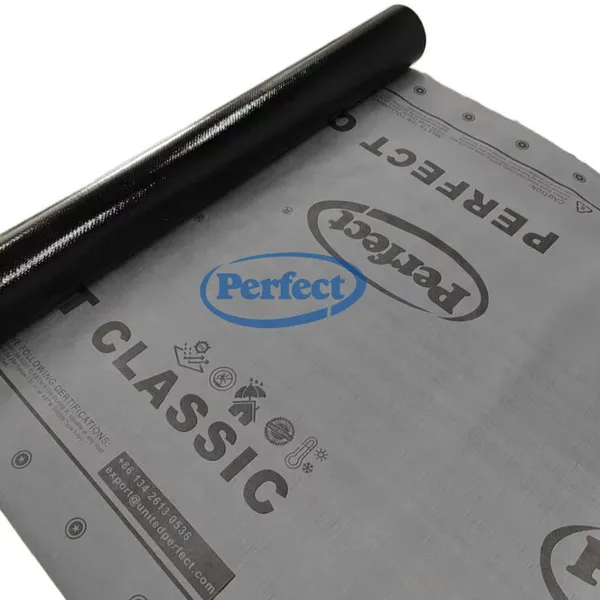 Read More

Contact Us
Recommended Products
-
 Glasswool Blanket With FSK FacingNegotiableMOQ: 100 Rolls
-
Rockwool Blanket With Wire MeshNegotiableMOQ: 100 Rolls
-
Rockwool Blanket With FSK FacingNegotiableMOQ: 100 Rolls
-
CE Certified Glass Wool Insulation, Glasswool Fiberglass, Low Thermal Conductivity, Noise Reduction for Wall, Roof and Industrial EquipmentNegotiableMOQ: 100 Rolls
-
KSK Foil Facing Roll, Laminated Aluminum Foil + Scrim + Kraft Paper, Anti-Tear Thermal Barrier, Suitable for Commercial HVAC and Roof InsulationNegotiableMOQ: 500 Rolls
-
FSK Foil Scrim Kraft, FWF MSK MWV KSK Laminate Foils, Metalized PET MPET Vapor Barrier Facing for Insulation Glasswool RockwoolNegotiableMOQ: 100 Rolls
-
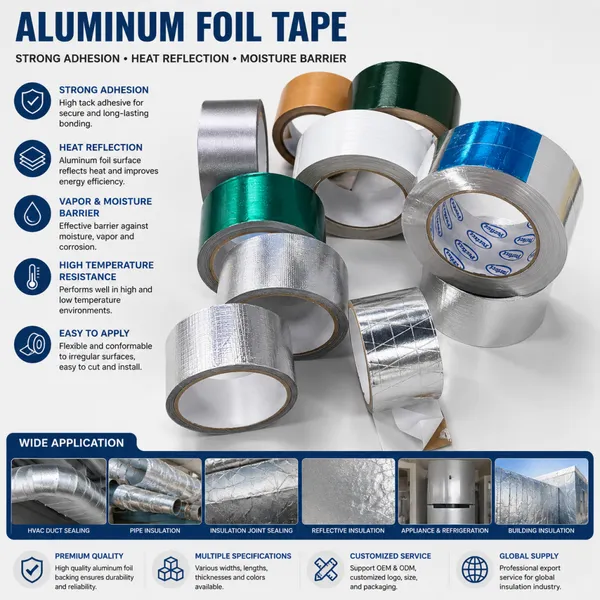
Reinforced Aluminium Foil Tape, Waterproof Anti-aging Tape, Widely Used in HVAC and Building Insulation ProjectsNegotiableMOQ: 500 Cartons
-
HVAC Aluminum Foil Sealing Tape, Strong Adhesion Heat Resistance for Pipe, Glass Wool and Rockwool InsulationNegotiableMOQ: 500 Cartons
-
Factory Supply Metalized PET MPET Laminate Foils, Aluminum Coated PET Film for Roof Wall InsulationNegotiableMOQ: 10000 Cubic Meters
-
Custom MPET Metalized PET Laminate Foils, VMPET Metallized Polyester Facing Film for Thermal InsulationNegotiableMOQ: 10000 Cubic Meters
-
Glass Wool Insulation Series, Glasswool With FSK/FWF/MSK/MWV/KSK Facing, Metalized PET Laminate Foils, Heat & Sound Insulation for Commercial BuildingNegotiableMOQ: 100 Rolls
-
Rockwool Blanket With Black Firber GlassNegotiableMOQ: 100 Rolls
-
Glasswool Insulation Blanket & Board, FSK FWF MSK MWV KSK Foil Laminate, MPET Metalized PET Faced Glass Wool for HVAC, Roof, Wall, Air DuctNegotiableMOQ: 100 Rolls
-
Rockwool Insulation Roll, FSK Foil Faced Mineral Wool for Building Thermal & Acoustic Insulation, Fire Resistant Roof Wall Insulation MaterialNegotiableMOQ: 100 Rolls
-
FWF MSK FSK Foil Laminated Rock Wool Glass Wool Blanket, Metalized PET Laminate Foils Faced Insulation for HVAC and ConstructionNegotiableMOQ: 100 Rolls
-
Rockwool Insulation Board, Mineral Wool Rock Wool Slab for Building Thermal & Fire Insulation, Soundproof Rockwool Panel for Roof, Wall, HVAC SystemNegotiableMOQ: 100 Rolls
-
Rockwool Pipe Section, Mineral Wool Rock Wool Tube Insulation, Fire & Heat Resistant Rockwool for Steam Pipes, Industrial Pipeline Insulation ProjectNegotiableMOQ: 100 Rolls
-
Rockwool Board With FSK FacingNegotiableMOQ: 100 Rolls
-
Rockwool Insulation Slab With FSK Facing, Fireproof Rock Wool Board, Thermal & Sound Insulation Rockwool for Roof, Wall and Ductwork ApplicationNegotiableMOQ: 100 Rolls
-
Fireproof Foil Laminated Glass Wool, Laminate Foils MPET Faced Glasswool Insulation Roll & Sheet for Roofing, Wall, Duct and Pipe InsulationNegotiableMOQ: 100 Rolls