
 Business License
Blog Categories

Aluglass in Appliance and HVAC Equipment Insulation
An appliance manufacturer in Eastern Asia replaced a paper-backed foil on a commercial refrigerator line and measured the result over one production season. The reject rate at the wrapping station fell by roughly 12 percent. The material cost rose by less than 10 percent.
The change came from the reinforcement, not from the foil. On a production line, an appliance insulation foil is handled thousands of times a shift, and the way it behaves at the cutting and wrapping stations decides the reject rate. This article covers how aluglass performs in appliance and hvac equipment insulation, where the demands differ from a building application, and what to specify when the facing is part of a manufactured product rather than a construction element.
1. Why Appliance Insulation Foil Differs From Building Facing
A building facing is installed once, usually in a large sheet, on a site where the crew can work around it. An appliance insulation foil is installed hundreds of times a day on a line where every second counts.
That difference changes the priority order. On a construction site, span and wind load dominate the specification. On a production line, the deciding factors are how the material cuts, how it folds, whether it sheds fibre, and whether the surface marks during handling.
An appliance insulation foil also has to tolerate vibration in service, since a compressor or a fan runs continuously nearby. A facing that would last decades in a static building assembly can fail in a year on a vibrating panel if the laminate is not bonded throughout.
The environment is different as well. Appliances and equipment are often tested in damp chambers, shipped in humid containers and stored in unconditioned warehouses. The facing has to survive all three without losing its bond or its surface. Foil fabric laminate use in this sector therefore rewards a consistent construction more than a high headline figure on any one property.
2. Where HVAC Equipment Insulation Uses Foil Facings
HVAC equipment insulation covers a wider range of conditions than a building duct run, because the equipment itself produces the vibration and the temperature change.
| Equipment | Facing Demand | Temperature Range |
|---|---|---|
| Air handling units | Panel facing, low vibration | Ambient to moderate |
| Ductwork, concealed | Flexibility, clean edges | Ambient |
| Ductwork, exposed | Surface durability | Ambient to warm |
| Chiller and pipe insulation | Cold-side vapour control | Below ambient |
| Fan and compressor housings | Vibration tolerance | Warm |
| Rooftop units | Weather exposure | Wide |
The cold-side applications are the most demanding. Where a facing sits on the cold side of insulation, moisture migrates toward it and condenses if the facing prevents drying. On a chiller or a cold pipe, the facing has to act as a vapour barrier as well as a surface, and that changes the specification away from a breathable construction.
Warm-side and ambient applications are more forgiving. There, the facing mostly protects the insulation and provides a clean surface, and the mechanical demands dominate.
3. Foil Fabric Laminate Use in a Production Environment
Foil fabric laminate use on a production line is governed by handling rather than by service performance, and the two requirements pull in different directions.
A stiffer laminate is easier to handle in large flat panels, because it resists sagging and holds its shape during placement. A more flexible laminate is easier to form around curved shells and tight radii, which is common on compressor housings and cylindrical ducts.
Cutting behaviour separates grades more than any other property on a line. A laminate with a light glass reinforcement cuts cleanly and leaves little loose fibre. A paper-backed product tends to fray and leaves dust at the cut, which contaminates the surface and appears in finished goods inspection.
Surface durability matters for the same reason. A foil layer that marks easily produces visible defects on finished equipment, and those defects are rejected on appearance long before any thermal issue arises. On a finished appliance, a scuff on the facing is a defect on the product, not on a concealed building element that no one will see again.
4. Matching HVAC Equipment Insulation Grades to the Application
The right grade follows from the support condition, the vibration level and the temperature range rather than from a general preference.
| Condition | Suggested Construction | Key Requirement |
|---|---|---|
| Fully supported, ambient | Light mesh, 2x2 | Clean cut edges, flexibility |
| Fully supported, vibrating | Medium mesh, 3x3 | Full-surface bond |
| Partially supported | Medium mesh, 3x3 | Tear resistance |
| Exposed, weather | Heavy mesh, 4x4 | Surface durability |
| Cold side, condensing risk | Foil layer as barrier | Vapour tightness |
Where the facing is part of a manufactured product, the grade should be confirmed on the actual line rather than on a sample bench. A material that handles well in a trial can behave differently at production speed, and a short run of a few hundred units usually reveals the problems that a bench test does not. Foil fabric laminate use on an automated line also rewards a consistent roll-to-roll construction, because a line cannot adjust for variation within a roll.
5. Adhesive Performance and Foil Fabric Laminate Use Under Vibration
Vibration is the failure mode that separates appliance and equipment applications from building work, and it acts on the adhesive rather than on the foil or the reinforcement.
A laminate bonded across its full surface distributes vibration load across the whole area. A laminate bonded in a pattern concentrates stress at the boundary of each bonded region, and the foil begins to lift at those boundaries after a period in service.
The failure appears first at the edges of a panel or at a fitting, where the panel movement is largest. It then spreads inward over months. Because the lift is gradual, the facing often passes final inspection and fails in the field instead.
Testing for it is straightforward. A heat-aged peel test, followed by a vibration exposure on a sample panel, gives a useful indication of whether the adhesive is suited to a vibrating application. Suppliers who serve appliance manufacturers normally offer this test as standard.
6. Case Notes on Appliance and HVAC Equipment Insulation
A refrigeration equipment maker in Eastern Asia used a paper-backed foil on a line producing 240 units a day. The wrapping station reported frequent edge fraying, and loose paper fibre appeared on internal surfaces at final inspection. Switching to a glass-reinforced laminate with a 2x2 mesh removed the fibre problem, and the reject rate at that station fell by around 12 percent. Unit material cost rose by less than 10 percent, so the change paid back within the first production month.
A second manufacturer of rooftop units used a light laminate on a vibrating fan housing and saw the foil lift at the panel edges after one cooling season. A laboratory peel test on a returned unit showed the bond had fallen sharply after heat ageing. A medium-mesh laminate with a confirmed full-surface bond resolved the problem on the following model, and no field returns were recorded for that item over the next two years.
Both cases turned on the same point. The facing had been selected against its appearance and its price rather than against the handling and vibration conditions it would meet.
7. Specifying Foil Fabric Laminate Use for Equipment
State the support condition and the vibration exposure first, since those two facts narrow the field quickly. A fully supported static panel and a vibrating compressor housing do not require the same construction.
State the cutting method. A laminate cut by blade, by guillotine or by die behaves differently, and the edge quality varies with the reinforcement. Where the line uses a die, the reinforcement has to be matched to the tool rather than chosen independently.
State the temperature range, including any test chamber condition. A facing that meets an ambient specification may not meet a cold-chamber test, and the vapour requirement changes when the facing is on the cold side.
Ask for a retained sample from the production batch and keep it for the life of the model. Where an appliance is produced for years, a batch reference from the original approval settles any later query without a redesign.
8. Foil Fabric Laminate Use and Supplier Profile
United Perfect Building Materials, part of Jinan United Perfect Building Materials Corporation, produces foil fabric laminates for appliance and equipment insulation alongside its building facings. The company's range covers light, medium and heavy reinforcements, which allows a manufacturer to match the construction to the support condition and the vibration exposure on each item.
Jinan United Perfect Building Materials holds retained samples by production batch, so a delivered roll can be checked against the reference used at approval. Manufacturers specifying several items on one platform, such as an air handling unit and its associated ductwork, can order the grades from one source and keep the adhesive system consistent across the product range. United Perfect can also supply a heat-aged peel result alongside the sample where the equipment will see continuous vibration.
9. FAQ About Appliance Insulation Foil and HVAC Applications
9.1 What reinforcement suits an appliance insulation foil?
It depends on how the material is handled on the line and how much vibration the finished product sees. A fully supported static panel works well with a light 2x2 reinforcement, which cuts cleanly and forms easily. A vibrating compressor housing or fan panel usually needs a medium 3x3 grade with a confirmed full-surface bond. Where the line cuts with a die, the reinforcement has to suit the tool as well as the service condition, and that requirement is confirmed most reliably on a production trial rather than on a sample bench.
9.2 Can one grade serve both appliance and duct applications?
Often yes, and a medium 3x3 reinforcement is the usual compromise. It is flexible enough to form around duct fittings and stiff enough to handle well in flat panels, and it tolerates moderate vibration. Where the equipment is exposed to weather, the compromise weakens, because an exposed surface needs a heavier reinforcement and a more durable foil than an internal panel does. In those cases two grades are usually cheaper overall than one grade that is over-built for the internal parts and under-built for the exposed ones.
9.3 Why does foil lift on vibrating equipment?
The adhesive bond is what fails, not the foil or the reinforcement. Vibration moves the panel continuously, and the movement concentrates at the edges of each bonded area: where the bond covers the full surface, the load spreads across the laminate and the facing holds, and where the bond is partial, the foil lifts at the boundary of each bonded patch. The lift then spreads inward over months. A full-surface bond and a heat-aged peel result are the two things that predict whether a facing will survive this condition.
9.4 Does hvac equipment insulation need a vapour barrier facing?
Where the facing sits on the cold side of the insulation. In that position moisture migrates toward the facing and condenses if the assembly cannot dry, so the facing has to act as a vapour barrier rather than as a breathable layer. On the warm side or on an ambient panel, a vapour-tight facing brings no benefit and can trap moisture that enters during manufacture. The position of the facing within the equipment determines which type is correct, just as it does in a building assembly.
9.5 How should I trial a new facing on a production line?
Run a few hundred units with the candidate material and record the reject rate at each station, rather than judging the material by feel. Pay particular attention to the cutting station and to the final surface inspection, because those two places reveal fraying, dust and marking that a bench test will not show. Keep an offcut from the trial batch as a reference. Where several suppliers are being considered, run the same trial on the same line so the comparison is like for like, and keep the machine settings identical throughout.
Recently Posted
-
From Felt to Synthetic Underlayment in North American Roofing
November 3, 2026A roofing supplier in North America once kept both felt and synthetic underlayment on the same rack and watched the split shift wi Read More
-
QC Checklist for Synthetic Underlayment Before Shipment
November 3, 2026A buyer in North America once received a shipment in which the lengths on the packing list were correct and the rolls at the centr Read More
-
Synthetic Underlayment Slitting Winding and Roll Diameter Control
November 2, 2026A buyer in North America once rejected a container of synthetic underlayment because the rolls at one end had flattened into an ov Read More
-
Synthetic Underlayment for Tropical and Desert Roofing Projects
November 2, 2026Two projects in the same product family can fail for opposite reasons. A tropical roof underlayment in Southeast Asia can be ruine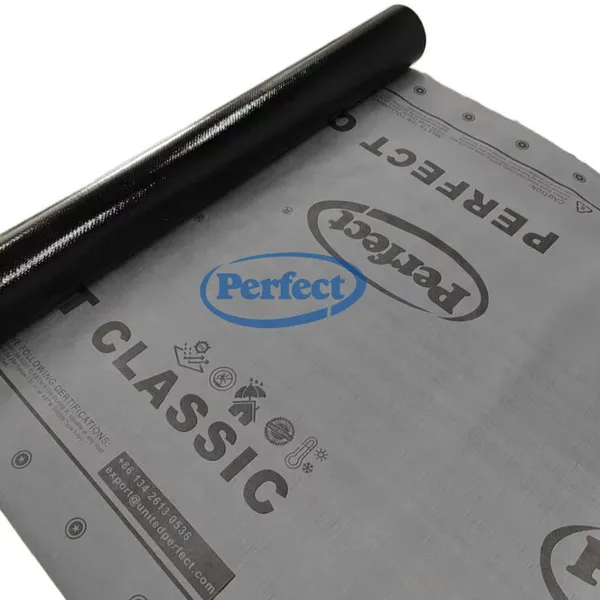 Read More

Contact Us
Recommended Products
-
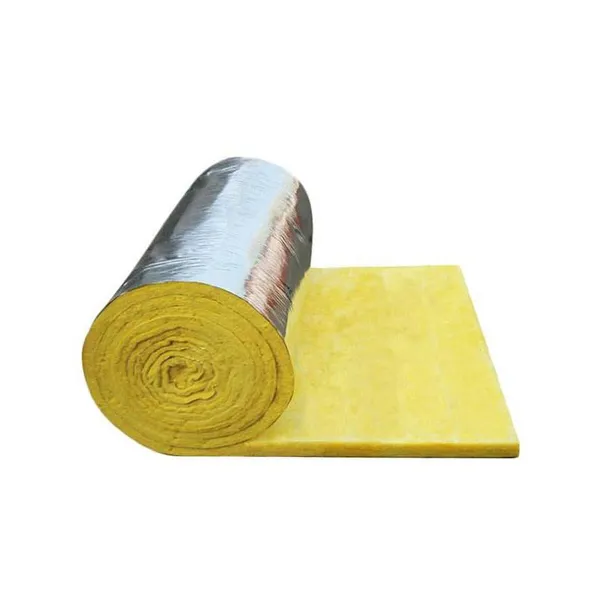
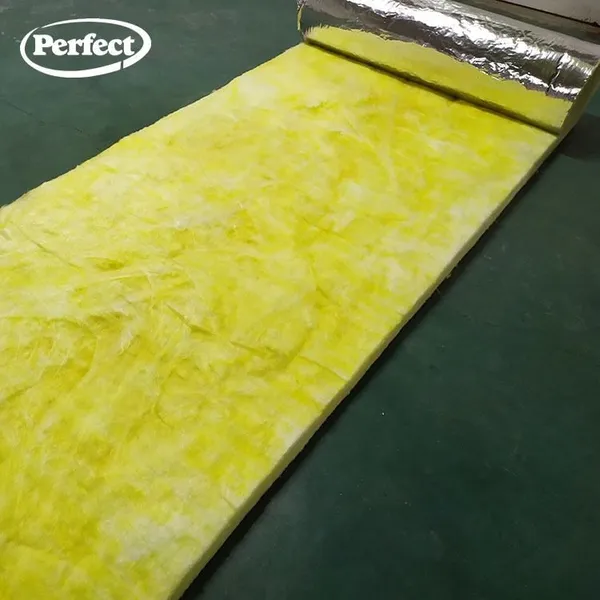
 Glasswool Blanket With FSK FacingNegotiableMOQ: 100 Rolls
-
Rockwool Blanket With Wire MeshNegotiableMOQ: 100 Rolls
-
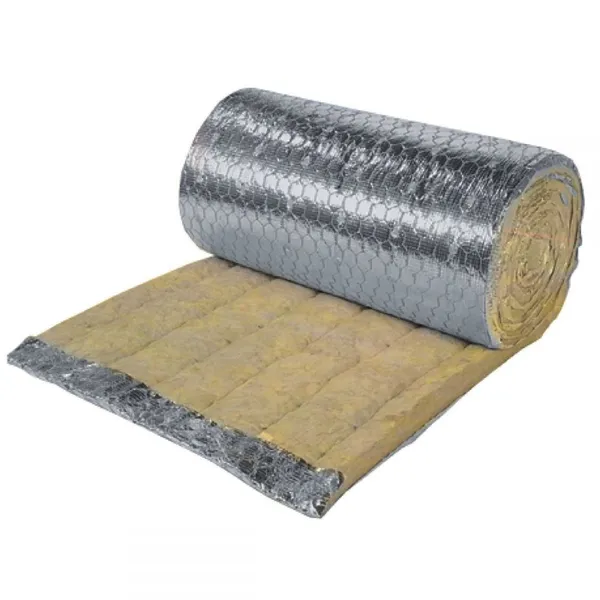
Rockwool Blanket With FSK FacingNegotiableMOQ: 100 Rolls
-
CE Certified Glass Wool Insulation, Glasswool Fiberglass, Low Thermal Conductivity, Noise Reduction for Wall, Roof and Industrial EquipmentNegotiableMOQ: 100 Rolls
-
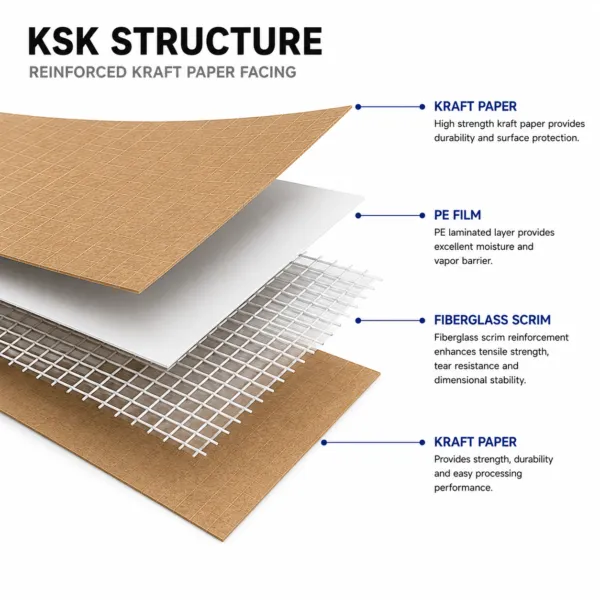
KSK Foil Facing Roll, Laminated Aluminum Foil + Scrim + Kraft Paper, Anti-Tear Thermal Barrier, Suitable for Commercial HVAC and Roof InsulationNegotiableMOQ: 500 Rolls
-
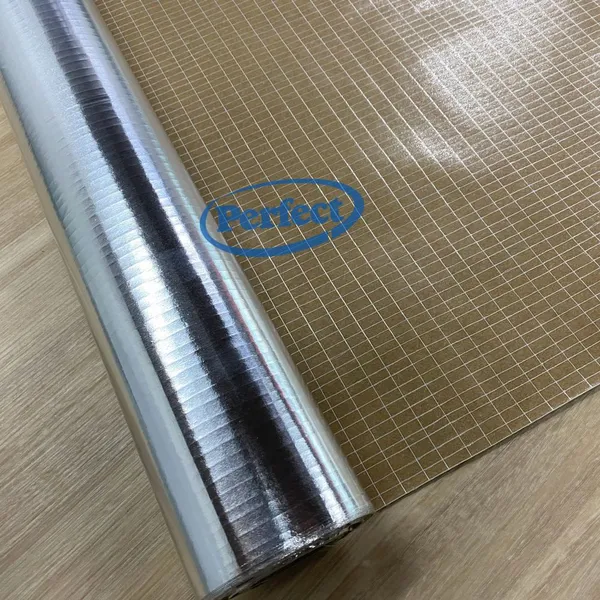
FSK Foil Scrim Kraft, FWF MSK MWV KSK Laminate Foils, Metalized PET MPET Vapor Barrier Facing for Insulation Glasswool RockwoolNegotiableMOQ: 100 Rolls
-
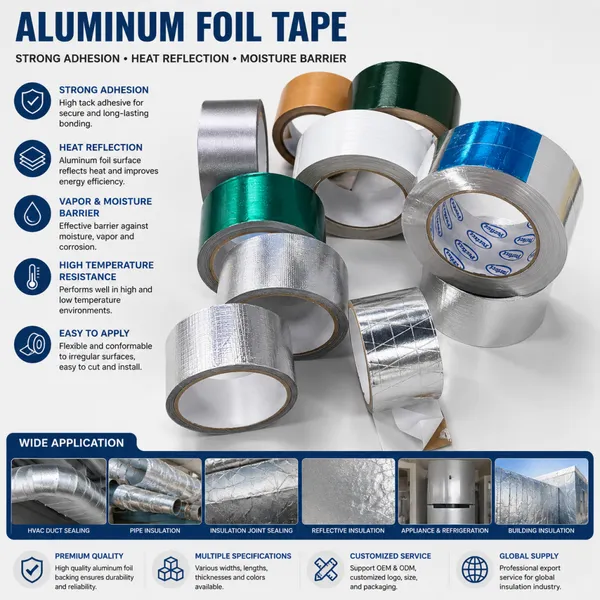
Reinforced Aluminium Foil Tape, Waterproof Anti-aging Tape, Widely Used in HVAC and Building Insulation ProjectsNegotiableMOQ: 500 Cartons
-
HVAC Aluminum Foil Sealing Tape, Strong Adhesion Heat Resistance for Pipe, Glass Wool and Rockwool InsulationNegotiableMOQ: 500 Cartons
-
Factory Supply Metalized PET MPET Laminate Foils, Aluminum Coated PET Film for Roof Wall InsulationNegotiableMOQ: 10000 Cubic Meters
-
Custom MPET Metalized PET Laminate Foils, VMPET Metallized Polyester Facing Film for Thermal InsulationNegotiableMOQ: 10000 Cubic Meters
-
Glass Wool Insulation Series, Glasswool With FSK/FWF/MSK/MWV/KSK Facing, Metalized PET Laminate Foils, Heat & Sound Insulation for Commercial BuildingNegotiableMOQ: 100 Rolls
-
Rockwool Blanket With Black Firber GlassNegotiableMOQ: 100 Rolls
-
Glasswool Insulation Blanket & Board, FSK FWF MSK MWV KSK Foil Laminate, MPET Metalized PET Faced Glass Wool for HVAC, Roof, Wall, Air DuctNegotiableMOQ: 100 Rolls
-
Rockwool Insulation Roll, FSK Foil Faced Mineral Wool for Building Thermal & Acoustic Insulation, Fire Resistant Roof Wall Insulation MaterialNegotiableMOQ: 100 Rolls
-
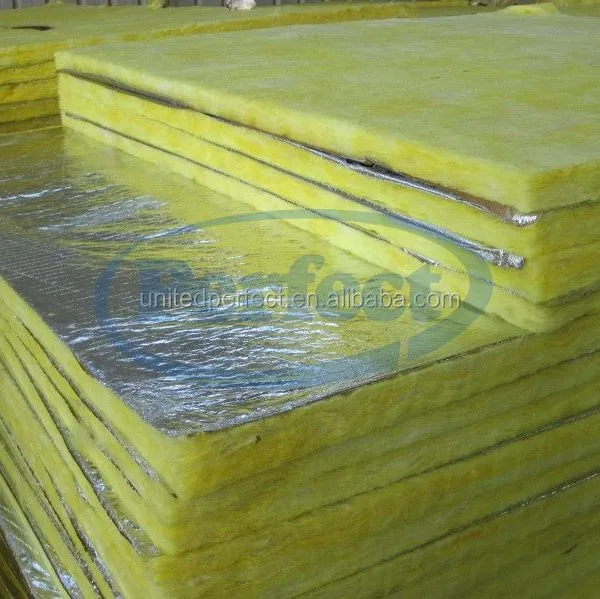
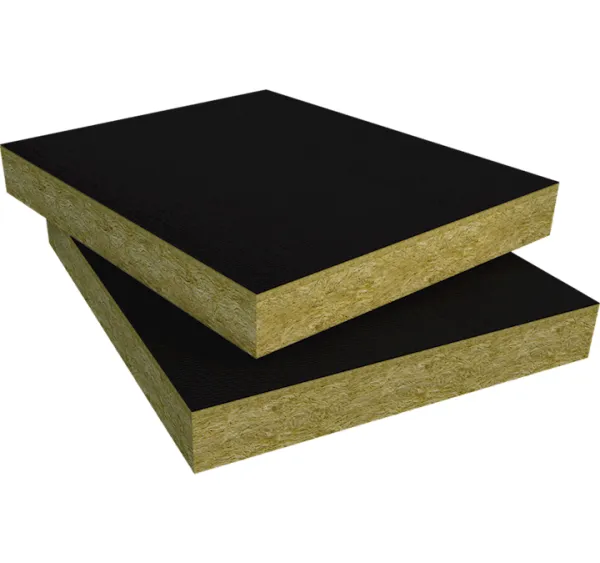
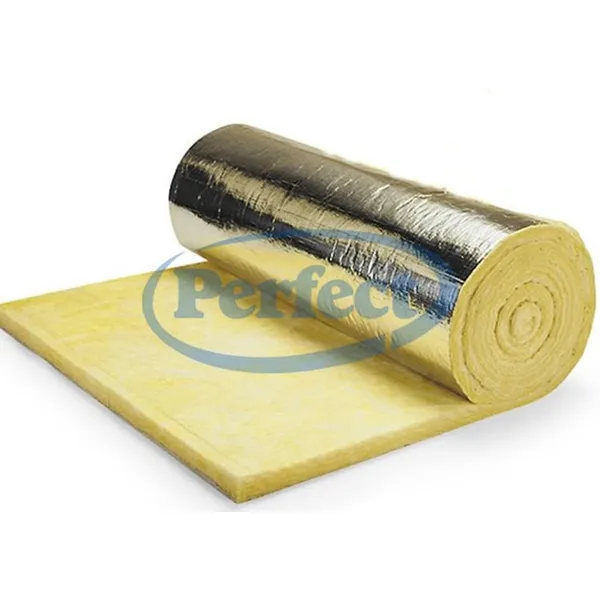
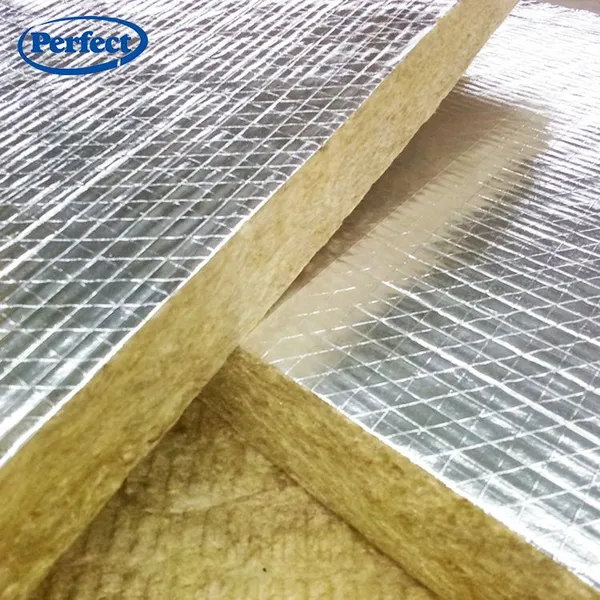
FWF MSK FSK Foil Laminated Rock Wool Glass Wool Blanket, Metalized PET Laminate Foils Faced Insulation for HVAC and ConstructionNegotiableMOQ: 100 Rolls
-
Rockwool Insulation Board, Mineral Wool Rock Wool Slab for Building Thermal & Fire Insulation, Soundproof Rockwool Panel for Roof, Wall, HVAC SystemNegotiableMOQ: 100 Rolls
-
Rockwool Pipe Section, Mineral Wool Rock Wool Tube Insulation, Fire & Heat Resistant Rockwool for Steam Pipes, Industrial Pipeline Insulation ProjectNegotiableMOQ: 100 Rolls
-
Rockwool Board With FSK FacingNegotiableMOQ: 100 Rolls
-
Rockwool Insulation Slab With FSK Facing, Fireproof Rock Wool Board, Thermal & Sound Insulation Rockwool for Roof, Wall and Ductwork ApplicationNegotiableMOQ: 100 Rolls
-
Fireproof Foil Laminated Glass Wool, Laminate Foils MPET Faced Glasswool Insulation Roll & Sheet for Roofing, Wall, Duct and Pipe InsulationNegotiableMOQ: 100 Rolls