
 Business License
Blog Categories

Breathable Membrane Sd Value and Water Vapour Resistance
A specifier in Southern Europe once rejected two quotations because one reported an Sd value of 0.4 metres and the other reported a water vapour resistance of 6.4 meganewtons per gram. The two figures describe similar performance, and the specifier read them as a factor of sixteen apart.
The confusion is common because the same property is reported in several units. A breathable membrane sd value, a water vapour resistance and a vapour transmission rate can all describe one material, and a comparison that mixes them produces a false ranking. This article explains what each figure means, how to convert between them, and how to write a specification that produces comparable answers.
1. What a Breathable Membrane Sd Value Measures
The Sd value expresses the vapour resistance of a layer as the equivalent thickness of still air that would produce the same resistance.
The unit is metres, which is what makes the figure easy to use in a design. A layer with an Sd of 0.5 metres resists vapour movement as much as half a metre of still air would. A layer with an Sd of 50 metres resists it as much as fifty metres of still air.
Expressing the resistance as an equivalent air thickness allows a designer to compare a membrane with the air layers already present in a wall. It also makes the relative magnitudes intuitive, since air layers are already part of the calculation.
| Sd Value | Behaviour | Typical Product |
|---|---|---|
| Below 0.5 m | Very permeable | Open breather membrane |
| 0.5 to 5 m | Permeable | Standard breather membrane |
| 5 to 20 m | Restricted | Low-resistance vapour control layer |
| Above 20 m | Vapour tight | Vapour barrier, foil facing |
A breathable membrane sd value is normally below 5 metres and often below 1 metre. Where a product described as breathable reports an Sd above 20 metres, the description and the figure disagree, and the figure is the one to trust.
2. Water Vapour Resistance and Its Units
Water vapour resistance is the same property expressed as a resistance rather than as an equivalent thickness, and it uses different units.
The common forms are the vapour resistance itself, in meganewtons seconds per gram, and the vapour resistance factor, which is a dimensionless multiple of the resistance of still air. Each describes the material, and each can be converted to an Sd value.
| Quantity | Unit | Relation to Sd |
|---|---|---|
| Sd value | Metres | Direct |
| Vapour resistance factor | Dimensionless | Multiply by thickness |
| Vapour resistance | MN s/g | Proportional to Sd |
| Vapour transmission rate | g per square metre per day | Inverse relation |
The conversion between Sd and vapour resistance depends on constants that are fixed, so a figure in one unit can be converted to another without ambiguity. Where a supplier reports one form and a competitor reports another, the conversion is arithmetic rather than a judgement.
The vapour resistance factor is the form most often used in product literature, because it describes the material rather than a finished layer. It becomes an Sd value once it is multiplied by the layer thickness, which is why a factor reported without a thickness cannot be read as a performance figure.
3. Membrane Vapour Transmission Rate Explained
The membrane vapour transmission rate describes how much vapour passes through in a given period, and it is the inverse of resistance rather than a different property. A membrane vapour transmission rate quoted in grams per square metre per day is convenient for comparing two permeable products, provided the conditions match.
A high transmission rate means low resistance. The two move in opposite directions, so a supplier who reports a high transmission rate is describing a permeable product and a supplier who reports a high resistance is describing a tight one.
The transmission rate is usually reported in grams per square metre per day, with the test conditions stated. The conditions matter, because the rate depends on the vapour pressure difference across the specimen, and a rate quoted without those conditions cannot be compared with another. A membrane vapour transmission rate is therefore as useful as the conditions printed beside it.
Where two suppliers report transmission rates on different conditions, the figures are not directly comparable even though both are in the same unit. This is the same problem as the mixed-unit case, and the solution is the same: fix the test conditions in the enquiry.
4. Why the Basis Matters in Water Vapour Resistance Data
Two figures can describe the same material and differ widely, and the difference lies in the basis rather than in the product.
An Sd value is a property of a layer at a thickness. A vapour resistance factor is a property of the material. A transmission rate is a property of the layer under stated conditions. Reading one as though it were another produces an error that is often large.
The most common error is comparing an Sd value with a vapour resistance factor directly, which ignores the thickness. A factor of 100 in a 0.5 millimetre membrane corresponds to an Sd of 0.05 metres, which is a different product from a membrane with an Sd of 100 metres.
The practical defence is to ask for the basis whenever a figure is quoted. A supplier who states the basis has a controlled source for the number, and a supplier who does not leaves the buyer to guess.
5. Reading a Breathable Membrane Sd Value on a Datasheet
A usable datasheet states the figure, the basis, the thickness and the test method, and all four are needed.
The figure and the unit come first. Where the unit is absent, the number cannot be interpreted, because the same number in a different unit describes a different product. This is the single most frequent defect in product literature, and it is also the easiest to correct with a written request.
The thickness follows, because a vapour resistance factor is meaningless without it. Where a product is supplied at several thicknesses, the factor may be the same and the Sd value different, and the datasheet should make that clear.
The test method closes the set. A diffusion figure measured under one method may not be directly comparable with one measured under another, and the method is what allows a comparison to be made on a stated basis.
6. Case Notes on Mixed Vapour Resistance Units
A specifier in Southern Europe initially ranked two membrane quotations as a factor of sixteen apart, because one reported an Sd value and the other a vapour resistance in meganewtons seconds per gram. Converting both to a common basis showed the products were within ten percent of each other. The ranking had been determined by the units rather than by the material.
A second project in Northern Europe compared a vapour transmission rate with a vapour resistance figure and concluded incorrectly that one product was far more permeable. Asking both suppliers for the basis and converting to Sd values reversed the conclusion, and the product that had appeared less permeable was in fact the more open of the two. The award was made on the corrected comparison.
Both cases were resolved by asking a single question about the basis. Neither involved a product that failed to meet a requirement.
7. Writing a Membrane Vapour Transmission Rate Specification
State the quantity required and the unit. Naming the Sd value in metres removes most of the ambiguity, because it is a layer property with a single accepted unit.
State the test method. Where a project requires a particular method, the requirement should appear in the enquiry rather than being assumed.
State the thickness where the product is supplied in more than one. A vapour resistance factor applies to the material, and the Sd value applies to the layer, and the two are linked by thickness.
State the minimum and maximum acceptable values rather than an exact figure. A range allows a supplier to offer a compliant product without forcing an unnecessary substitution, and it makes the comparison meaningful across a shortlist.
8. Breathable Membrane Supplier Profile
United Perfect Building Materials, part of Jinan United Perfect Building Materials Corporation, produces breathable membranes for roof and wall systems and reports the breathable membrane sd value, the water vapour resistance and the membrane vapour transmission rate for each grade. The company states the unit, the thickness and the test method alongside each figure, which allows a comparison to be made on a common basis.
Jinan United Perfect Building Materials holds retained samples by production batch, so a delivered roll can be checked against the reference used at approval. Buyers comparing grades across roof and wall applications can request the figures in the form their project requires and receive them on a consistent basis. United Perfect can also confirm the basis in writing where a specification states the requirement in a unit that differs from the company's standard reporting.
9. FAQ About Sd Value and Vapour Transmission Rate
9.1 What is a good breathable membrane sd value?
For a breather membrane, lower is generally better, and most products sit below 5 metres, with many below 1 metre. The acceptable value depends on the assembly, because a layer that must let the wall dry benefits from a low figure while a layer serving as a vapour control needs a high one. The useful check is that the figure matches the position: a product described as breathable with an Sd above 20 metres is being marketed as something it is not, and the figure should be trusted over the description.
9.2 How do I convert water vapour resistance to an Sd value?
The conversion depends on which form of resistance is reported, and it is arithmetic rather than a judgement. A vapour resistance factor is converted to an Sd value by multiplying by the layer thickness, and a vapour resistance in meganewtons seconds per gram is converted using fixed constants. Where a supplier reports a transmission rate instead, it has to be converted through its inverse. The safest approach is to ask the supplier for the figure in the unit the specification uses, since they hold the underlying test data.
9.3 Is a higher vapour transmission rate better?
Where the layer is meant to be permeable, a high transmission rate means low resistance, which suits a breather membrane on the cold side of an assembly. On the warm side, the assembly needs resistance, and a high transmission rate is the wrong property. A membrane vapour transmission rate also depends on the test conditions, so a rate quoted without them cannot be compared across suppliers. Where the rate is quoted with its conditions, it can be converted and used like any other vapour figure.
9.4 Why do two suppliers report very different Sd values for similar products?
Usually because they are reporting different quantities or different bases. One may quote an Sd value and the other a vapour resistance factor without the thickness, or one may quote a transmission rate on different conditions. The materials may be similar and the numbers may be read as though they described the same thing. Asking for the basis settles the question, and in most cases the converted figures fall much closer together than the original pair suggested, which is why the basis deserves attention before any ranking is drawn.
9.5 What should a membrane datasheet include?
The figure, the unit, the basis, the thickness where relevant, and the test method. All five are needed before a comparison can be made, because a number without a unit is unreadable, a factor without a thickness is incomplete, and a figure without a method cannot be placed alongside a competitor's. A datasheet that omits one of these is not necessarily inaccurate, and it is difficult to use in a specification. Where a project depends on the figure, request a corrected sheet rather than interpreting the gap.
Recently Posted
-
From Felt to Synthetic Underlayment in North American Roofing
November 3, 2026A roofing supplier in North America once kept both felt and synthetic underlayment on the same rack and watched the split shift wi Read More
-
QC Checklist for Synthetic Underlayment Before Shipment
November 3, 2026A buyer in North America once received a shipment in which the lengths on the packing list were correct and the rolls at the centr Read More
-
Synthetic Underlayment Slitting Winding and Roll Diameter Control
November 2, 2026A buyer in North America once rejected a container of synthetic underlayment because the rolls at one end had flattened into an ov Read More
-
Synthetic Underlayment for Tropical and Desert Roofing Projects
November 2, 2026Two projects in the same product family can fail for opposite reasons. A tropical roof underlayment in Southeast Asia can be ruine Read More

Contact Us
Recommended Products
-
 Glasswool Blanket With FSK FacingNegotiableMOQ: 100 Rolls
-
Rockwool Blanket With Wire MeshNegotiableMOQ: 100 Rolls
-
Rockwool Blanket With FSK FacingNegotiableMOQ: 100 Rolls
-
CE Certified Glass Wool Insulation, Glasswool Fiberglass, Low Thermal Conductivity, Noise Reduction for Wall, Roof and Industrial EquipmentNegotiableMOQ: 100 Rolls
-
KSK Foil Facing Roll, Laminated Aluminum Foil + Scrim + Kraft Paper, Anti-Tear Thermal Barrier, Suitable for Commercial HVAC and Roof InsulationNegotiableMOQ: 500 Rolls
-
FSK Foil Scrim Kraft, FWF MSK MWV KSK Laminate Foils, Metalized PET MPET Vapor Barrier Facing for Insulation Glasswool RockwoolNegotiableMOQ: 100 Rolls
-
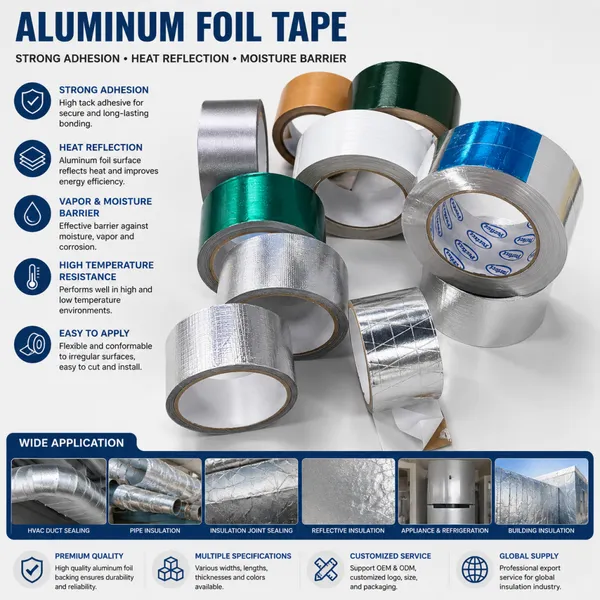
Reinforced Aluminium Foil Tape, Waterproof Anti-aging Tape, Widely Used in HVAC and Building Insulation ProjectsNegotiableMOQ: 500 Cartons
-
HVAC Aluminum Foil Sealing Tape, Strong Adhesion Heat Resistance for Pipe, Glass Wool and Rockwool InsulationNegotiableMOQ: 500 Cartons
-
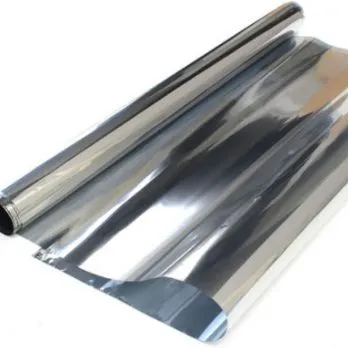
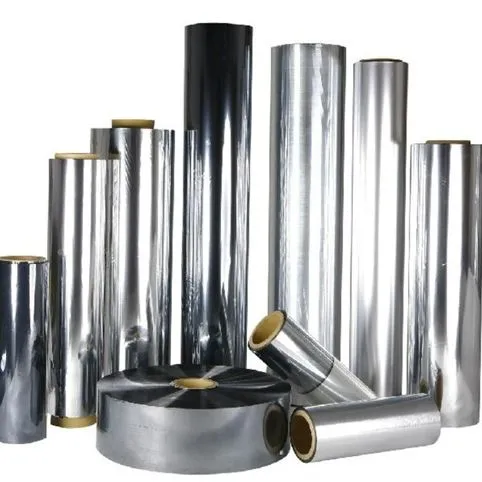
Factory Supply Metalized PET MPET Laminate Foils, Aluminum Coated PET Film for Roof Wall InsulationNegotiableMOQ: 10000 Cubic Meters
-
Custom MPET Metalized PET Laminate Foils, VMPET Metallized Polyester Facing Film for Thermal InsulationNegotiableMOQ: 10000 Cubic Meters
-
Glass Wool Insulation Series, Glasswool With FSK/FWF/MSK/MWV/KSK Facing, Metalized PET Laminate Foils, Heat & Sound Insulation for Commercial BuildingNegotiableMOQ: 100 Rolls
-
Rockwool Blanket With Black Firber GlassNegotiableMOQ: 100 Rolls
-
Glasswool Insulation Blanket & Board, FSK FWF MSK MWV KSK Foil Laminate, MPET Metalized PET Faced Glass Wool for HVAC, Roof, Wall, Air DuctNegotiableMOQ: 100 Rolls
-
Rockwool Insulation Roll, FSK Foil Faced Mineral Wool for Building Thermal & Acoustic Insulation, Fire Resistant Roof Wall Insulation MaterialNegotiableMOQ: 100 Rolls
-
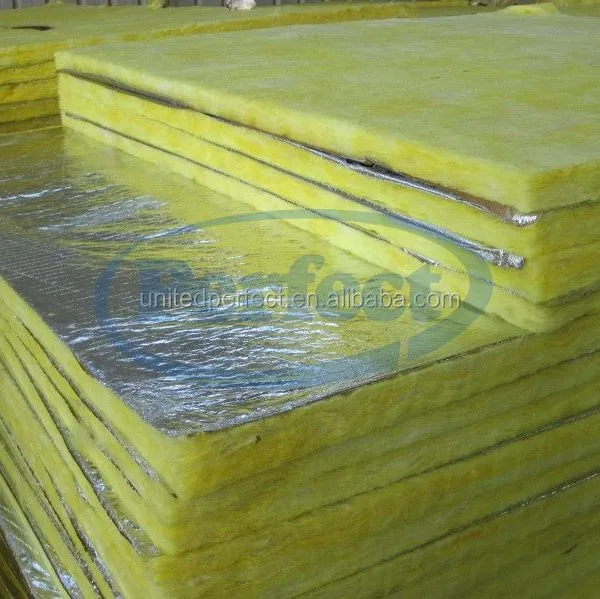
FWF MSK FSK Foil Laminated Rock Wool Glass Wool Blanket, Metalized PET Laminate Foils Faced Insulation for HVAC and ConstructionNegotiableMOQ: 100 Rolls
-
Rockwool Insulation Board, Mineral Wool Rock Wool Slab for Building Thermal & Fire Insulation, Soundproof Rockwool Panel for Roof, Wall, HVAC SystemNegotiableMOQ: 100 Rolls
-
Rockwool Pipe Section, Mineral Wool Rock Wool Tube Insulation, Fire & Heat Resistant Rockwool for Steam Pipes, Industrial Pipeline Insulation ProjectNegotiableMOQ: 100 Rolls
-
Rockwool Board With FSK FacingNegotiableMOQ: 100 Rolls
-
Rockwool Insulation Slab With FSK Facing, Fireproof Rock Wool Board, Thermal & Sound Insulation Rockwool for Roof, Wall and Ductwork ApplicationNegotiableMOQ: 100 Rolls
-
Fireproof Foil Laminated Glass Wool, Laminate Foils MPET Faced Glasswool Insulation Roll & Sheet for Roofing, Wall, Duct and Pipe InsulationNegotiableMOQ: 100 Rolls