
 Business License
Blog Categories

What Is Laminated Foil? FSK WMP and AluPET Facing Explained
A contractor in the Mid East ordered a laminated foil facing by specification name and received a product that met the name but not the requirement. The facing was reflective and it was laminated, and it delaminated within one summer in a roof cavity.
The problem was that the specification had used a trade term without defining the construction. FSK, WMP and AluPET are three different laminated foil facings, and they are not interchangeable. Each uses a different reinforcement and a different adhesive logic, and each suits a different set of conditions. This article sets out what each abbreviation means, how the three differ, and how to write a specification that a supplier can meet on the first shipment.
1. What Laminated Foil Facing Means
A laminated foil facing is a composite in which an aluminum foil layer is bonded to a supporting layer with an adhesive. The foil provides the reflective surface and the vapour resistance, and the support provides the mechanical strength.
That basic structure is shared across a very wide product range. The differences between grades lie almost entirely in the support layer and the adhesive, and those two choices determine how the facing behaves in heat, in moisture and under mechanical load.
The foil itself is usually between 7 and 9 microns thick. At that thickness the foil contributes very little to tensile strength, which is why the support layer carries the mechanical duty in every laminated foil facing.
Understanding this hierarchy is the key to reading a specification. A laminated foil facing described by its foil thickness alone says almost nothing about how it will perform, because the load path runs through the support. Two facings with identical foil can differ by a factor of two in tensile strength, and the difference sits entirely in a layer that the specification may not mention at all.
2. FSK Foil Laminate: Foil Scrim Kraft
FSK stands for foil, scrim and kraft. The construction bonds aluminum foil to a kraft paper layer that is reinforced with a glass scrim, and the scrim is what gives the laminate its tear resistance.
An fsk foil laminate is the traditional choice for insulation facings in North American construction, and it is widely used on duct wrap, duct board and equipment insulation. It is reflective, it resists vapour, and the scrim lets it hold together when a fixing pin passes through it. An fsk foil laminate is supplied in roll form for field application and in board form where a rigid substrate is used.
| Layer | Function | Typical Spec |
|---|---|---|
| Aluminum foil | Reflectivity, vapour resistance | 7 to 9 micron |
| Adhesive | Bonds foil to kraft | Flame retardant |
| Glass scrim | Tear resistance | 2x2 to 3x3 mesh |
| Kraft paper | Body, stiffness, printability | 40 to 60 g per square metre |
The kraft layer brings two benefits and one limitation. It stiffens the facing, which makes it easier to handle in flat panels, and it accepts printing for branding and code marking. The limitation is that kraft paper is sensitive to moisture, and a facing that stays wet loses its body over time.
FSK is therefore a strong choice for concealed, dry applications such as duct wrap and internal equipment insulation, and a weaker choice for wet or exposed positions. Where a project uses an fsk foil laminate, the specification should also state the kraft weight and the scrim mesh, since both vary between grades and both affect how the facing performs under a fixing load.
3. WMP Facing and Metalised Foil Facing Construction
WMP stands for white metalised polypropylene. The construction bonds a metalised polypropylene film to a woven or non-woven reinforcement, and the surface is white rather than bright foil.
The white surface changes the application. A bright foil facing reflects radiant heat, and a white facing reflects visible light while producing a much softer appearance inside an occupied space. In a plant room or a factory ceiling, that difference affects the lighting environment rather than the thermal performance.
WMP also avoids the moisture sensitivity of a kraft layer. The polypropylene film does not absorb water, so the facing keeps its properties in a damp or humid position where a kraft-based product would degrade.
On the other hand, a metalised polypropylene surface is more easily damaged than a foil surface during handling, and it can be scuffed by abrasion against ductwork or against structural steel.
4. AluPET Foil Membrane: Foil and Polyester
AluPET combines aluminum foil with a polyester film, and the construction is often used where a thin, strong facing is needed.
An alupet foil membrane brings a specific combination: a foil surface for reflectivity, and a polyester layer for strength and moisture tolerance. Polyester is dimensionally stable and does not absorb water, which makes the laminate suitable for humid and moderate-temperature positions.
The trade-off is ease of forming. A polyester film is less conformable than a kraft layer, so an AluPET facing is easier to use in flat or gently curved panels than around tight fittings. Where a project needs the facing to follow complex shapes, a glass-reinforced construction is usually a better match.
AluPET is also thinner and lighter than an FSK construction at comparable strength, which reduces roll weight and improves handling on some production lines.
5. Comparing Laminated Foil Facing Grades
The three grades differ on five practical dimensions, and the table below places them side by side.
| Property | FSK | WMP | AluPET |
|---|---|---|---|
| Support layer | Kraft plus glass scrim | Woven or non-woven polymer | Polyester film |
| Surface | Bright aluminum foil | White metalised film | Bright aluminum foil |
| Moisture tolerance | Limited | Good | Good |
| Formability | Moderate | Moderate | Limited |
| Typical use | Duct wrap, duct board | Exposed interiors, plant rooms | Thin panels, humid positions |
The comparison is often reduced to a price question, and that reduction is where most specification errors begin. The three grades are not alternatives at different price points. They are different constructions suited to different positions, and choosing the wrong one costs far more than any price difference between them.
6. Case Notes on Laminated Foil Facing Selection
A contractor in the Mid East specified an FSK foil laminate for a roof cavity application and installed it across purlins without a protective layer. Roof cavity temperatures in that project exceeded 60 degrees for part of the year, and the kraft layer dried and became brittle over one hot season. The facing then cracked along the scrim lines and lost its vapour continuity. A metalised polymer construction was used on the remaining bays and held its properties across the following two seasons.
A second project in Eastern Europe used a thin AluPET foil membrane on ductwork with a high fitting count. The facing performed well on the straight runs and proved slow to form around the fittings, where the polyester resisted bending. The contractor switched to a glass-reinforced facing for the fittings and kept the AluPET on the straight sections, which reduced the installation time on the second phase.
Both projects had selected a grade from a general description rather than from the conditions the facing would meet.
7. Writing a Laminated Foil Facing Specification
Name the construction rather than the abbreviation alone. An abbreviation can cover several constructions, and a supplier reading FSK may offer a product that meets the letters but not the requirement.
State the support layer, the foil thickness, the adhesive chemistry and the reinforcement mesh count. These four figures define the material, and each should appear on the datasheet with a stated basis.
State the position and the exposure. A laminated foil facing on a cold side needs vapour continuity and moisture tolerance, and a facing in a hot cavity needs heat-ageing performance. The position decides which property to prioritise.
Where a trade abbreviation is used in the specification, add a note defining the construction behind it. This costs one line and removes a whole category of mismatch between the specified product and the delivered one.
8. Laminated Foil Facing Supplier Profile
United Perfect Building Materials, part of Jinan United Perfect Building Materials Corporation, produces laminated foil facings across the FSK, WMP and AluPET families. The company quotes the support layer, foil thickness, adhesive chemistry and reinforcement construction on each datasheet, which allows a buyer to compare two grades against the same figures rather than against two different abbreviations.
Jinan United Perfect Building Materials holds retained samples by production batch, so a delivered roll can be checked against the reference used at approval. Buyers specifying more than one laminated foil facing grade on a project, such as FSK for duct wrap and a metalised grade for exposed interiors, can order both from one source and keep the documentation on a consistent basis. United Perfect can also confirm which construction stands behind a named abbreviation when a specification is being reviewed.
9. FAQ About Laminated Foil Facing and AluPET Foil Membrane
9.1 Is FSK the same as laminated foil?
FSK is one type of laminated foil facing, not a synonym for the whole family. A laminated foil facing is any composite of foil and support, and FSK is the version that uses kraft paper with a glass scrim. WMP and AluPET are laminated foil facings too, and they use different supports. Using the terms interchangeably in a specification leaves the supplier to choose the construction, which is how a product can match a name and still fail in service.
9.2 When should I choose an alupet foil membrane over FSK?
When the facing will see moisture or a humid position and when the geometry is flat or gently curved. An AluPET construction uses a polyester support that does not absorb water, while an fsk foil laminate uses kraft paper that does. Where the facing will follow tight fittings, a glass-reinforced construction usually forms more easily than either. The choice follows from the position and the geometry rather than from a general preference for one family over another, and the two constructions are often used on the same project in different locations.
9.3 Does a white WMP facing perform worse than a foil facing?
It depends on what is being asked of it. A white metalised surface reflects visible light and produces a softer appearance, which suits occupied interiors and plant rooms. A bright foil surface has a higher radiant reflectivity, which matters where radiant heat transfer is the design concern. Neither is uniformly better, and the choice usually comes down to the position: a visible ceiling and a concealed roof cavity do not call for the same surface treatment, and a facing that suits one will look out of place in the other.
9.4 What foil thickness should a laminated foil facing carry?
Most insulation facings use foil between 7 and 9 microns. Thicker foil improves surface durability and resistance to damage at fixings, and it adds weight and cost without contributing meaningfully to tensile strength, because the mechanical load runs through the support layer. Where a facing is handled heavily or is installed over an abrasive surface, a slightly thicker foil can be justified. Where the facing is concealed and handled once, the standard range is usually sufficient, and the extra microns are more usefully spent on the support layer instead.
9.5 How do I check that a delivered laminated foil facing matches the specification?
Check the layer structure at the roll end, which is visible without cutting the roll, then compare the foil thickness, the support layer and the reinforcement against the datasheet. Weighing a known area confirms the total laminate weight on the same basis as the specification. A field peel on a 50 millimetre strip shows whether the adhesive bond is complete. Where a supplier is part of the building materials sector in China, requesting the retained batch reference alongside the delivered roll allows the comparison to be made against the production sample.
Recently Posted
-
From Felt to Synthetic Underlayment in North American Roofing
November 3, 2026A roofing supplier in North America once kept both felt and synthetic underlayment on the same rack and watched the split shift wi Read More
-
QC Checklist for Synthetic Underlayment Before Shipment
November 3, 2026A buyer in North America once received a shipment in which the lengths on the packing list were correct and the rolls at the centr Read More
-
Synthetic Underlayment Slitting Winding and Roll Diameter Control
November 2, 2026A buyer in North America once rejected a container of synthetic underlayment because the rolls at one end had flattened into an ov Read More
-
Synthetic Underlayment for Tropical and Desert Roofing Projects
November 2, 2026Two projects in the same product family can fail for opposite reasons. A tropical roof underlayment in Southeast Asia can be ruine Read More

Contact Us
Recommended Products
-
 Glasswool Blanket With FSK FacingNegotiableMOQ: 100 Rolls
-
Rockwool Blanket With Wire MeshNegotiableMOQ: 100 Rolls
-
Rockwool Blanket With FSK FacingNegotiableMOQ: 100 Rolls
-
CE Certified Glass Wool Insulation, Glasswool Fiberglass, Low Thermal Conductivity, Noise Reduction for Wall, Roof and Industrial EquipmentNegotiableMOQ: 100 Rolls
-
KSK Foil Facing Roll, Laminated Aluminum Foil + Scrim + Kraft Paper, Anti-Tear Thermal Barrier, Suitable for Commercial HVAC and Roof InsulationNegotiableMOQ: 500 Rolls
-
FSK Foil Scrim Kraft, FWF MSK MWV KSK Laminate Foils, Metalized PET MPET Vapor Barrier Facing for Insulation Glasswool RockwoolNegotiableMOQ: 100 Rolls
-
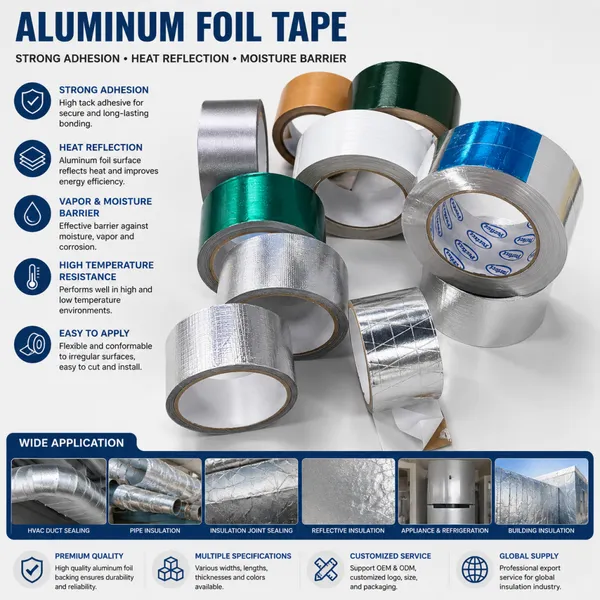
Reinforced Aluminium Foil Tape, Waterproof Anti-aging Tape, Widely Used in HVAC and Building Insulation ProjectsNegotiableMOQ: 500 Cartons
-
HVAC Aluminum Foil Sealing Tape, Strong Adhesion Heat Resistance for Pipe, Glass Wool and Rockwool InsulationNegotiableMOQ: 500 Cartons
-
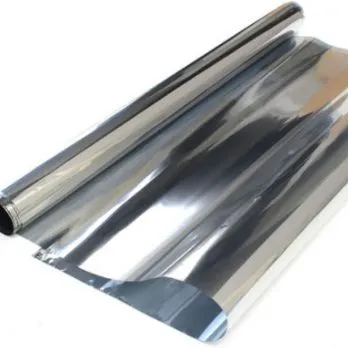
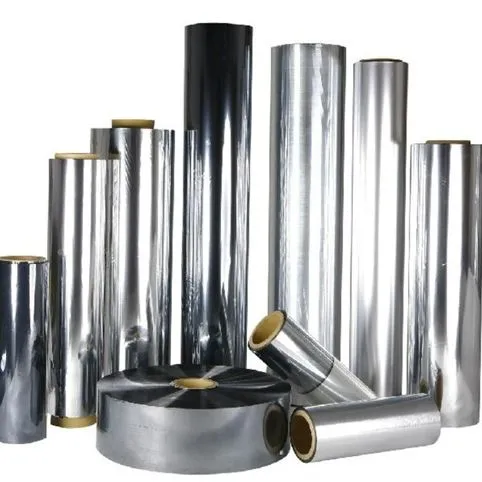
Factory Supply Metalized PET MPET Laminate Foils, Aluminum Coated PET Film for Roof Wall InsulationNegotiableMOQ: 10000 Cubic Meters
-
Custom MPET Metalized PET Laminate Foils, VMPET Metallized Polyester Facing Film for Thermal InsulationNegotiableMOQ: 10000 Cubic Meters
-
Glass Wool Insulation Series, Glasswool With FSK/FWF/MSK/MWV/KSK Facing, Metalized PET Laminate Foils, Heat & Sound Insulation for Commercial BuildingNegotiableMOQ: 100 Rolls
-
Rockwool Blanket With Black Firber GlassNegotiableMOQ: 100 Rolls
-
Glasswool Insulation Blanket & Board, FSK FWF MSK MWV KSK Foil Laminate, MPET Metalized PET Faced Glass Wool for HVAC, Roof, Wall, Air DuctNegotiableMOQ: 100 Rolls
-
Rockwool Insulation Roll, FSK Foil Faced Mineral Wool for Building Thermal & Acoustic Insulation, Fire Resistant Roof Wall Insulation MaterialNegotiableMOQ: 100 Rolls
-
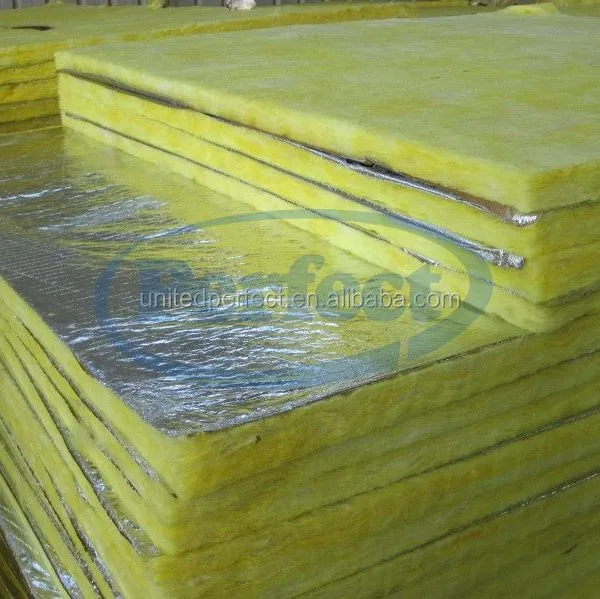
FWF MSK FSK Foil Laminated Rock Wool Glass Wool Blanket, Metalized PET Laminate Foils Faced Insulation for HVAC and ConstructionNegotiableMOQ: 100 Rolls
-
Rockwool Insulation Board, Mineral Wool Rock Wool Slab for Building Thermal & Fire Insulation, Soundproof Rockwool Panel for Roof, Wall, HVAC SystemNegotiableMOQ: 100 Rolls
-
Rockwool Pipe Section, Mineral Wool Rock Wool Tube Insulation, Fire & Heat Resistant Rockwool for Steam Pipes, Industrial Pipeline Insulation ProjectNegotiableMOQ: 100 Rolls
-
Rockwool Board With FSK FacingNegotiableMOQ: 100 Rolls
-
Rockwool Insulation Slab With FSK Facing, Fireproof Rock Wool Board, Thermal & Sound Insulation Rockwool for Roof, Wall and Ductwork ApplicationNegotiableMOQ: 100 Rolls
-
Fireproof Foil Laminated Glass Wool, Laminate Foils MPET Faced Glasswool Insulation Roll & Sheet for Roofing, Wall, Duct and Pipe InsulationNegotiableMOQ: 100 Rolls