
 Business License
Blog Categories

How to Buy Laminated Foil: MOQ Widths and Lead Times
A buyer in Eastern Europe once placed an order for a laminated foil at the agreed price and then discovered, three weeks later, that the roll width specified would have to be trimmed from a wider parent roll and that the trimming added a run on the slitter. The price held and the delivery was late.
Buying a laminated foil looks like a straightforward purchase of a material to a specification, and the three figures that decide whether an order runs smoothly are the minimum order quantity, the roll width and the lead time. Each of them is a production constraint rather than a commercial preference. This article explains what a laminated foil moq represents, why the laminated foil roll width matters to the price, and how a foil laminate lead time should be planned.
1. What a Laminated Foil MOQ Represents
A laminated foil moq is a production quantity rather than a sales policy, and it follows from the length of a run the line needs to justify a set-up.
Every change of product on a laminating line requires the line to be stopped, the substrate and the facing changed, the adhesive system prepared, the slitting blades re-set and the tension profile re-established. The first metres of a run are usually waste while the process settles, and the waste is proportional to the number of changes rather than to the length of the run.
| Order Size | Effect on the Line | Effect on Price |
|---|---|---|
| Below the minimum | Not accepted as a run | Handled as a sample or a trial |
| At the minimum | One short run | Highest unit cost |
| Mid range | One full run | Moderate |
| Large | Scheduled over runs | Lowest unit cost |
The minimum order quantity therefore depends on the product and on how far it sits from the line's standard build-up. A grade that runs regularly on the line has a lower effective minimum, because the set-up is shared across a scheduled production. A grade that requires a change of substrate or a different adhesive system carries a higher minimum, because the set-up falls on that order alone.
Asking for the minimum on a non-standard build-up is the most common way to receive a quote that looks high. The figure is not an arbitrary charge, and it can sometimes be reduced by moving the specification closer to a standard grade without losing the performance the application needs.
2. Laminated Foil Roll Width and Slitting
The laminated foil roll width is the other figure that changes the price, because the finished width is cut from a parent roll of a fixed width.
The line produces a parent web at a width set by the equipment, and the slitting station cuts that web into narrower strips. Where the ordered width divides the parent width exactly, the trim waste is low. Where it does not, a strip of waste is produced at one edge, and the waste is charged into the order.
| Ordered Width | Fit to Parent Width | Trim Waste |
|---|---|---|
| Exact division | Full use | Minimal |
| Small remainder | Mostly used | Low |
| Large remainder | Partly used | High |
| Very narrow | Many strips | Edge waste per strip |
That is why a small change in the ordered width can change the price more than a change in the quantity. A buyer who needs a width that leaves a large remainder pays for material that is produced and then discarded. A buyer who can accept a width that divides the parent roll evenly receives the same material for less.
The width also affects the finished roll. A narrow roll is lighter and easier to handle and produces more rolls for the same area, which adds winding time. A wide roll is heavier and needs handling equipment. The width should be chosen against the parent roll and the site handling together rather than on the installation alone.
3. Foil Laminate Lead Time and Its Components
A foil laminate lead time is not a single figure, and the useful way to plan it is to split it into its components.
The first component is the queue time, which is the wait until the order reaches the line. A run that can be scheduled alongside an existing production moves more quickly than one that needs a dedicated slot.
The second component is the production time itself, which depends on the length of the run and the line speed for that combination. A long run at a fixed line speed takes proportionally longer, and a substrate that requires a slower line speed takes longer for the same length.
| Lead Time Component | What Drives It |
|---|---|
| Queue time | Scheduling against other orders |
| Production time | Run length, line speed |
| Finishing | Slitting, winding, packing |
| Inspection | Sampling, testing, release |
| Transport | Mode, route, customs |
The third and fourth components are the finishing and the inspection, which happen after the production run. The slitting and the winding are part of the same operation on a combined line, and the inspection includes the sampling and testing that confirms the figures.
The transport component is the one a buyer usually controls least and plans for most. The total lead time should be assembled from these components and then compared against the delivery date the project needs, rather than taken as a single quoted figure.
4. Planning a Foil Laminate Order
Planning a foil laminate order well means starting from the project date and working backwards through the components.
Begin with the date the material is needed on site and subtract the transport time for the chosen mode. That gives the date by which the material has to leave the plant.
Then subtract the finishing and inspection time, which gives the date the production run has to finish. Then subtract the production time for the ordered length at the applicable line speed, which gives the date the run has to start. Then subtract the queue time, which gives the date the order has to be placed.
That sequence usually reveals that the controlling figure is the queue time rather than the production time. An order placed into a full schedule waits, and the wait is often longer than the run. A buyer who places the order late pays for expediting or accepts a later delivery, and neither is a production issue.
5. Case Notes on a Laminated Foil MOQ and Width
A buyer in Eastern Europe ordered a laminated foil moq for a new grade to test the market and received a quote well above the expected unit price. The grade required a substrate change, so the entire set-up fell on that order. A second order at a larger quantity brought the unit price close to the standard range, and the buyer then stocked the grade rather than buying it in small lots.
A second buyer specified a laminated foil roll width that left a remainder on the parent roll, and paid for the trim on every order for a year. Changing to a width that divided the parent evenly removed the waste and the unit price fell, with the same material delivered. The change came at the buyer's end and required no change from the supplier.
Both cases show the same point. The minimum and the width are production figures, and a buyer who understands them can reduce the cost without changing the product.
6. Verifying a Laminated Foil Order
Verifying a laminated foil order means checking that the delivered material matches the figures that were ordered.
The width, the length and the roll diameter should be measured against the order. A width that is out of tolerance changes the coverage, and a length that is short changes the number of rolls needed.
The figures that define the grade should be checked against the certificate. The foil thickness, the carrier and the adhesive weight are the three that most often differ between a sample and a production run.
A retained sample held by production batch allows a later delivery to be compared against the reference used at approval. That comparison is the practical way to confirm that the material has not drifted, and it should be requested at the order stage rather than after a problem appears.
7. Specifying a Laminated Foil Order
State the full specification, including the foil thickness, the carrier, the adhesive weight and the key performance figures. A grade named by a product code alone leaves the build-up to the supplier's records.
State the width and check it against the parent roll before fixing it. A width that divides the parent evenly saves the trim waste, and the check is worth doing before the first order rather than after it.
State the length and the roll diameter together, because a roll that is too large for the site handling adds handling rather than material.
State the required delivery date and ask for the lead time to be broken into its components. That makes the queue time visible before the order is placed rather than after it is late.
8. Laminated Foil Supplier Profile
United Perfect Building Materials, part of Jinan United Perfect Building Materials Corporation, produces laminated foil on lines that combine laminating, coating and slitting. The company quotes the laminated foil moq, the laminated foil roll width and the foil laminate lead time for each grade, which allows an order to be planned against the production figures rather than against a single headline number.
Jinan United Perfect Building Materials holds retained samples by production batch, so a delivered roll can be checked against the reference used at approval. Buyers in Europe, North America and Oceania can request the lead time broken down by component and can confirm the width against the parent roll before the first order. United Perfect can also advise on a grade that is close to a standard build-up where a smaller minimum is needed.
9. FAQ About Buying Laminated Foil
9.1 Why is the minimum order quantity so high?
Because the laminated foil moq reflects a production run rather than a sales policy. Every change of product on a laminating line requires the line to be stopped, the substrate and the facing changed, the adhesive system prepared and the slitting blades re-set, and the first metres of a run are waste while the process settles. That set-up falls on the order, so a small order on a non-standard grade carries the whole cost. A grade that runs regularly shares the set-up and carries a lower effective minimum.
9.2 How does roll width affect the price?
The laminated foil roll width decides how efficiently the parent roll is used. The line produces a parent web at a fixed width and slits it into strips, so a width that divides the parent evenly leaves little waste and a width that leaves a remainder produces a strip of trim that is charged to the order. A small change in the ordered width can therefore change the price more than a change in quantity. Checking the width against the parent roll before ordering is the practical way to avoid the charge.
9.3 What is a typical lead time for laminated foil?
A foil laminate lead time varies with the grade and the schedule, and the useful answer is a breakdown rather than a single figure. The total is made up of the queue time until the run is scheduled, the production time for the ordered length at the applicable line speed, the finishing time for slitting and winding, the inspection time for sampling and release, and the transport time. The queue time is often the largest component and the one that a buyer influences most by placing the order early.
9.4 Can I order a trial quantity before a full run?
Yes, and a trial is usually handled differently from a production order. A small quantity on a new or non-standard build-up is generally processed as a trial run rather than as a production run, because the purpose is to confirm the figures and produce a reference sample. The trial establishes the process settings that a later production order will use, and the sample from it becomes the reference that delivered batches are checked against. The trial should be requested at the specification stage.
9.5 What should I check when the order arrives?
Check the width, the length and the roll diameter against the order, because a width out of tolerance changes the coverage and a short length changes the number of rolls needed. Then check the figures that define the grade against the certificate, with the foil thickness, the carrier and the adhesive weight being the three that most often differ between a sample and a production run. Ask for a retained sample held by production batch so that a later delivery can be compared against the same reference.
Recently Posted
-
From Felt to Synthetic Underlayment in North American Roofing
November 3, 2026A roofing supplier in North America once kept both felt and synthetic underlayment on the same rack and watched the split shift wi Read More
-
QC Checklist for Synthetic Underlayment Before Shipment
November 3, 2026A buyer in North America once received a shipment in which the lengths on the packing list were correct and the rolls at the centr Read More
-
Synthetic Underlayment Slitting Winding and Roll Diameter Control
November 2, 2026A buyer in North America once rejected a container of synthetic underlayment because the rolls at one end had flattened into an ov Read More
-
Synthetic Underlayment for Tropical and Desert Roofing Projects
November 2, 2026Two projects in the same product family can fail for opposite reasons. A tropical roof underlayment in Southeast Asia can be ruine Read More

Contact Us
Recommended Products
-
 Glasswool Blanket With FSK FacingNegotiableMOQ: 100 Rolls
-
Rockwool Blanket With Wire MeshNegotiableMOQ: 100 Rolls
-
Rockwool Blanket With FSK FacingNegotiableMOQ: 100 Rolls
-
CE Certified Glass Wool Insulation, Glasswool Fiberglass, Low Thermal Conductivity, Noise Reduction for Wall, Roof and Industrial EquipmentNegotiableMOQ: 100 Rolls
-
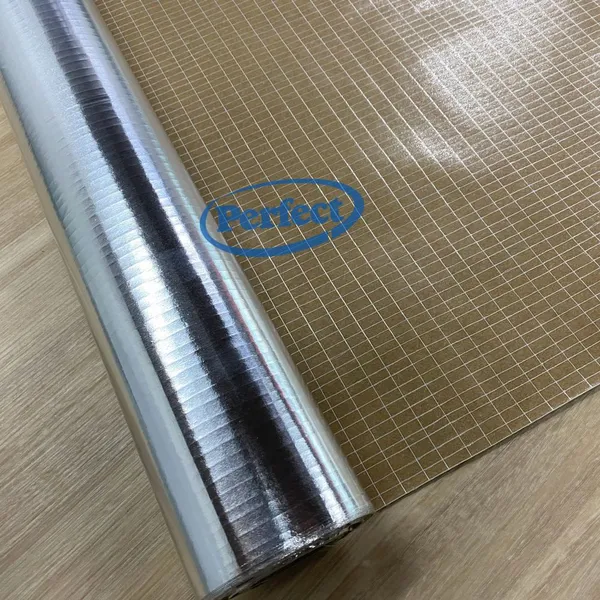
KSK Foil Facing Roll, Laminated Aluminum Foil + Scrim + Kraft Paper, Anti-Tear Thermal Barrier, Suitable for Commercial HVAC and Roof InsulationNegotiableMOQ: 500 Rolls

-
FSK Foil Scrim Kraft, FWF MSK MWV KSK Laminate Foils, Metalized PET MPET Vapor Barrier Facing for Insulation Glasswool RockwoolNegotiableMOQ: 100 Rolls
-
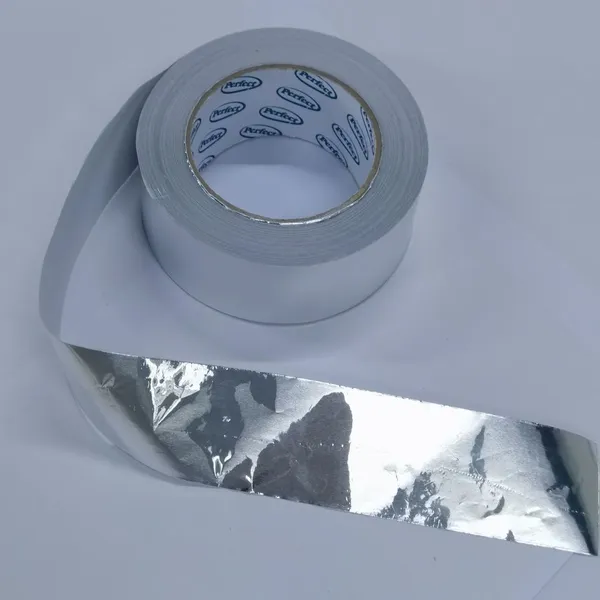
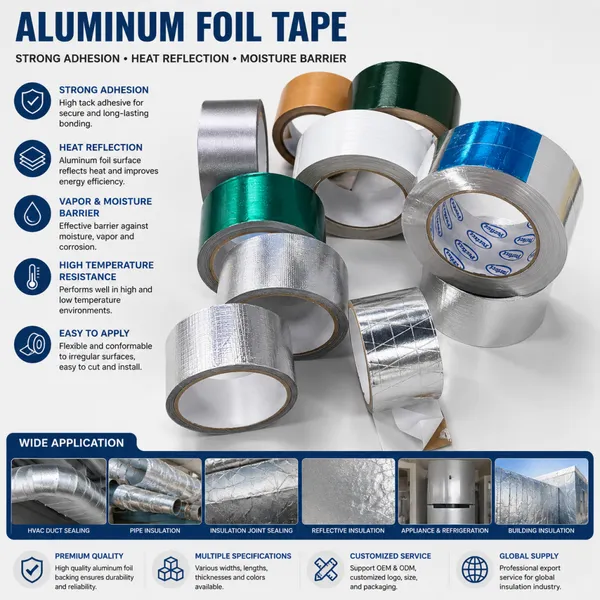
Reinforced Aluminium Foil Tape, Waterproof Anti-aging Tape, Widely Used in HVAC and Building Insulation ProjectsNegotiableMOQ: 500 Cartons
-
HVAC Aluminum Foil Sealing Tape, Strong Adhesion Heat Resistance for Pipe, Glass Wool and Rockwool InsulationNegotiableMOQ: 500 Cartons
-
Factory Supply Metalized PET MPET Laminate Foils, Aluminum Coated PET Film for Roof Wall InsulationNegotiableMOQ: 10000 Cubic Meters
-
Custom MPET Metalized PET Laminate Foils, VMPET Metallized Polyester Facing Film for Thermal InsulationNegotiableMOQ: 10000 Cubic Meters
-
Glass Wool Insulation Series, Glasswool With FSK/FWF/MSK/MWV/KSK Facing, Metalized PET Laminate Foils, Heat & Sound Insulation for Commercial BuildingNegotiableMOQ: 100 Rolls
-
Rockwool Blanket With Black Firber GlassNegotiableMOQ: 100 Rolls
-
Glasswool Insulation Blanket & Board, FSK FWF MSK MWV KSK Foil Laminate, MPET Metalized PET Faced Glass Wool for HVAC, Roof, Wall, Air DuctNegotiableMOQ: 100 Rolls
-
Rockwool Insulation Roll, FSK Foil Faced Mineral Wool for Building Thermal & Acoustic Insulation, Fire Resistant Roof Wall Insulation MaterialNegotiableMOQ: 100 Rolls
-
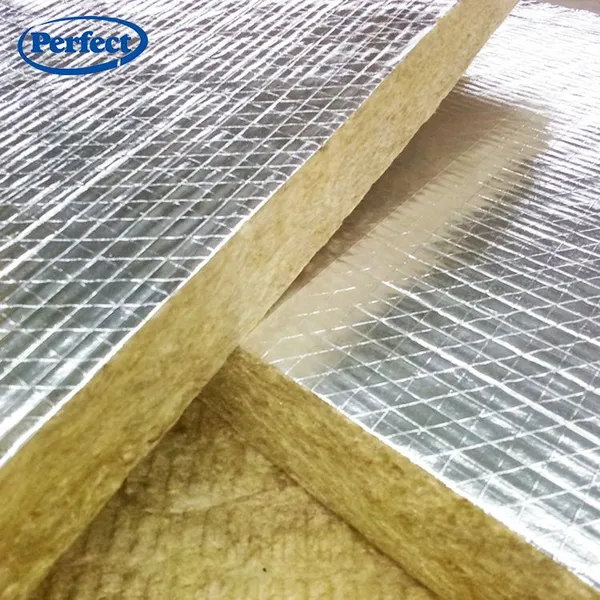
FWF MSK FSK Foil Laminated Rock Wool Glass Wool Blanket, Metalized PET Laminate Foils Faced Insulation for HVAC and ConstructionNegotiableMOQ: 100 Rolls
-
Rockwool Insulation Board, Mineral Wool Rock Wool Slab for Building Thermal & Fire Insulation, Soundproof Rockwool Panel for Roof, Wall, HVAC SystemNegotiableMOQ: 100 Rolls
-
Rockwool Pipe Section, Mineral Wool Rock Wool Tube Insulation, Fire & Heat Resistant Rockwool for Steam Pipes, Industrial Pipeline Insulation ProjectNegotiableMOQ: 100 Rolls
-
Rockwool Board With FSK FacingNegotiableMOQ: 100 Rolls
-
Rockwool Insulation Slab With FSK Facing, Fireproof Rock Wool Board, Thermal & Sound Insulation Rockwool for Roof, Wall and Ductwork ApplicationNegotiableMOQ: 100 Rolls
-
Fireproof Foil Laminated Glass Wool, Laminate Foils MPET Faced Glasswool Insulation Roll & Sheet for Roofing, Wall, Duct and Pipe InsulationNegotiableMOQ: 100 Rolls