
 Business License
Blog Categories

Laminated Foil Specifications: GSM Peel Strength and Fire Rating
A buyer in Western Europe once received two rolls of foil facing that met the same laminated foil gsm and behaved differently on the same duct line. The foil facing peel strength was the difference, and it was not on the certificate. One roll lifted at the edges within a season and the other did not.
A laminated foil specification is usually written as a set of figures, and three of them carry most of the performance: the grammage, the peel strength and the fire behaviour of the finished assembly. This article explains what a laminated foil gsm measures, how foil facing peel strength is tested and what it predicts, and how a foil laminate fire rating should be read against an assembly rather than against a product.
1. What a Laminated Foil GSM Measures
A laminated foil gsm is the mass per unit area of the finished laminate, expressed in grams per square metre, and it is a summary figure rather than a description.
The grammage includes the foil, the adhesive and the carrier together. It is a convenient figure for comparing rolls and for checking that a delivery matches the order, and it does not by itself say how the mass is distributed between the layers.
| Component | Contribution to GSM | What It Controls |
|---|---|---|
| Aluminium foil | Depends on foil thickness | Reflectivity, vapour resistance |
| Adhesive | A few grams per square metre | Bond strength |
| Carrier | Depends on material and weight | Tensile and tear strength |
| Surface layer | Where present | Printing, bonding |
Two laminates with the same laminated foil gsm can differ substantially in performance. A heavier carrier with a thinner foil and a lighter carrier with a thicker foil can reach the same total, and the two behave differently in every application that depends on reflectivity or on mechanical strength.
The grammage should therefore be specified together with the layer breakdown. A specification that names the gsm alone has described the weight of the product and left the distribution open, which is the figure that decides whether the laminate reflects well or holds a fastener.
2. Foil Facing Peel Strength and How It Is Tested
Foil facing peel strength is the force required to separate the foil from the carrier, and it is the figure that predicts whether the laminate holds together in service.
The test takes a strip of the laminate, separates the foil from the carrier at one end, and pulls the two apart at a controlled angle and speed. The force is recorded along the separation, and the result is the peel strength per unit width.
| Test Condition | What It Reveals |
|---|---|
| Peel in the flat | Adhesive strength on a sound area |
| Peel at the slit edge | Bond integrity where the cut exposed the interface |
| Peel after ageing | Bond durability under temperature or moisture |
| Peel after folding | Bond behaviour at a crease |
The condition matters as much as the force. A peel figure measured in the flat describes the bond on a sound, undisturbed area, and a laminate fails where it is disturbed, which is at the edge, at a fold or after ageing. A specification that quotes a peel figure without a condition has quoted a number that cannot be compared.
The angle and the speed of the test also have to be stated. A peel performed at a high angle gives a different figure from one at a low angle, and the two figures are not interchangeable. The test condition should be named so that a delivered batch can be compared against the reference on the same basis.
3. Foil Laminate Fire Rating and the Assembly
A foil laminate fire rating is a property of the assembly rather than of the laminate, and reading it against the product alone is the most common error in a specification.
The aluminium foil itself is non-combustible. The carrier and the adhesive decide the behaviour of the laminate under fire, and the insulation behind the laminate usually decides the behaviour of the assembly. A foil facing on a mineral wool board behaves differently from the same facing on a foam board, and the rating belongs to the assembly rather than to either layer.
| Element | Fire Contribution |
|---|---|
| Aluminium foil | Non-combustible |
| Carrier | Depends on material |
| Adhesive | Small mass, can contribute |
| Insulation behind | Usually the dominant factor |
| Assembly | Carries the rating |
The practical consequence is that a fire requirement should be written against the assembly and satisfied by evidence for that assembly. A laminate that carries a favourable classification on its own does not confer that classification on the wall, and a wall that has been tested with one facing does not automatically accept another.
Where the assembly has to be non-combustible, the insulation behind the facing is the element that usually decides whether that is achievable. The laminate should be chosen to suit the assembly rather than the assembly adjusted to suit the laminate.
4. Reading a Laminated Foil Specification
Reading a laminated foil specification means checking the figures against the application and confirming that each figure is quoted on a stated basis.
The grammage should come with the layer breakdown, so that the foil thickness and the carrier are both visible. The grammage alone does not define the product.
The peel strength should come with the test condition, including whether it was measured in the flat or at the edge and whether it was measured before or after ageing. Those conditions decide what the figure predicts.
The fire behaviour should come with a statement of the assembly, not of the laminate alone. Where the assembly has not been tested, the fire requirement should be met by the design of the build-up and confirmed by evidence for that build-up.
5. Case Notes on Foil Facing Peel Strength
A buyer in Western Europe received two rolls that met the same laminated foil gsm and behaved differently on a duct line. The roll that failed had a lower foil facing peel strength, measured at the slit edge, although both rolls passed the peel test in the flat. The supplier added the edge peel figure to the certificate, and the two rolls were then distinguishable on paper.
A second project specified a laminate with a favourable fire classification and used it on a foam board. The assembly did not meet the requirement, because the classification belonged to the laminate and the foam behind it was the deciding element. Replacing the foam with a mineral wool board met the requirement, and the laminate was unchanged.
Both cases point to the same conclusion. The figures that predict performance are the ones measured under the conditions the product will see, and a rating belongs to the assembly rather than to a layer within it.
6. Setting a Laminated Foil GSM Target
Setting a laminated foil gsm target means deciding the layer breakdown first and the total weight second, rather than the other way round.
Begin with the duty of the laminate. A reflective facing needs a foil thick enough to reflect and to resist vapour. A facing that will be fastened needs a carrier strong enough to hold the fastener. A facing that will be folded needs a carrier that resists a crease.
Then set the layers to meet those duties and read the total gsm from the result. A target gsm set first and then distributed across the layers produces a laminate that meets the weight and may not meet the duty.
The gsm still has a use as a checking figure. Once the build-up is fixed, the gsm is a convenient way to confirm that a delivered roll matches the reference, because it is quick to measure and it moves if any layer changes.
7. Specifying Peel Strength and Fire Behaviour
State the peel strength with the test condition, including the angle, the speed and whether the measurement is taken in the flat or at the edge.
State whether an ageing or a folding test is required, and state the conditions. A laminate that passes a peel test when new can fail after a number of temperature or moisture cycles, and the ageing test is the one that predicts that.
State the fire requirement against the assembly, and require evidence for that assembly rather than for the laminate alone. That keeps the insulation, the facing and the fixings within one tested build-up.
State the gsm with the layer breakdown, so that the delivery can be checked against the same figures that were specified rather than against a total weight alone.
8. Laminated Foil Specification Supplier Profile
United Perfect Building Materials, part of Jinan United Perfect Building Materials Corporation, produces laminated foil and quotes the laminated foil gsm with the layer breakdown for each grade. The company states the foil thickness, the carrier and the adhesive weight, which allows a specification to be written against the layers rather than against a total weight.
Jinan United Perfect Building Materials measures the foil laminate peel strength and states the test condition, including an edge measurement where the facing will be fastened or folded. The company holds retained samples by production batch, so a delivered roll can be checked against the reference used at approval. United Perfect can also advise on the build-up where a foil laminate fire rating has to be met by the assembly rather than by the facing.
9. FAQ About Laminated Foil Specifications
9.1 What does GSM mean for laminated foil?
It is the mass per unit area of the finished laminate in grams per square metre, and it covers the foil, the adhesive and the carrier together. It is useful for comparing rolls and for checking that a delivery matches an order, and it does not say how the mass is distributed between the layers. Two laminates with the same laminated foil gsm can behave differently if one has a thicker foil and a lighter carrier and the other is built the opposite way. The layer breakdown should be specified with the gsm.
9.2 How is peel strength measured?
A strip of laminate is taken, the foil is separated from the carrier at one end, and the two are pulled apart at a controlled angle and speed while the force is recorded along the separation. The result is the foil facing peel strength per unit width. The test condition matters as much as the force, because the figure differs between a high-angle and a low-angle peel and between a measurement in the flat and one at a slit edge. The condition should always be stated with the figure.
9.3 Does the foil fire rating apply to the whole wall?
No. A foil laminate fire rating applies to the laminate under the conditions in which it was tested, and the rating of an assembly belongs to the assembly. The aluminium foil is non-combustible, and the carrier, the adhesive and the insulation behind usually decide the behaviour of the wall. A wall that has been tested with one facing does not automatically accept another, so the fire requirement should be written against the assembly and supported by evidence for that build-up.
9.4 Can two laminates with the same GSM differ?
Yes, and they often do. The grammage is a total across the foil, the adhesive, the carrier and any surface layer, so the same total can be reached in more than one way. A thicker foil with a lighter carrier gives better reflectivity and vapour resistance and less mechanical strength, while the reverse gives the opposite. Because the grammage does not show the distribution, a specification that names it alone has described the weight of the product rather than its behaviour.
9.5 What peel strength should I specify?
It depends on how the facing will be handled rather than on a universal figure. A facing that is bonded to a board and never loaded needs less than one that is fastened through its surface or folded at a duct corner. The figure should be stated with the test condition and, where the facing will be fastened or folded, measured at the edge rather than in the flat. Where the facing will see a temperature or moisture cycle, an ageing test is more informative than a single peel figure.
Recently Posted
-
From Felt to Synthetic Underlayment in North American Roofing
November 3, 2026A roofing supplier in North America once kept both felt and synthetic underlayment on the same rack and watched the split shift wi Read More
-
QC Checklist for Synthetic Underlayment Before Shipment
November 3, 2026A buyer in North America once received a shipment in which the lengths on the packing list were correct and the rolls at the centr Read More
-
Synthetic Underlayment Slitting Winding and Roll Diameter Control
November 2, 2026A buyer in North America once rejected a container of synthetic underlayment because the rolls at one end had flattened into an ov Read More
-
Synthetic Underlayment for Tropical and Desert Roofing Projects
November 2, 2026Two projects in the same product family can fail for opposite reasons. A tropical roof underlayment in Southeast Asia can be ruine Read More

Contact Us
Recommended Products
-
 Glasswool Blanket With FSK FacingNegotiableMOQ: 100 Rolls
-
Rockwool Blanket With Wire MeshNegotiableMOQ: 100 Rolls
-
Rockwool Blanket With FSK FacingNegotiableMOQ: 100 Rolls
-
CE Certified Glass Wool Insulation, Glasswool Fiberglass, Low Thermal Conductivity, Noise Reduction for Wall, Roof and Industrial EquipmentNegotiableMOQ: 100 Rolls
-
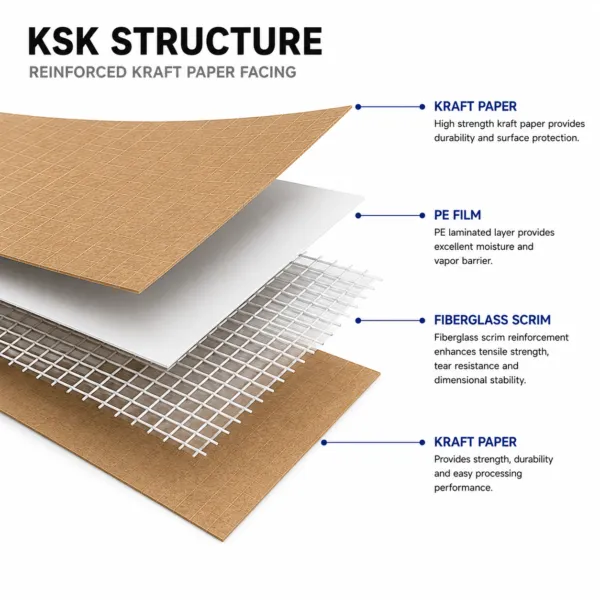
KSK Foil Facing Roll, Laminated Aluminum Foil + Scrim + Kraft Paper, Anti-Tear Thermal Barrier, Suitable for Commercial HVAC and Roof InsulationNegotiableMOQ: 500 Rolls

-
FSK Foil Scrim Kraft, FWF MSK MWV KSK Laminate Foils, Metalized PET MPET Vapor Barrier Facing for Insulation Glasswool RockwoolNegotiableMOQ: 100 Rolls
-
Reinforced Aluminium Foil Tape, Waterproof Anti-aging Tape, Widely Used in HVAC and Building Insulation ProjectsNegotiableMOQ: 500 Cartons
-
HVAC Aluminum Foil Sealing Tape, Strong Adhesion Heat Resistance for Pipe, Glass Wool and Rockwool InsulationNegotiableMOQ: 500 Cartons
-
Factory Supply Metalized PET MPET Laminate Foils, Aluminum Coated PET Film for Roof Wall InsulationNegotiableMOQ: 10000 Cubic Meters
-
Custom MPET Metalized PET Laminate Foils, VMPET Metallized Polyester Facing Film for Thermal InsulationNegotiableMOQ: 10000 Cubic Meters
-
Glass Wool Insulation Series, Glasswool With FSK/FWF/MSK/MWV/KSK Facing, Metalized PET Laminate Foils, Heat & Sound Insulation for Commercial BuildingNegotiableMOQ: 100 Rolls
-
Rockwool Blanket With Black Firber GlassNegotiableMOQ: 100 Rolls
-
Glasswool Insulation Blanket & Board, FSK FWF MSK MWV KSK Foil Laminate, MPET Metalized PET Faced Glass Wool for HVAC, Roof, Wall, Air DuctNegotiableMOQ: 100 Rolls
-
Rockwool Insulation Roll, FSK Foil Faced Mineral Wool for Building Thermal & Acoustic Insulation, Fire Resistant Roof Wall Insulation MaterialNegotiableMOQ: 100 Rolls
-
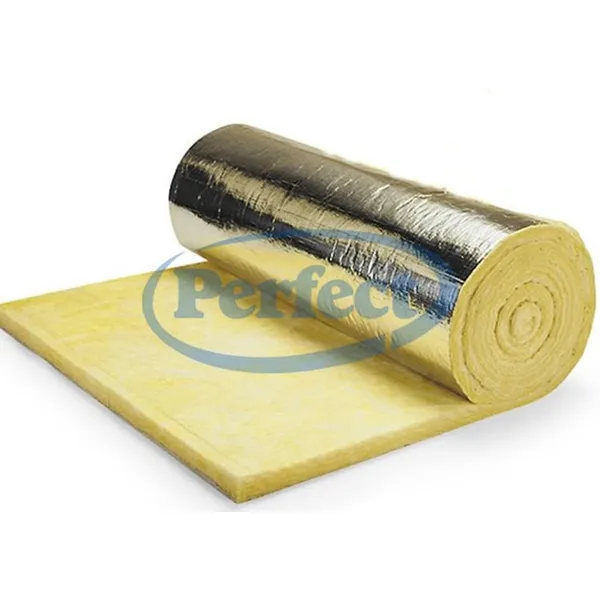
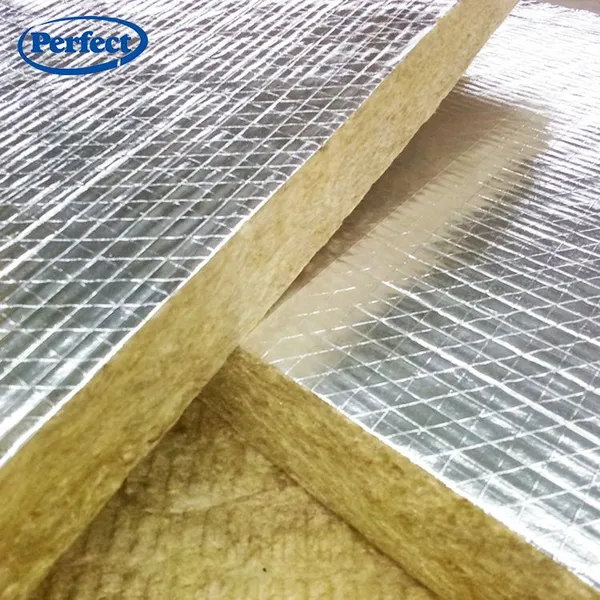
FWF MSK FSK Foil Laminated Rock Wool Glass Wool Blanket, Metalized PET Laminate Foils Faced Insulation for HVAC and ConstructionNegotiableMOQ: 100 Rolls
-
Rockwool Insulation Board, Mineral Wool Rock Wool Slab for Building Thermal & Fire Insulation, Soundproof Rockwool Panel for Roof, Wall, HVAC SystemNegotiableMOQ: 100 Rolls
-
Rockwool Pipe Section, Mineral Wool Rock Wool Tube Insulation, Fire & Heat Resistant Rockwool for Steam Pipes, Industrial Pipeline Insulation ProjectNegotiableMOQ: 100 Rolls
-
Rockwool Board With FSK FacingNegotiableMOQ: 100 Rolls
-
Rockwool Insulation Slab With FSK Facing, Fireproof Rock Wool Board, Thermal & Sound Insulation Rockwool for Roof, Wall and Ductwork ApplicationNegotiableMOQ: 100 Rolls
-
Fireproof Foil Laminated Glass Wool, Laminate Foils MPET Faced Glasswool Insulation Roll & Sheet for Roofing, Wall, Duct and Pipe InsulationNegotiableMOQ: 100 Rolls