
 Business License
Blog Categories

Laminated Foil Sarking for Hot and Humid Roof and Wall Systems
A builder in Southern Europe once opened a roof space that had been closed for eight years and found the underside of the tiles stained with condensation, while the foil above the insulation was bright and dry. The vapour had moved upward from the rooms below, and the foil had stopped it at the point where the temperature dropped.
Hot and humid conditions place a specific demand on a roof and wall assembly, and it is the opposite of the demand in a cold climate. The vapour drive runs inward and upward rather than outward, and a roof sarking foil has to resist that drive while reflecting the radiant heat that reaches the roof from outside. This article covers how a roof sarking foil and a wall sarking laminate are used in hot and humid conditions, what a humid climate foil facing has to provide, and how to specify it.
1. Roof Sarking Foil in Hot and Humid Conditions
A roof sarking foil is a laminated foil sheet installed beneath the roof covering, and in a hot and humid climate it carries two duties at once.
The first duty is as a reflective layer. Radiant heat from the roof covering is reflected back into the roof space rather than absorbed and re-radiated downward into the rooms. That reflection reduces the heat gain through the roof, which is the dominant load in a hot climate.
The second duty is as a vapour control layer. In humid conditions the vapour drive runs from the warm, moist outside toward the cooler inside, or from the rooms below upward into the roof space. A foil facing with low vapour permeability resists that drive at the point where the temperature falls and condensation would begin.
| Duty | Function | Benefit |
|---|---|---|
| Reflective | Reflects radiant heat | Lower heat gain through the roof |
| Vapour control | Resists vapour movement | Less condensation in the roof space |
| Water resistance | Sheds any water that passes the covering | Protects the structure |
| Air control | Reduces leakage at laps | Lower cooling demand |
The reflective and vapour duties are both served by the aluminium layer, which is why a foil sarking suits hot climates. A fibrous underlayment can shed water, and it cannot reflect radiant heat or resist vapour in the same way.
2. Wall Sarking Laminate for Humid Climates
A wall sarking laminate performs the same set of duties on a wall, and the position of the layer follows the vapour drive rather than a fixed rule.
In a hot and humid climate with strong air conditioning, the vapour drive runs from the humid outside toward the cooler inside. The vapour control layer then belongs on the outside of the frame, in front of the insulation, so that the vapour is stopped before it reaches the point where the temperature falls below its dew point.
Where the building is not air conditioned and the interior is cooler and drier than the exterior, the same placement still holds, because the drive runs inward. That is the reverse of a cold climate, where the vapour control layer sits on the warm side and the outer layer stays permeable.
Getting this placement wrong produces the failure that the case above describes. A vapour control layer placed on the inner face in a hot, humid, air-conditioned building traps the inward vapour inside the cooled space and holds it against a cold surface, which is where condensation then forms.
3. Reflective Performance of a Humid Climate Foil Facing
A humid climate foil facing earns its place first through reflectivity, and the figure depends on the surface rather than on the thickness of the sheet.
A polished aluminium surface reflects most of the radiant heat that reaches it, as long as the surface stays bright and clean. A dull or oxidised surface reflects less, and a dusty one less again. The reflective performance therefore depends on the surface condition at the time it is needed, not at the time of installation alone.
| Surface Condition | Effect on Reflectivity |
|---|---|
| Bright, clean aluminium | High reflection |
| Dusted during construction | Reduced reflection |
| Oxidised over time | Reduced reflection |
| Facing an air space | Reflectivity useful |
| In contact with another material | Reflectivity ineffective |
The facing needs an air space to work. Radiant heat is reflected at a surface, and a surface in contact with another material conducts rather than reflects. Where a foil is pressed against a batt or a deck with no air space, the reflective performance is lost and the sheet serves as a vapour and water barrier alone.
That air space is a design requirement, not an installation detail. A foil that is installed correctly and then compressed against the structure by insulation installed later has lost its reflective function, and the heat gain returns.
4. Vapour Resistance in a Wall Sarking Laminate
Vapour resistance is the second function of a wall sarking laminate, and it is the one that prevents condensation in the frame.
A foil laminate has a high vapour resistance because the aluminium layer is essentially impermeable. That is the property that lets it serve as a vapour control layer, and it is also the property that makes its position critical. A layer with high vapour resistance on the wrong side of the insulation traps moisture rather than excluding it.
The vapour control layer also has to be continuous to work. A foil with an unsealed lap at the ridge or at a wall junction allows vapour to pass at exactly the point where the geometry makes the leak most likely, and the condensation then appears at that detail.
Where the assembly has to dry, the build-up should provide a path. In a hot and humid climate the inner face is usually the cool side, and a slightly permeable internal lining allows any moisture that enters the frame to dry inward rather than accumulate.
5. Metal Roofing and a Roof Sarking Foil
Metal roofing is common in hot climates, and a roof sarking foil is used under metal for reasons that include thermal performance and noise as well as water resistance.
Metal conducts heat readily and reaches a high surface temperature in strong sun. Without a reflective layer beneath it, that heat radiates into the roof space and then into the rooms. A foil facing the air space below the metal reflects much of it back, and the reduction in heat gain is usually larger than the effect of adding more insulation of the same thickness.
A foil also reduces the noise of rain and hail on a metal roof, by adding a layer that breaks the direct contact between the metal and the structure. And it collects any condensation that forms on the underside of the metal in cool conditions, which would otherwise drip onto the ceiling.
| Benefit Under Metal Roofing | Mechanism |
|---|---|
| Lower heat gain | Reflection at the air space |
| Less rain noise | Decoupling of metal and structure |
| Condensation control | Collection and drainage of drips |
| Water resistance | Secondary layer under the metal |
For the noise benefit to appear, the foil must not be fixed rigidly to both the metal and the structure, because that restores the direct path. The sheet should be laid so that it interrupts the contact rather than bridging it.
6. Case Notes on a Humid Climate Foil Facing
A builder in Southern Europe wrapped a roof with a roof sarking foil and then increased the thickness of the insulation above it without adjusting the air space. The reflective performance fell and the roof space ran hotter than the earlier design. Moving the insulation to leave the air space restored the performance, and the foil itself was unchanged.
A second project in the Mid East used a wall sarking laminate on the inner face of a frame in an air-conditioned building. Condensation appeared on the inner lining within a season. The laminate was repositioned to the outer face of the frame, in front of the insulation, and the condensation stopped. The material was correct and the layer was on the wrong side.
Both cases point to the same conclusion. The foil works when it faces an air space and sits on the correct side of the vapour drive, and those two conditions are set by the design rather than by the product.
7. Specifying a Roof Sarking Foil
State the position of the foil in the build-up and the side of the insulation it sits on. That single item decides whether the layer controls vapour or traps it.
State the air space and hold it in the installation. A reflective layer without an air space performs as a plain barrier, and the thermal benefit is not delivered.
State the lap treatment and require the laps to be sealed where the foil is the vapour control layer. An unsealed lap at a ridge or a wall junction is the most common point of failure.
State the surface requirement and protect the foil during construction. Dust and contact with other materials reduce the reflectivity that the design relies on.
8. Laminated Foil Sarking Supplier Profile
United Perfect Building Materials, part of Jinan United Perfect Building Materials Corporation, produces laminated foil sarking for roof and wall systems and supplies buyers in Southern and Eastern Europe, the Mid East and other hot regions. The company quotes the foil thickness, the substrate and the vapour resistance of each grade, which allows a roof sarking foil or a wall sarking laminate to be specified against stated figures.
Jinan United Perfect Building Materials holds retained samples by production batch, so a delivered roll can be checked against the reference used at approval. Buyers specifying a humid climate foil facing for a project that mixes metal roofing and masonry walls can order the appropriate grades from one source together with the sealing tapes. United Perfect can also confirm the vapour resistance figure in writing where the placement of the layer is critical.
9. FAQ About Laminated Foil Sarking
9.1 Where should sarking go in a hot climate?
In a hot and humid climate the foil generally belongs on the outer side of the frame, immediately behind the cladding and in front of the insulation, so that vapour moving inward is stopped before it reaches a surface below its dew point. That is the reverse of a cold climate, where the vapour control layer sits on the warm inner face. The position should follow the direction of the vapour drive for the specific building, and air conditioning changes that direction, so the placement is decided per project rather than by a general rule.
9.2 Does foil sarking need an air space?
Yes, if the reflective performance is to be used. Radiant heat is reflected at a surface, and a surface in contact with another material conducts heat rather than reflecting it. A roof sarking foil pressed against a deck or a batt with no air space still works as a vapour and water barrier, and its reflective contribution is lost. The air space should be treated as a design requirement that is checked at installation, because insulation added later can close it without anyone intending to.
9.3 What vapour resistance should the foil have?
A laminated foil with an intact aluminium layer has a high vapour resistance, which is what allows it to act as a vapour control layer. The exact figure depends on the foil thickness and the substrate, and it should be quoted by the supplier rather than assumed. Where the foil is the vapour control layer, the resistance has to be high enough to control the drive and the layer has to be continuous. Where the assembly needs to dry, the rest of the build-up should provide a path.
9.4 Can foil sarking replace roof insulation?
No, and the two do different jobs. Insulation resists conductive heat flow through the roof, while a foil facing reflects radiant heat across an air space. In a hot climate the radiant load is a large share of the total, so a reflective layer makes a disproportionate contribution for its thickness, and it does not remove the need for insulation. The two are specified together, and the assembly should be assessed as a whole rather than as either layer alone.
9.5 Does sarking help under a metal roof?
Yes, in several ways at once. A foil facing reflects radiant heat from the hot metal back into the air space and lowers the heat gain into the roof space. It also collects condensation that forms on the underside of the metal in cool conditions, so drips do not reach the ceiling, and it breaks the direct contact that carries rain and hail noise into the structure. The metal still needs its own fixing and weatherproofing, and the foil is a second line rather than a replacement.
Recently Posted
-
From Felt to Synthetic Underlayment in North American Roofing
November 3, 2026A roofing supplier in North America once kept both felt and synthetic underlayment on the same rack and watched the split shift wi Read More
-
QC Checklist for Synthetic Underlayment Before Shipment
November 3, 2026A buyer in North America once received a shipment in which the lengths on the packing list were correct and the rolls at the centr Read More
-
Synthetic Underlayment Slitting Winding and Roll Diameter Control
November 2, 2026A buyer in North America once rejected a container of synthetic underlayment because the rolls at one end had flattened into an ov Read More
-
Synthetic Underlayment for Tropical and Desert Roofing Projects
November 2, 2026Two projects in the same product family can fail for opposite reasons. A tropical roof underlayment in Southeast Asia can be ruine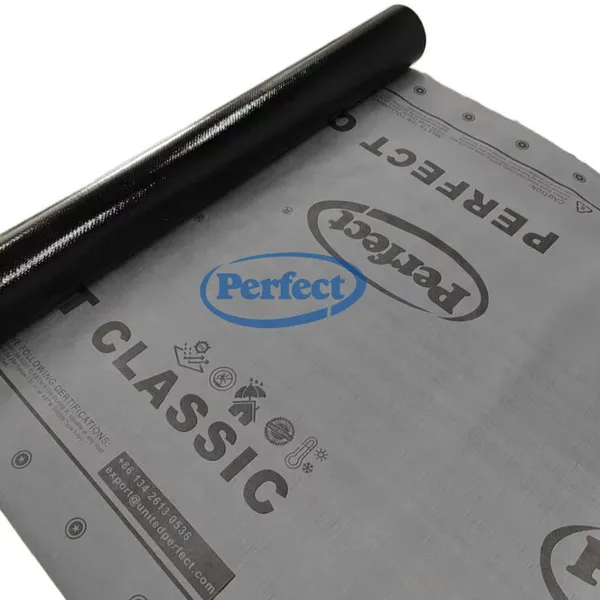 Read More

Contact Us
Recommended Products
-
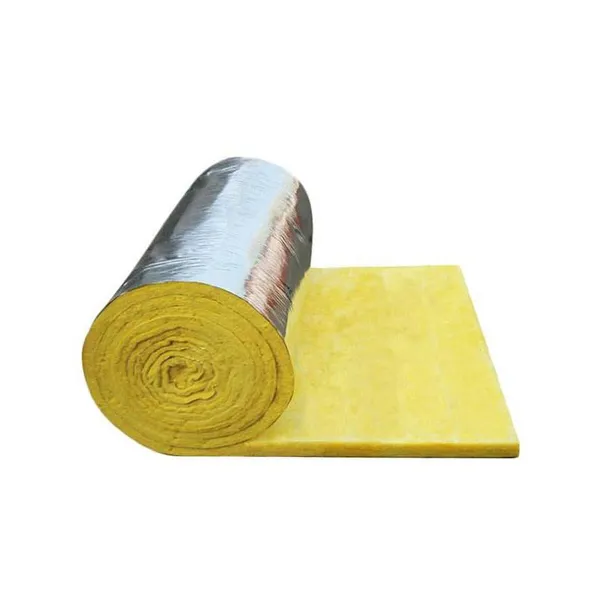
 Glasswool Blanket With FSK FacingNegotiableMOQ: 100 Rolls
-
Rockwool Blanket With Wire MeshNegotiableMOQ: 100 Rolls
-
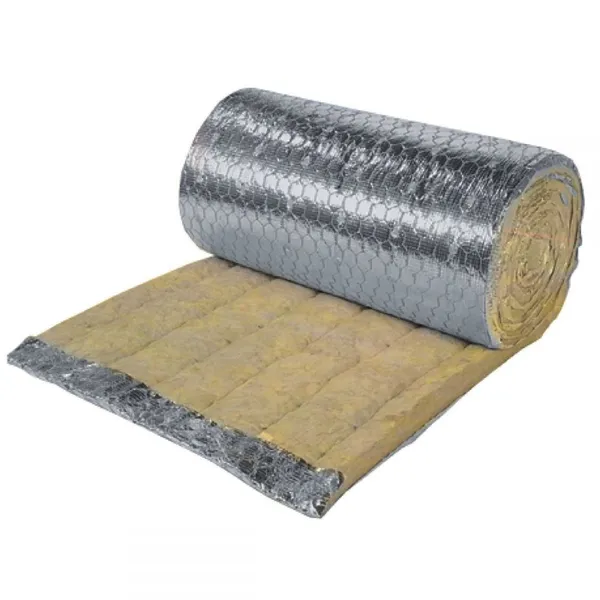
Rockwool Blanket With FSK FacingNegotiableMOQ: 100 Rolls
-
CE Certified Glass Wool Insulation, Glasswool Fiberglass, Low Thermal Conductivity, Noise Reduction for Wall, Roof and Industrial EquipmentNegotiableMOQ: 100 Rolls
-
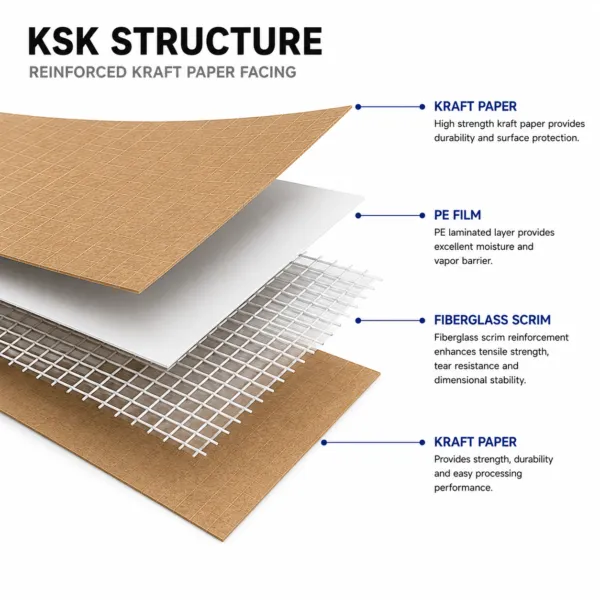
KSK Foil Facing Roll, Laminated Aluminum Foil + Scrim + Kraft Paper, Anti-Tear Thermal Barrier, Suitable for Commercial HVAC and Roof InsulationNegotiableMOQ: 500 Rolls
-
FSK Foil Scrim Kraft, FWF MSK MWV KSK Laminate Foils, Metalized PET MPET Vapor Barrier Facing for Insulation Glasswool RockwoolNegotiableMOQ: 100 Rolls
-
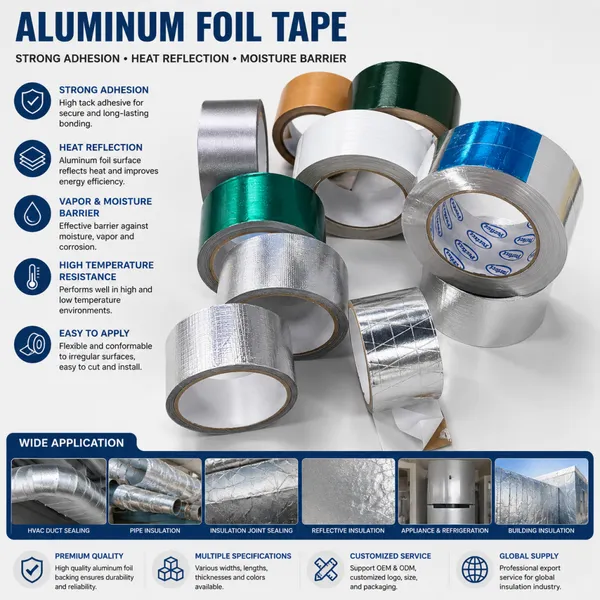
Reinforced Aluminium Foil Tape, Waterproof Anti-aging Tape, Widely Used in HVAC and Building Insulation ProjectsNegotiableMOQ: 500 Cartons
-
HVAC Aluminum Foil Sealing Tape, Strong Adhesion Heat Resistance for Pipe, Glass Wool and Rockwool InsulationNegotiableMOQ: 500 Cartons
-
Factory Supply Metalized PET MPET Laminate Foils, Aluminum Coated PET Film for Roof Wall InsulationNegotiableMOQ: 10000 Cubic Meters
-
Custom MPET Metalized PET Laminate Foils, VMPET Metallized Polyester Facing Film for Thermal InsulationNegotiableMOQ: 10000 Cubic Meters
-
Glass Wool Insulation Series, Glasswool With FSK/FWF/MSK/MWV/KSK Facing, Metalized PET Laminate Foils, Heat & Sound Insulation for Commercial BuildingNegotiableMOQ: 100 Rolls
-
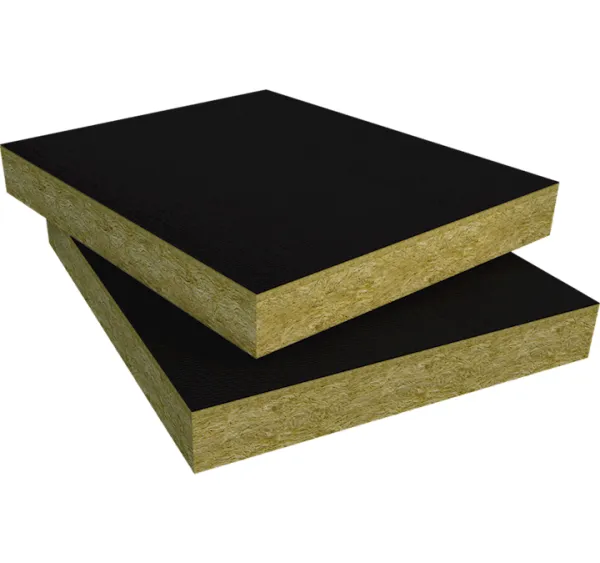
Rockwool Blanket With Black Firber GlassNegotiableMOQ: 100 Rolls
-
Glasswool Insulation Blanket & Board, FSK FWF MSK MWV KSK Foil Laminate, MPET Metalized PET Faced Glass Wool for HVAC, Roof, Wall, Air DuctNegotiableMOQ: 100 Rolls
-
Rockwool Insulation Roll, FSK Foil Faced Mineral Wool for Building Thermal & Acoustic Insulation, Fire Resistant Roof Wall Insulation MaterialNegotiableMOQ: 100 Rolls
-
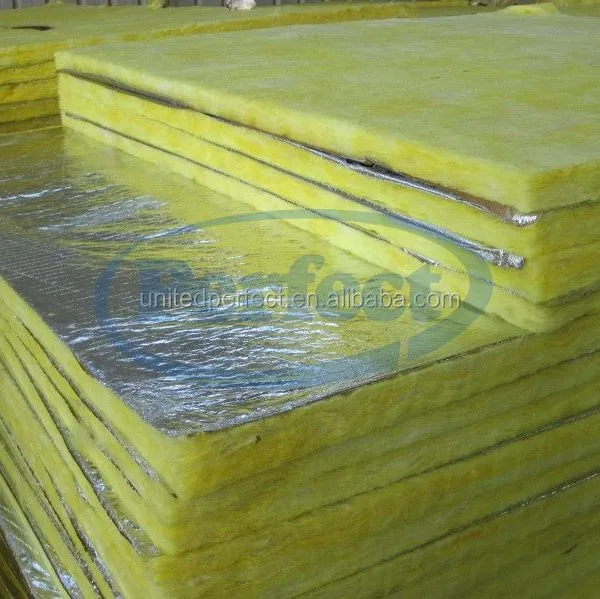
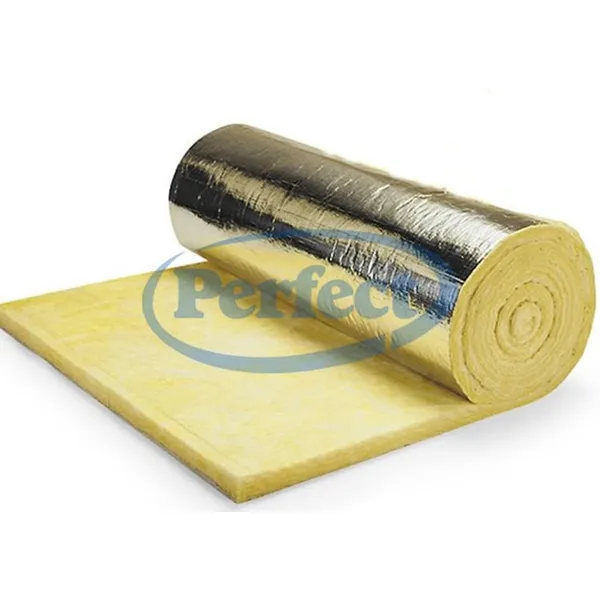
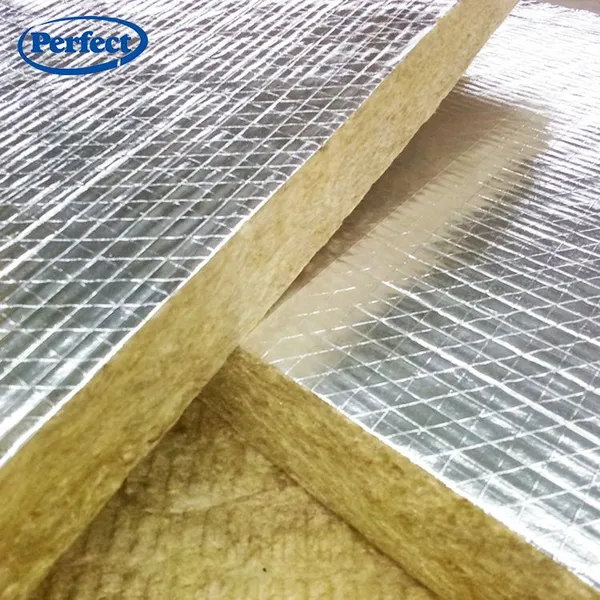
FWF MSK FSK Foil Laminated Rock Wool Glass Wool Blanket, Metalized PET Laminate Foils Faced Insulation for HVAC and ConstructionNegotiableMOQ: 100 Rolls
-
Rockwool Insulation Board, Mineral Wool Rock Wool Slab for Building Thermal & Fire Insulation, Soundproof Rockwool Panel for Roof, Wall, HVAC SystemNegotiableMOQ: 100 Rolls
-
Rockwool Pipe Section, Mineral Wool Rock Wool Tube Insulation, Fire & Heat Resistant Rockwool for Steam Pipes, Industrial Pipeline Insulation ProjectNegotiableMOQ: 100 Rolls
-
Rockwool Board With FSK FacingNegotiableMOQ: 100 Rolls
-
Rockwool Insulation Slab With FSK Facing, Fireproof Rock Wool Board, Thermal & Sound Insulation Rockwool for Roof, Wall and Ductwork ApplicationNegotiableMOQ: 100 Rolls
-
Fireproof Foil Laminated Glass Wool, Laminate Foils MPET Faced Glasswool Insulation Roll & Sheet for Roofing, Wall, Duct and Pipe InsulationNegotiableMOQ: 100 Rolls