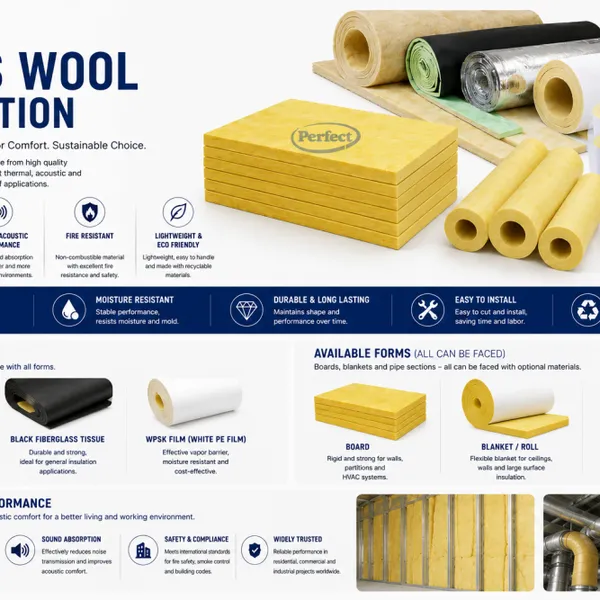

 Business License
Blog Categories

What Is Rockwool Pipe Insulation and Where Is It Applied
A plant engineer in Eastern Europe once replaced a run of pipe insulation with a flat blanket wrapped around the pipe and found the thermal performance below the original. The wrapping left a gap at the seam, and the gap allowed air to move along the pipe beneath the insulation.
Rockwool pipe insulation is a moulded product rather than a flat one, and the moulding is what makes it work on a round service. A mineral wool pipe covering follows the pipe diameter on its inner face and the insulation thickness on its outer face, and a fit that follows the pipe leaves no gap for air to move. This article covers what the product is, how it is made and installed, and where it is applied.
1. What Rockwool Pipe Insulation Is
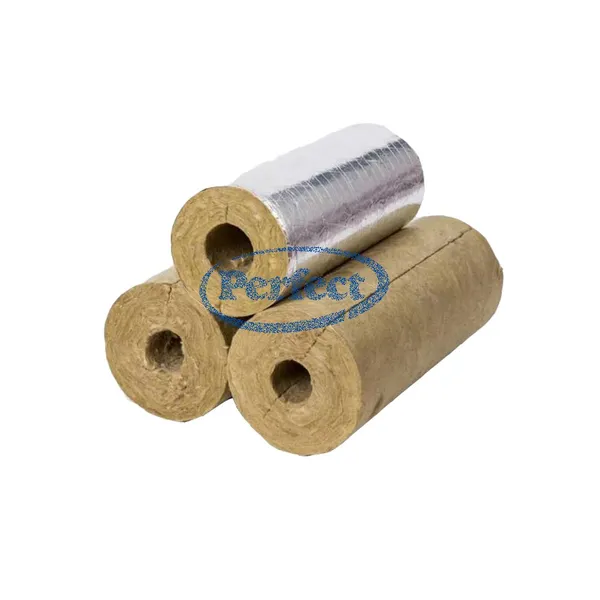
Rockwool pipe insulation is a moulded mineral wool section shaped to fit around a pipe, supplied with a slit along its length so that it can be opened and closed around the service.
The section is produced by forming basalt fibres, applying a binder and curing the section in a curved mould. The inner face follows the pipe's outside diameter, and the outer face is concentric with it, so the wall thickness is uniform around the circumference.
| Property | Description |
|---|---|
| Material | Mineral wool from melted basalt |
| Form | Moulded half-round or split section |
| Inner face | Matched to the pipe diameter |
| Outer face | Concentric, uniform thickness |
| Fire behaviour | Non-combustible |
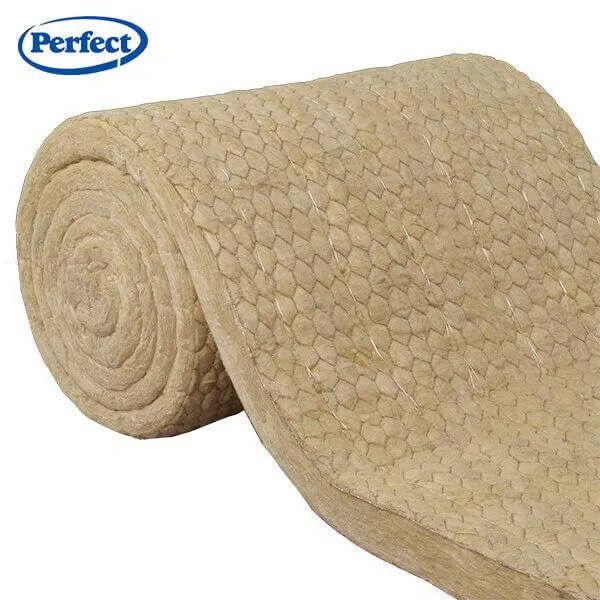
The moulded shape is the property that distinguishes the product from a flat blanket or a board. A flat product wrapped around a pipe has to be cut, folded and fitted piece by piece, and the folds leave gaps at the seam and at the ends. A moulded section closes around the pipe with a single seam, and the seam can be closed tightly.
The material is the same mineral wool used in boards and blankets, so the fire behaviour, the thermal conductivity and the moisture behaviour carry over. What changes is the geometry that the product is made in.
2. Mineral Wool Pipe Covering Construction and Fit
A mineral wool pipe covering is judged on how well it fits, because a gap between the insulation and the pipe is a convection path that reduces the performance of the whole run.
The section is supplied as a split piece with a hinge or a slit on one side and a slit on the other. The two halves are opened, placed around the pipe and closed so that the facing edges meet.
| Form | Fit Method | Typical Pipe Size |
|---|---|---|
| Half-round | Two pieces closed together | Small to medium |
| Split section | Opened and closed at a hinge | Medium to large |
| Segmental | Several pieces around the circumference | Large |
| Bevelled section | Cut to an elbow or a tee | Fittings |
The section should be sized to the pipe rather than to a nominal size, because pipes of the same nominal size vary with the material and the wall thickness. A section ordered to a nominal size can leave a small gap on a pipe that is at the upper end of its tolerance.
The section should be fitted so that it is slightly compressed when closed. A compressed section closes the slit and stays tight against the pipe, and a loose section opens at the slit as soon as the pipe expands or contracts.
3. Pipe Section Insulation Thermal Behaviour
Pipe section insulation performs differently from flat insulation on the same pipe, and the reason is the geometry rather than the material.
On a pipe, the heat flows radially outward through the insulation, and the surface area increases with the radius. That increase means the outer surface of a thick insulation is larger than the pipe, so the outer surface temperature is lower than it would be for a flat surface carrying the same heat flow.
| Factor | Effect |
|---|---|
| Radial heat flow | Heat spreads over a larger area outward |
| Increasing area | Outer surface cooler than flat |
| Gap at the pipe | Convection path, performance falls |
| Open end | Air moves along the insulation |
The gap at the pipe is the failure that matters most. Air in a gap between the insulation and the pipe can circulate along the pipe, carrying heat around the insulation rather than through it. A gap of a few millimetres on a long run can reduce the effective performance substantially.
The open end is the second failure. A run whose end is left open allows air to move along the annular space between the insulation and the pipe, and the movement carries heat away from the pipe for the length of the run. The ends should be closed with the same care as the field.
4. Where Rockwool Pipe Insulation Is Applied
Rockwool pipe insulation is applied wherever a round service needs thermal insulation, and the applications divide by the temperature and the fire requirement.
Hot service piping is the largest application. A pipe carrying hot water, steam or a process fluid loses heat along its length, and the insulation reduces that loss and protects personnel from a hot surface.
| Application | Requirement |
|---|---|
| Hot water and heating | Thermal, surface temperature |
| Steam and condensate | High temperature, fire safety |
| Process piping | Process temperature control |
| Chilled and cold pipes | Condensation control |
| Ductwork | Thermal, acoustic, fire |
| Fire-rated runs | Non-combustible, integrity |
Cold service piping is the second group, and it asks for a different detail rather than a different material. A chilled pipe needs the insulation to keep the pipe surface above the dew point so that condensation does not form, and the insulation has to be vapour-tight on the outside so that moist air cannot reach the cold pipe.
Fire-rated runs are the third group, where the non-combustible property matters as much as the thermal one. A pipe passing through a fire compartment is protected by the insulation, and a mineral wool that holds its structure is the material that maintains the protection.
5. Case Notes on Mineral Wool Pipe Covering
A plant engineer in Eastern Europe replaced a run of pipe insulation with a flat blanket wrapped around the pipe and found the performance below the original. The wrapping left a gap at the seam, and air had circulated along the pipe beneath the insulation. Replacing it with a moulded mineral wool pipe covering closed the gap and restored the performance, and the material was the same.
A second project fitted pipe sections to a chilled line without sealing the outer face. Condensation formed on the outer surface and the insulation became wet. Sealing the outer face with a vapour-tight jacket stopped the condensation, and the sections were unchanged. The material was correct and the vapour control was missing.
Both cases show the same point. The moulded fit and the vapour control are the two properties that decide whether a pipe insulation performs, and neither follows from the material alone.
6. Installing Pipe Section Insulation
Installing pipe section insulation follows a sequence, and the details at the joints and the ends decide the result.
The sections are opened, placed around the pipe and closed so that the facing edges meet. The closure should be secured with the tape, the wire or the banding that the specification calls for, at the spacing the specification gives.
The joints between sections should be butted tightly and staggered where the pipe passes through a wall or a support. Each joint is a place where a gap can open, and a series of small gaps reduces the performance of the run.
The ends of the run and the terminations should be closed. An end left open allows air to move along the annular space, and the movement carries heat away from the pipe for the whole length of the run. The termination should be sealed with the same care as a joint.
7. Specifying a Rockwool Pipe Insulation
State the pipe outside diameter rather than the nominal size, so that the section is matched to the pipe that will be insulated.
State the insulation thickness and the density together, and state the service temperature. A density that suits a chilled water line differs from one that suits a steam line, and the two should not be treated as interchangeable.
State the closure method and the spacing, and state the finish. An aluminium or a foil finish protects the insulation and, on a cold line, provides the vapour control that keeps the pipe dry.
State the treatment of the joints, the ends and the fittings. Those are the details where a pipe insulation succeeds or fails, and they should be specified rather than left to the installer.
8. Rockwool Pipe Insulation Supplier Profile
United Perfect Building Materials, part of Jinan United Perfect Building Materials Corporation, supplies mineral wool in board, blanket and pipe section forms and quotes the form, density and thickness of each grade. The company states the pipe diameters that each section size covers, which allows a rockwool pipe insulation to be matched to the pipe rather than to a nominal size.
Jinan United Perfect Building Materials holds retained samples by production batch, so a delivered pack can be checked against the reference used at approval. Buyers specifying a mineral wool pipe covering for a project that mixes hot and cold runs can order the appropriate grades from one source, and can confirm the density and the thickness in writing. United Perfect can also advise on the finish where a pipe section insulation has to control condensation on a chilled line.
9. FAQ About Rockwool Pipe Insulation
9.1 What is rockwool pipe insulation made from?
It is made from basalt rock that is melted and spun into fibres, bonded with a resin and cured in a curved mould. The result is a mineral wool section with the same material properties as a rockwool board and a different geometry, because it is shaped to follow a pipe. The inner face matches the pipe's outside diameter and the outer face is concentric, so the wall thickness is uniform. The product is non-combustible and it holds its structure at high temperature.
9.2 How is it fixed to the pipe?
The section is opened at the slit, placed around the pipe and closed so that the facing edges meet, and the closure is then secured with tape, wire or banding at the spacing the specification gives. The section should be fitted so that it is slightly compressed when closed, which closes the slit and keeps it tight against the pipe. The joints between sections are butted tightly, and the ends of the run are closed rather than left open, because an open end allows air to move along the annular space.
9.3 Why is a moulded section better than a blanket?
Because it fits the pipe without a gap. A flat blanket wrapped around a pipe has to be cut and folded, and the folds leave gaps at the seam and at the ends. A gap between the insulation and the pipe allows air to circulate along the pipe, carrying heat around the insulation rather than through it, which reduces the effective performance of the whole run. A pipe section insulation is moulded so that the inner face follows the pipe diameter and closes with a single seam that can be made tight.
9.4 Can it be used on cold pipes?
Yes, with a detail that controls vapour rather than a different material. A chilled pipe needs the insulation to keep the pipe surface above the dew point so that condensation does not form, and the outer face has to be vapour-tight so that moist air cannot reach the cold pipe. A mineral wool section performs the thermal duty and the vapour control comes from the jacket or the finish applied over it. Without the vapour-tight outer layer, condensation forms and the insulation becomes wet.
9.5 Does it need a finish?
It usually takes one, and the requirement follows from the service. An aluminium or a foil finish protects the insulation from mechanical damage and from moisture, and on a cold line it provides the vapour control that keeps the pipe dry. On a hot line the finish protects the insulation and reduces the surface temperature that a person could touch. The finish should be specified with the section rather than chosen after it, because the two are installed together and the vapour control depends on the finish being continuous.
Recently Posted
-
From Felt to Synthetic Underlayment in North American Roofing
November 3, 2026A roofing supplier in North America once kept both felt and synthetic underlayment on the same rack and watched the split shift wi Read More
-
QC Checklist for Synthetic Underlayment Before Shipment
November 3, 2026A buyer in North America once received a shipment in which the lengths on the packing list were correct and the rolls at the centr Read More
-
Synthetic Underlayment Slitting Winding and Roll Diameter Control
November 2, 2026A buyer in North America once rejected a container of synthetic underlayment because the rolls at one end had flattened into an ov Read More
-
Synthetic Underlayment for Tropical and Desert Roofing Projects
November 2, 2026Two projects in the same product family can fail for opposite reasons. A tropical roof underlayment in Southeast Asia can be ruine Read More

Contact Us
Recommended Products
-
 Glasswool Blanket With FSK FacingNegotiableMOQ: 100 Rolls
-
Rockwool Blanket With Wire MeshNegotiableMOQ: 100 Rolls
-
Rockwool Blanket With FSK FacingNegotiableMOQ: 100 Rolls
-
CE Certified Glass Wool Insulation, Glasswool Fiberglass, Low Thermal Conductivity, Noise Reduction for Wall, Roof and Industrial EquipmentNegotiableMOQ: 100 Rolls
-
KSK Foil Facing Roll, Laminated Aluminum Foil + Scrim + Kraft Paper, Anti-Tear Thermal Barrier, Suitable for Commercial HVAC and Roof InsulationNegotiableMOQ: 500 Rolls
-
FSK Foil Scrim Kraft, FWF MSK MWV KSK Laminate Foils, Metalized PET MPET Vapor Barrier Facing for Insulation Glasswool RockwoolNegotiableMOQ: 100 Rolls
-
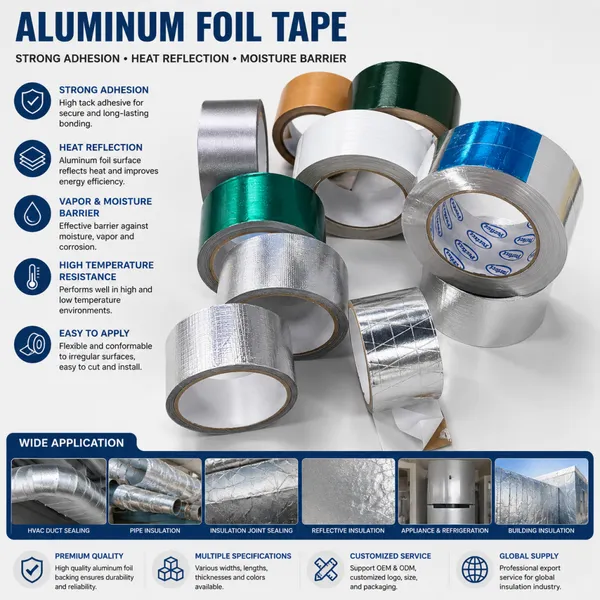
Reinforced Aluminium Foil Tape, Waterproof Anti-aging Tape, Widely Used in HVAC and Building Insulation ProjectsNegotiableMOQ: 500 Cartons
-
HVAC Aluminum Foil Sealing Tape, Strong Adhesion Heat Resistance for Pipe, Glass Wool and Rockwool InsulationNegotiableMOQ: 500 Cartons
-
Factory Supply Metalized PET MPET Laminate Foils, Aluminum Coated PET Film for Roof Wall InsulationNegotiableMOQ: 10000 Cubic Meters
-
Custom MPET Metalized PET Laminate Foils, VMPET Metallized Polyester Facing Film for Thermal InsulationNegotiableMOQ: 10000 Cubic Meters
-
Glass Wool Insulation Series, Glasswool With FSK/FWF/MSK/MWV/KSK Facing, Metalized PET Laminate Foils, Heat & Sound Insulation for Commercial BuildingNegotiableMOQ: 100 Rolls
-
Rockwool Blanket With Black Firber GlassNegotiableMOQ: 100 Rolls
-
Glasswool Insulation Blanket & Board, FSK FWF MSK MWV KSK Foil Laminate, MPET Metalized PET Faced Glass Wool for HVAC, Roof, Wall, Air DuctNegotiableMOQ: 100 Rolls
-
Rockwool Insulation Roll, FSK Foil Faced Mineral Wool for Building Thermal & Acoustic Insulation, Fire Resistant Roof Wall Insulation MaterialNegotiableMOQ: 100 Rolls
-
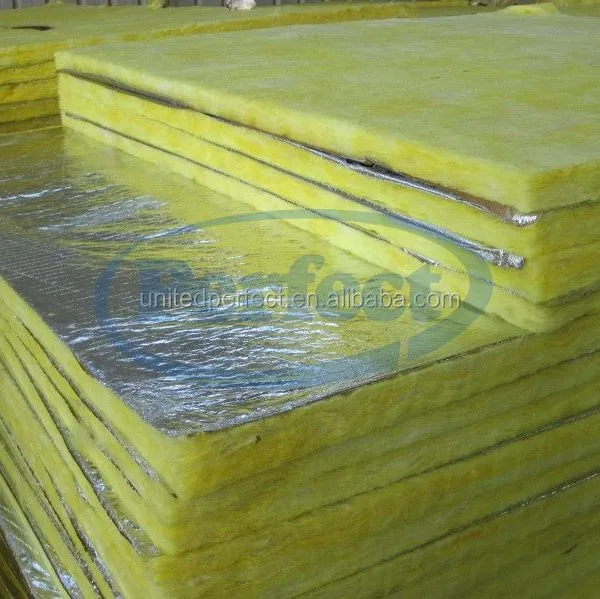
FWF MSK FSK Foil Laminated Rock Wool Glass Wool Blanket, Metalized PET Laminate Foils Faced Insulation for HVAC and ConstructionNegotiableMOQ: 100 Rolls
-
Rockwool Insulation Board, Mineral Wool Rock Wool Slab for Building Thermal & Fire Insulation, Soundproof Rockwool Panel for Roof, Wall, HVAC SystemNegotiableMOQ: 100 Rolls
-
Rockwool Pipe Section, Mineral Wool Rock Wool Tube Insulation, Fire & Heat Resistant Rockwool for Steam Pipes, Industrial Pipeline Insulation ProjectNegotiableMOQ: 100 Rolls
-
Rockwool Board With FSK FacingNegotiableMOQ: 100 Rolls
-
Rockwool Insulation Slab With FSK Facing, Fireproof Rock Wool Board, Thermal & Sound Insulation Rockwool for Roof, Wall and Ductwork ApplicationNegotiableMOQ: 100 Rolls
-
Fireproof Foil Laminated Glass Wool, Laminate Foils MPET Faced Glasswool Insulation Roll & Sheet for Roofing, Wall, Duct and Pipe InsulationNegotiableMOQ: 100 Rolls