
 Business License
Blog Categories

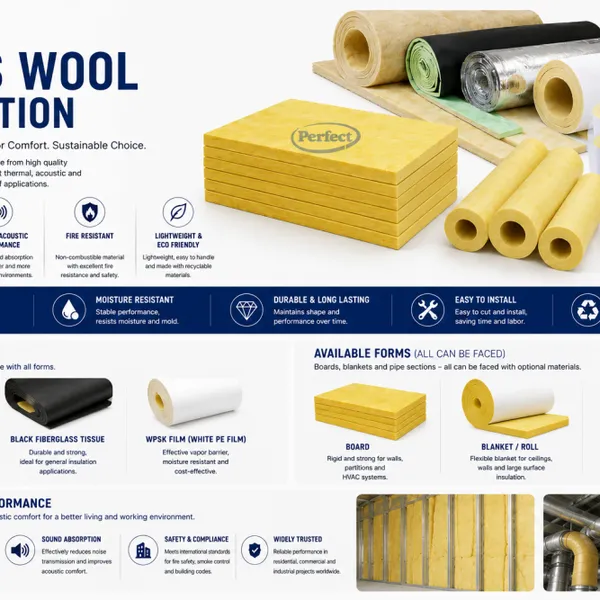
Rockwool Board Blanket and Pipe: Understanding Mineral Wool Forms
A contractor in Eastern Europe once ordered a rockwool insulation board for a curved tank and received a rigid panel that would not follow the shell. The material was correct and the form was wrong. A rockwool blanket roll would have wrapped the curve, and the panel could not.
Mineral wool is supplied in several forms, and the form decides where a product can be used and how it has to be installed. A rockwool insulation board, a rockwool blanket roll and a rockwool pipe section are the three main shapes, and each follows from a different structural requirement. This article explains what distinguishes the forms, how each is made and installed, and how to select between them.
1. Rockwool Insulation Board: Rigid and Semi-Rigid
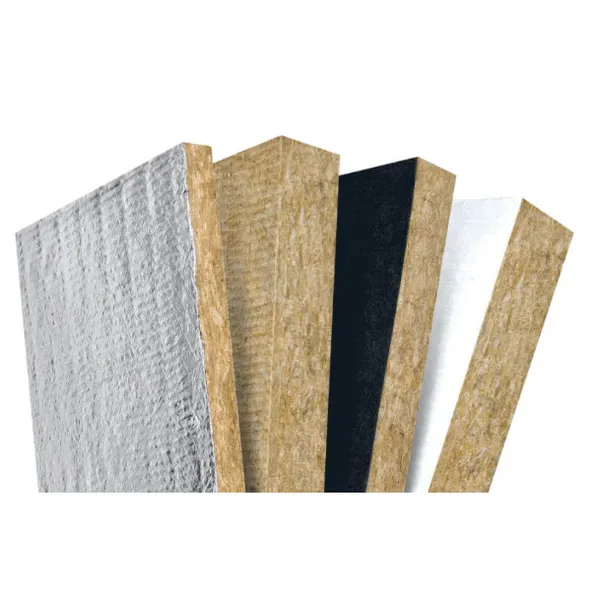
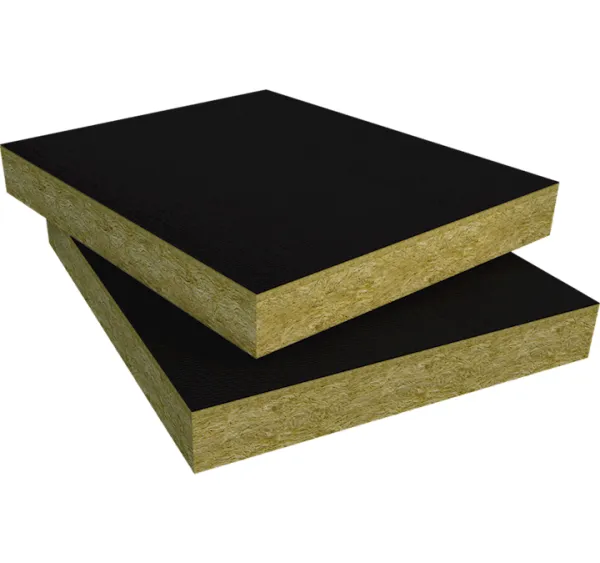
A rockwool insulation board is a flat product made at a density high enough to hold its own shape, and it is the form used wherever the insulation has to span or carry.
The board is produced by forming the fibres into a mat, compressing it to the target thickness and curing the binder while the mat is held flat. The result is a panel that holds its dimensions and resists a modest load without support underneath.
| Type | Density | Behaviour |
|---|---|---|
| Semi-rigid board | Medium | Holds shape, slight flex |
| Rigid board | High | Firm, carries load |
| High-density board | Very high | Structural contribution |
The stiffness comes from the density and from the fibre orientation. A board produced with the fibres aligned across the thickness is stiffer in compression than one produced with the fibres aligned along the face, and the two behave differently under the same load.
The board is the form used on flat roofs, on external walls, in fire-rated assemblies and in any position where the insulation supports a load or has to hold a surface flat. It is also the form that is easiest to cut to a dimension on site, because it can be scored and snapped or cut with a saw.
2. Rockwool Blanket Roll: Flexible and Continuous
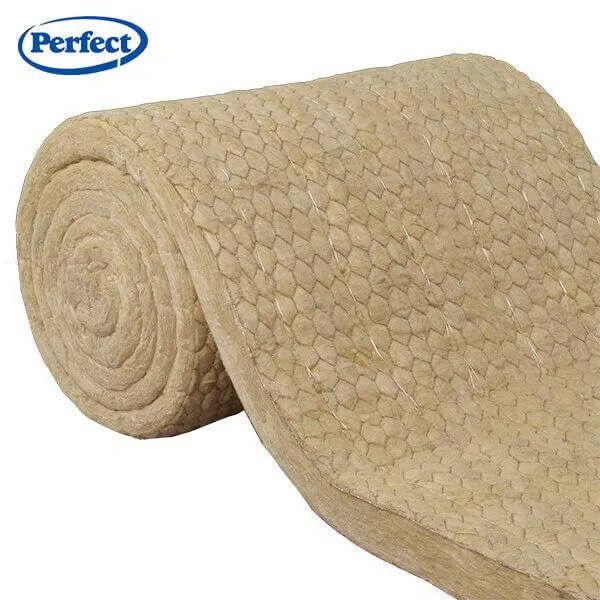
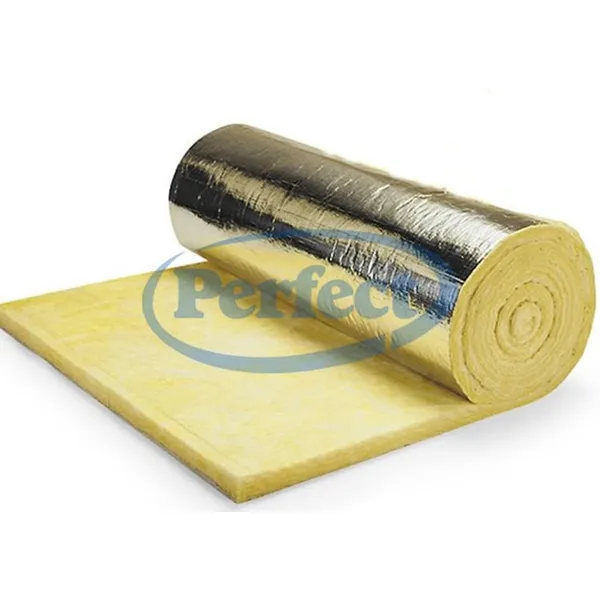
A rockwool blanket roll is a flexible product supplied wound on a core, and it is used where the insulation has to follow a shape or cover a large area without joints.
The blanket is produced as a continuous mat at a lower density than a board, and it is rolled rather than cut into panels. The lower density gives it the flexibility to follow a curve and to compress slightly around an irregular surface.
| Property | Blanket Roll | Board |
|---|---|---|
| Flexibility | High | Low |
| Density | Lower | Higher |
| Joints | Few, continuous | Many, butted |
| Load carrying | None | Yes, at higher density |
| Typical use | Large areas, curves, wraps | Flat surfaces, load bearing |
The continuous length is the property that matters most on a large surface. A blanket laid in one run across a wall or a duct has fewer joints than a surface covered in boards, and fewer joints means fewer places where the insulation can be interrupted and a thermal or acoustic path can open.
The blanket is the form used for duct wraps, for large wall and roof areas where a continuous layer is wanted, and for curved surfaces such as tanks, vessels and large pipes where a board cannot follow the radius.
3. Rockwool Pipe Section: Moulded for Round Services
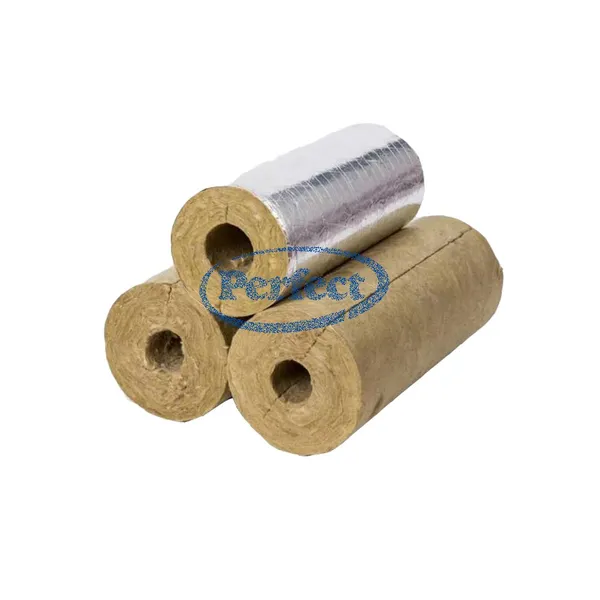
A rockwool pipe section is a moulded product shaped to fit around a pipe, and it is supplied as a half-round or as a split section.
The section is produced by forming the fibres in a curved mould, so that the inside face follows the pipe diameter and the outside face is concentric with it. The section is then slit along its length so that it can be opened, placed around the pipe and closed again.
| Form | How It Fits | Typical Pipe Size |
|---|---|---|
| Half-round | Two pieces closed around the pipe | Small to medium |
| Split section | One piece opened and closed | Medium to large |
| Segmental | Several pieces around a large pipe | Large |
The moulded shape matters for performance as well as for fit. A section that follows the pipe exactly leaves no gap between the insulation and the pipe wall, and a gap at that point would create a convection path and reduce the thermal performance of the whole length.
The section is the form used on pipes, on small ducts and on any round service where a board would have to be cut into narrow strips and fitted piece by piece. It is the slowest of the three forms to install where the pipe is accessible, because each section has to be opened, closed and secured.
4. Comparing Rockwool Insulation Board Blanket and Pipe Section
The three forms solve different structural problems, and the choice follows from the geometry and the load rather than from the material.
A flat surface that carries a load or holds a surface flat takes a board. A large or curved surface that has to be covered continuously takes a blanket. A round service takes a pipe section, because it is the one form among the three made to the shape.
| Application | Appropriate Form |
|---|---|
| Flat roof | Board |
| External wall | Board or batt |
| Duct wrap | Blanket roll |
| Large tank shell | Blanket roll |
| Process pipe | Pipe section |
| Fire-rated shaft | Board |
The three forms also differ in installation speed. A blanket covers a large area quickly, a board is fitted panel by panel and a pipe section is fitted piece by piece around a service. The installation time is part of the cost, and a form that suits the geometry also reduces the time.
A form used against its geometry costs twice. It takes longer to install, and it leaves gaps that reduce the performance the material was bought to provide.
5. Case Notes on Rockwool Insulation Board and Blanket Roll
A contractor in Eastern Europe ordered a rockwool insulation board for a curved tank shell and found the panels would not follow the radius. Gaps opened at the edges of every panel. A rockwool blanket roll at a similar thickness followed the curve and was installed in one continuous wrap. The material was the same and the form was the difference.
A second project used a blanket on a flat roof where the insulation had to support the covering. The blanket compressed under the load and the thermal bridge appeared along the load path. A rigid board at the original density restored the performance. The blanket was correct for the curve in the first case and wrong for the load in the second.
Both cases point to the same conclusion. The form follows from the geometry and the load, and those two questions come before the choice of product.
6. Rockwool Pipe Section Installation
A rockwool pipe section is installed by opening the slit, placing the section around the pipe and closing it so that the two faces meet.
The section should be fitted so that it is slightly compressed when closed, which closes any gap at the slit and keeps the section tight against the pipe. Where the section is loose, a gap opens at the slit and a convection path forms along the pipe.
The joints between sections should be staggered where the pipe runs through a wall or a support, and the sections should butt tightly at each joint. A small gap at a joint is a thermal bridge, and a series of them along a pipe reduces the performance of the run.
The ends of the run and the terminations should be closed with the same care. An open end allows air to move along the inside of the insulation, which is a convection path that carries heat away from the pipe and reduces the effective performance of the whole length.
7. Selecting Rockwool Insulation Board or Blanket Roll
State the geometry first. A flat surface, a curved surface and a round service each point to a different form, and the geometry removes the alternatives before the density is considered.
Then state the load. Where the insulation carries a load or holds a surface flat, a board is required and the density follows from the load.
Then state whether continuous coverage matters. Where the surface is large or the joints are a risk, a blanket reduces the number of joints and the number of places where the insulation can be interrupted.
State the form and the density together. A specification that names the density and leaves the form open has described the material and left the shape undefined.
8. Rockwool Insulation Board Supplier Profile
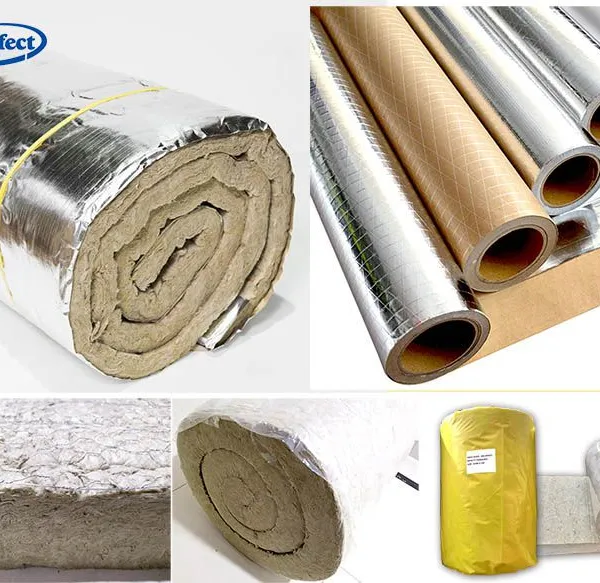
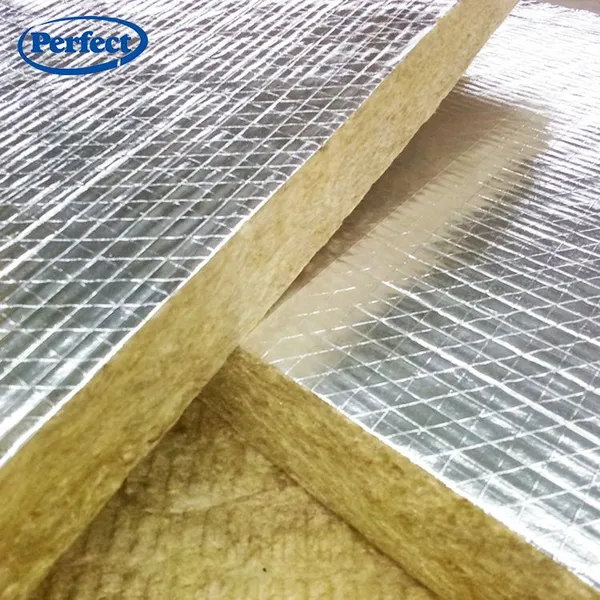
United Perfect Building Materials, part of Jinan United Perfect Building Materials Corporation, supplies mineral wool in board, blanket and pipe section forms together with the foil facings used with them. The company quotes the form, density and thickness of each grade, which allows a rockwool insulation board, a rockwool blanket roll or a rockwool pipe section to be specified against stated figures.
Jinan United Perfect Building Materials holds retained samples by production batch, so a delivered pack can be checked against the reference used at approval. Buyers selecting a form for a project that mixes flat and curved surfaces can order the appropriate forms from one source. United Perfect can also advise on the form where a surface is curved but also has to carry a light load.
9. FAQ About Rockwool Insulation Board and Blanket Roll
9.1 What is the difference between a board and a blanket?
A rockwool insulation board is a flat panel made at a density high enough to hold its shape and resist a load, while a rockwool blanket roll is a flexible mat at a lower density supplied wound on a core. The board is used on flat surfaces and wherever the insulation has to span or carry, and the blanket is used on curved surfaces and on large areas where a continuous layer with few joints is wanted. The density and the flexibility differ, and so does the geometry each one suits.
9.2 When should I use a pipe section?
Use a rockwool pipe section on any round service, because it is the form among the three made to the shape. The section is moulded so that the inside face follows the pipe diameter and the outside face is concentric, and a fit that follows the pipe exactly leaves no gap between the insulation and the pipe wall. A gap at that point would create a convection path and reduce the performance of the length. A board would have to be cut into narrow strips and fitted piece by piece.
9.3 Can a blanket be used on a flat roof?
Where it is fully supported and does not carry the load of the covering. A blanket is flexible and compresses under a sustained load, and a roof insulation that compresses creates a thermal bridge along the load path. A flat roof normally takes a rigid rockwool insulation board at a density that resists the load without settling. A blanket is suited to a flat surface that is protected from load, such as a wall or a duct wrap, rather than to one that carries a covering.
9.4 How does density differ between the forms?
The density range differs because each form is made for a different duty. A blanket roll is produced at a lower density, which gives it the flexibility to follow a curve. A board is produced across a range from semi-rigid to high density, and the density follows the load it has to carry, while a pipe section is moulded at a medium to high density so that it holds the shape of the pipe. The density should be stated with the form rather than assumed from it.
9.5 What causes gaps between insulation sections?
Most gaps come from a form used against its geometry or from a fit that is not tight. A board fitted to a curved surface opens at the panel edges, and a pipe section closed without slight compression opens at the slit, while a blanket that is cut short leaves a gap at the end of a run. Each of those gaps becomes a thermal or acoustic path, and the performance falls even though the material is correct. Matching the form to the geometry and fitting it tight prevents most of them.
Recently Posted
-
From Felt to Synthetic Underlayment in North American Roofing
November 3, 2026A roofing supplier in North America once kept both felt and synthetic underlayment on the same rack and watched the split shift wi Read More
-
QC Checklist for Synthetic Underlayment Before Shipment
November 3, 2026A buyer in North America once received a shipment in which the lengths on the packing list were correct and the rolls at the centr Read More
-
Synthetic Underlayment Slitting Winding and Roll Diameter Control
November 2, 2026A buyer in North America once rejected a container of synthetic underlayment because the rolls at one end had flattened into an ov Read More
-
Synthetic Underlayment for Tropical and Desert Roofing Projects
November 2, 2026Two projects in the same product family can fail for opposite reasons. A tropical roof underlayment in Southeast Asia can be ruine Read More

Contact Us
Recommended Products
-
 Glasswool Blanket With FSK FacingNegotiableMOQ: 100 Rolls
-
Rockwool Blanket With Wire MeshNegotiableMOQ: 100 Rolls
-
Rockwool Blanket With FSK FacingNegotiableMOQ: 100 Rolls
-
CE Certified Glass Wool Insulation, Glasswool Fiberglass, Low Thermal Conductivity, Noise Reduction for Wall, Roof and Industrial EquipmentNegotiableMOQ: 100 Rolls
-
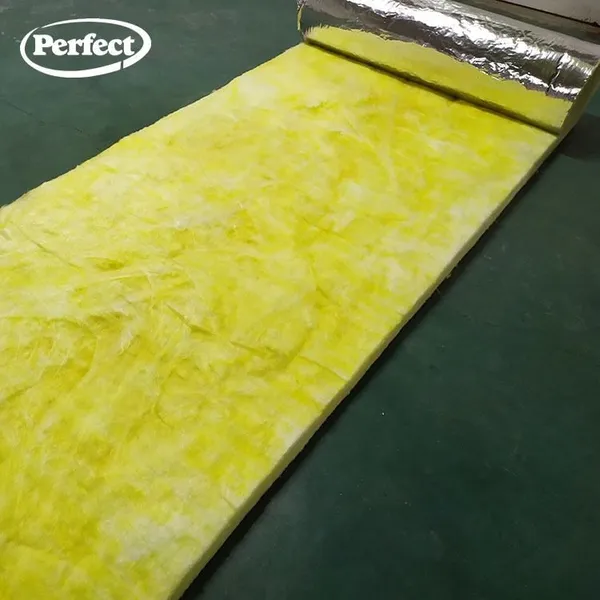
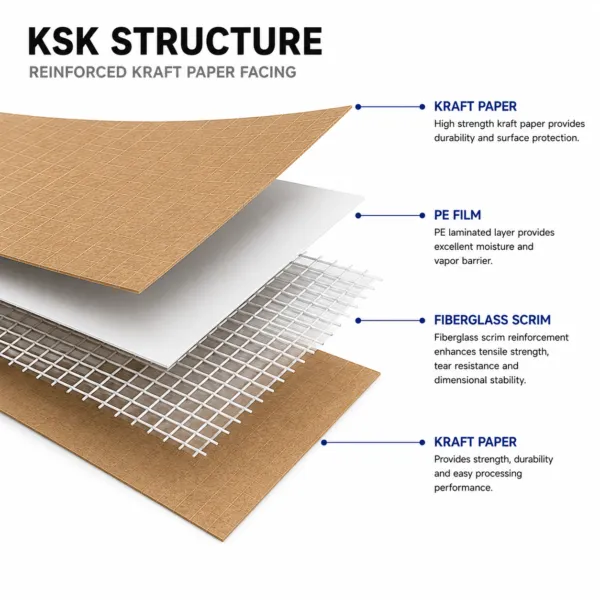
KSK Foil Facing Roll, Laminated Aluminum Foil + Scrim + Kraft Paper, Anti-Tear Thermal Barrier, Suitable for Commercial HVAC and Roof InsulationNegotiableMOQ: 500 Rolls
-
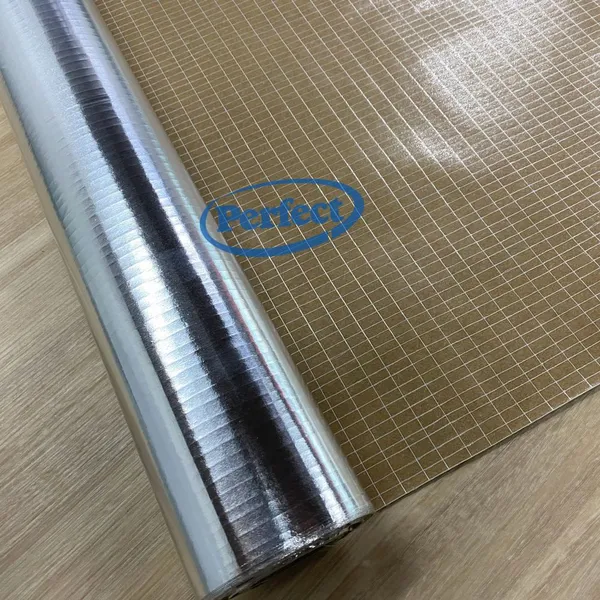
FSK Foil Scrim Kraft, FWF MSK MWV KSK Laminate Foils, Metalized PET MPET Vapor Barrier Facing for Insulation Glasswool RockwoolNegotiableMOQ: 100 Rolls
-
Reinforced Aluminium Foil Tape, Waterproof Anti-aging Tape, Widely Used in HVAC and Building Insulation ProjectsNegotiableMOQ: 500 Cartons
-
HVAC Aluminum Foil Sealing Tape, Strong Adhesion Heat Resistance for Pipe, Glass Wool and Rockwool InsulationNegotiableMOQ: 500 Cartons
-
Factory Supply Metalized PET MPET Laminate Foils, Aluminum Coated PET Film for Roof Wall InsulationNegotiableMOQ: 10000 Cubic Meters
-
Custom MPET Metalized PET Laminate Foils, VMPET Metallized Polyester Facing Film for Thermal InsulationNegotiableMOQ: 10000 Cubic Meters
-
Glass Wool Insulation Series, Glasswool With FSK/FWF/MSK/MWV/KSK Facing, Metalized PET Laminate Foils, Heat & Sound Insulation for Commercial BuildingNegotiableMOQ: 100 Rolls
-
Rockwool Blanket With Black Firber GlassNegotiableMOQ: 100 Rolls
-
Glasswool Insulation Blanket & Board, FSK FWF MSK MWV KSK Foil Laminate, MPET Metalized PET Faced Glass Wool for HVAC, Roof, Wall, Air DuctNegotiableMOQ: 100 Rolls
-
Rockwool Insulation Roll, FSK Foil Faced Mineral Wool for Building Thermal & Acoustic Insulation, Fire Resistant Roof Wall Insulation MaterialNegotiableMOQ: 100 Rolls
-
FWF MSK FSK Foil Laminated Rock Wool Glass Wool Blanket, Metalized PET Laminate Foils Faced Insulation for HVAC and ConstructionNegotiableMOQ: 100 Rolls
-
Rockwool Insulation Board, Mineral Wool Rock Wool Slab for Building Thermal & Fire Insulation, Soundproof Rockwool Panel for Roof, Wall, HVAC SystemNegotiableMOQ: 100 Rolls
-
Rockwool Pipe Section, Mineral Wool Rock Wool Tube Insulation, Fire & Heat Resistant Rockwool for Steam Pipes, Industrial Pipeline Insulation ProjectNegotiableMOQ: 100 Rolls
-
Rockwool Board With FSK FacingNegotiableMOQ: 100 Rolls
-
Rockwool Insulation Slab With FSK Facing, Fireproof Rock Wool Board, Thermal & Sound Insulation Rockwool for Roof, Wall and Ductwork ApplicationNegotiableMOQ: 100 Rolls
-
Fireproof Foil Laminated Glass Wool, Laminate Foils MPET Faced Glasswool Insulation Roll & Sheet for Roofing, Wall, Duct and Pipe InsulationNegotiableMOQ: 100 Rolls