
 Business License
Blog Categories

Rockwool vs XPS and EPS for Exterior Wall Insulation
A designer in Western Europe once specified an extruded polystyrene board for an exterior wall and found it rejected at the fire review, while the same wall passed with a mineral wool board of the same thickness. The thermal figures were almost identical. The exterior wall insulation choice turned on a property that the thermal comparison does not show.
A rockwool xps eps comparison is usually presented as a table of thermal conductivity, and that table hides the distinctions that decide a wall. The three materials differ in fire behaviour, in moisture behaviour, in compressive strength and in how they interact with the rest of the build-up. This article compares them on those properties and sets out how a rigid insulation board should be chosen for an exterior wall.
1. Rockwool XPS EPS Comparison: The Materials
A rockwool xps eps comparison involves two different material families, and the difference in family is the reason the comparison is not a simple ranking.
Rockwool is a mineral wool made by melting basalt and spinning the melt into fibres bonded with a resin. It is an open, fibrous material, and it is non-combustible.
XPS, or extruded polystyrene, is a closed-cell foam made by extruding polystyrene with a blowing agent. EPS, or expanded polystyrene, is a bead foam made by expanding polystyrene beads and fusing them in a mould. Both are organic foams and both are combustible, with a closed or partially closed cell structure.
For a rockwool xps eps comparison, the material family also sets the temperature limit. A mineral fibre holds its structure at temperatures well above those at which a polystyrene foam softens and melts, and that difference appears in the fire performance of the finished wall rather than in the thermal figure.
| Property | Rockwool | XPS | EPS |
|---|---|---|---|
| Material family | Mineral fibre | Closed-cell foam | Bead foam |
| Structure | Open, fibrous | Closed cell | Partially closed |
| Combustibility | Non-combustible | Combustible | Combustible |
| Water absorption | Repellent, vapour open | Very low, vapour closed | Low, vapour semi-open |
| Compressive strength | Moderate to high | High | Low to moderate |
The material family also sets the temperature limit, which the table below sets out for each of the three.
2. Thermal Comparison for Exterior Wall Insulation Choice
For an exterior wall insulation choice on thermal performance alone, the three materials are close at the same thickness, and the differences are smaller than the marketing of any of them suggests.
XPS typically has the lowest thermal conductivity of the three, because its closed cell structure holds a low-conductivity gas. EPS is close behind and depends on density. Rockwool is comparable at a similar density, and its conductivity rises as the density rises.
| Material | Relative Thermal Performance | Note |
|---|---|---|
| XPS | Highest per unit thickness | Gas fill can age |
| EPS | Close, density dependent | Lower cost |
| Rockwool | Close, density dependent | Rises with density |
The thermal advantage of XPS is real and small in wall terms. The difference is typically a few percent per unit thickness, which translates into a small change in the required thickness. A wall designed to a target U-value will need slightly more rockwool than XPS, and that difference is usually outweighed by the fire, moisture and acoustic behaviour that the mineral wool brings.
The thermal figure should therefore be treated as one input rather than as the decision. A comparison that stops at conductivity has compared the three materials on the property where they differ least.
3. Fire Behaviour of a Rigid Insulation Board
Fire behaviour is where a rigid insulation board made from rockwool separates most clearly from a polystyrene board, and it is the property that most often decides a specification.
Polystyrene foams are organic and combustible. They soften at a relatively low temperature, and they contribute fuel to a fire and produce smoke when they burn. Additives can reduce the ignitability and slow the spread, and they do not change the fact that the material is combustible and can melt out of an assembly.
Rockwool is non-combustible. It does not contribute fuel to a fire, it does not produce the smoke that an organic foam produces, and it holds its structure at high temperature rather than melting away. In a wall assembly that has to maintain its integrity for a rated period, that difference is decisive.
The consequence for a design is that a combustible board can be used in many walls and cannot be used where the assembly has to be non-combustible or where the insulation has to stay in place during a fire. That is a design constraint rather than a thermal one, and it often removes the polystyrene options before the thermal comparison begins.
4. Exterior Wall Insulation Choice in Moisture and Below Grade
Moisture behaviour separates the three materials in the opposite direction, and it is the property that most often favours the foams.
XPS has a closed cell structure and a very low water absorption, which makes it the usual choice for below-grade and damp applications. It resists liquid water and it also resists vapour, which suits a detail where the insulation has to stay dry.
EPS has a partially closed structure and a low but higher water absorption. It is used in above-grade walls and in some below-grade details where the load is lower.
Rockwool is water-repellent rather than waterproof. It resists liquid water uptake and it allows vapour to move, so a wall that gets wet can dry out through the insulation. That vapour openness is an advantage in a wall that has to dry, and it makes rockwool unsuitable for a detail where it would sit permanently in water.
| Situation | Suitable Material |
|---|---|
| Below grade, permanently damp | XPS |
| Above grade, vapour-open wall | Rockwool |
| Above grade, dry sheathing | EPS or XPS |
| Wall that must dry outward | Rockwool |
| Fire-rated assembly | Rockwool |
The moisture comparison therefore does not produce a single winner. XPS is the better material in a wet detail, and rockwool is the better material in a wall that has to dry and in a wall that has a fire requirement.
5. Compressive Strength of a Rigid Insulation Board
Compressive strength decides where a rigid insulation board can carry a load, and the three materials differ substantially.
XPS has a high compressive strength and is used under slabs, under floors and in details where the insulation carries a load. EPS is lower and varies with density, and it is used where the load is light. Rockwool is available across a range from a compressible batt to a high-density board that carries a load, so it can serve load-bearing details in the upper part of its range.
The load also changes the required density in all three materials. A board that carries a slab has to resist a sustained compressive load without settling, and a board that settles creates a thermal bridge along the load path. That is why the compressive strength of a rigid insulation board has to be stated for the worst sustained load the detail will see.
The figure should be stated at the deformation level the application requires. A compressive strength quoted without a deformation figure cannot be compared across materials, because the three materials compress differently before they reach the same load.
6. Case Notes on a Rigid Insulation Board
A designer in Western Europe specified an XPS board for an exterior wall of a multi-storey building and had the specification rejected at the fire review. The wall was re-specified with a rockwool board at a slightly greater thickness to reach the same U-value, and the fire requirement was met. The thermal difference was a few percent and the fire difference was the whole specification.
A second project used a rockwool board below grade in a damp detail and found the board waterlogged after a season. The detail was re-specified with XPS, which resisted the water, and the rockwool was moved to the above-grade portion of the same wall. Each material was correct in one position and wrong in the other.
Both cases point to the same conclusion. The material follows from the position in the assembly, and a single material rarely suits the whole wall.
7. Choosing a Rigid Insulation Board for a Wall
Start with the fire requirement, because it removes the combustible options where the assembly has to be non-combustible.
Then consider the moisture environment. Choose XPS where the detail is wet or below grade, and choose rockwool where the wall has to dry outward.
Then compare the thermal performance at the thickness the design allows, and accept that the difference will be small. The thickness should be set by the U-value target rather than by the material.
State the density and the compressive strength at a defined deformation level, and state the vapour behaviour so that the layers of the wall can be checked against the drive. Those three figures define the board as much as the thermal conductivity does.
8. Rockwool XPS EPS Supplier Profile
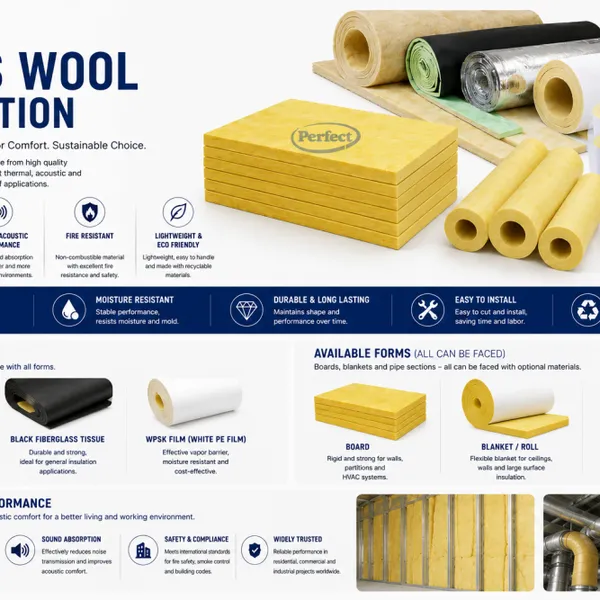
United Perfect Building Materials, part of Jinan United Perfect Building Materials Corporation, supplies mineral wool insulation and the foil facings used with it. The company quotes the form, density and thickness of each grade, which allows a rockwool xps eps comparison to be made on stated figures for the mineral wool side of it.
Jinan United Perfect Building Materials holds retained samples by production batch, so a delivered pack can be checked against the reference used at approval. Buyers making an exterior wall insulation choice can confirm the density and the compressive strength in writing, and can order the foil facing for a mineral wool board from the same source. United Perfect can also advise on the position where a wall mixes a mineral wool above grade with another material below.
9. FAQ About Rockwool, XPS and EPS
9.1 Which insulates better, rockwool or XPS?
XPS insulates slightly better per unit thickness, because its closed cell structure holds a low-conductivity gas. The difference is typically a few percent, which in wall terms means a slightly greater thickness of rockwool to reach the same U-value. That small thermal advantage is usually outweighed by the fire behaviour, where the two materials are not comparable, and by the acoustic and vapour behaviour, where the mineral wool performs differently. The thermal figure should be treated as one input among several.
9.2 Can XPS or EPS be used in a fire-rated wall?
Not where the assembly has to be non-combustible. Both materials are organic and combustible, so they contribute fuel to a fire and can melt out of an assembly. Additives reduce ignitability and slow the spread without changing the material into a non-combustible one, so a fire-rated wall is normally specified with a mineral wool board, which is non-combustible and holds its structure at high temperature. The fire requirement should be checked before the thermal comparison begins.
9.3 Which material suits below grade?
XPS is the usual choice, because its closed cell structure gives a very low water absorption and it resists both liquid water and vapour. A below-grade detail keeps the insulation in contact with damp soil, and a material that absorbs water loses thermal performance and can be damaged by freeze and thaw. Rockwool is water-repellent rather than waterproof and is not suited to a detail where it would sit in water, although it can serve the above-grade portion of the same wall.
9.4 Does the vapour behaviour of these materials matter?
It matters where the wall has to dry, and the three materials behave differently. XPS resists vapour as well as liquid water, which suits a detail that has to stay dry and can trap moisture in a wall that needs to dry outward. Rockwool allows vapour to move, so a wall that gets wet can dry through the insulation. The vapour behaviour of the board should be checked against the direction of the vapour drive for the specific building rather than assumed.
9.5 How do I compare compressive strength across the three?
Compare the figures at the deformation level the application requires, because the three materials compress differently before they reach the same load. A compressive strength quoted without a deformation figure cannot be compared across materials. For a load-bearing detail, the board has to resist a sustained load without settling, and a board that settles creates a thermal bridge along the load path. XPS usually leads on compressive strength, EPS is lower and varies with density, and rockwool is available in a high-density board form.
Recently Posted
-
From Felt to Synthetic Underlayment in North American Roofing
November 3, 2026A roofing supplier in North America once kept both felt and synthetic underlayment on the same rack and watched the split shift wi Read More
-
QC Checklist for Synthetic Underlayment Before Shipment
November 3, 2026A buyer in North America once received a shipment in which the lengths on the packing list were correct and the rolls at the centr Read More
-
Synthetic Underlayment Slitting Winding and Roll Diameter Control
November 2, 2026A buyer in North America once rejected a container of synthetic underlayment because the rolls at one end had flattened into an ov Read More
-
Synthetic Underlayment for Tropical and Desert Roofing Projects
November 2, 2026Two projects in the same product family can fail for opposite reasons. A tropical roof underlayment in Southeast Asia can be ruine Read More

Contact Us
Recommended Products
-
 Glasswool Blanket With FSK FacingNegotiableMOQ: 100 Rolls
-
Rockwool Blanket With Wire MeshNegotiableMOQ: 100 Rolls
-
Rockwool Blanket With FSK FacingNegotiableMOQ: 100 Rolls
-
CE Certified Glass Wool Insulation, Glasswool Fiberglass, Low Thermal Conductivity, Noise Reduction for Wall, Roof and Industrial EquipmentNegotiableMOQ: 100 Rolls
-
KSK Foil Facing Roll, Laminated Aluminum Foil + Scrim + Kraft Paper, Anti-Tear Thermal Barrier, Suitable for Commercial HVAC and Roof InsulationNegotiableMOQ: 500 Rolls
-
FSK Foil Scrim Kraft, FWF MSK MWV KSK Laminate Foils, Metalized PET MPET Vapor Barrier Facing for Insulation Glasswool RockwoolNegotiableMOQ: 100 Rolls
-
Reinforced Aluminium Foil Tape, Waterproof Anti-aging Tape, Widely Used in HVAC and Building Insulation ProjectsNegotiableMOQ: 500 Cartons
-
HVAC Aluminum Foil Sealing Tape, Strong Adhesion Heat Resistance for Pipe, Glass Wool and Rockwool InsulationNegotiableMOQ: 500 Cartons
-
Factory Supply Metalized PET MPET Laminate Foils, Aluminum Coated PET Film for Roof Wall InsulationNegotiableMOQ: 10000 Cubic Meters
-
Custom MPET Metalized PET Laminate Foils, VMPET Metallized Polyester Facing Film for Thermal InsulationNegotiableMOQ: 10000 Cubic Meters
-
Glass Wool Insulation Series, Glasswool With FSK/FWF/MSK/MWV/KSK Facing, Metalized PET Laminate Foils, Heat & Sound Insulation for Commercial BuildingNegotiableMOQ: 100 Rolls
-
Rockwool Blanket With Black Firber GlassNegotiableMOQ: 100 Rolls
-
Glasswool Insulation Blanket & Board, FSK FWF MSK MWV KSK Foil Laminate, MPET Metalized PET Faced Glass Wool for HVAC, Roof, Wall, Air DuctNegotiableMOQ: 100 Rolls
-
Rockwool Insulation Roll, FSK Foil Faced Mineral Wool for Building Thermal & Acoustic Insulation, Fire Resistant Roof Wall Insulation MaterialNegotiableMOQ: 100 Rolls
-
FWF MSK FSK Foil Laminated Rock Wool Glass Wool Blanket, Metalized PET Laminate Foils Faced Insulation for HVAC and ConstructionNegotiableMOQ: 100 Rolls
-
Rockwool Insulation Board, Mineral Wool Rock Wool Slab for Building Thermal & Fire Insulation, Soundproof Rockwool Panel for Roof, Wall, HVAC SystemNegotiableMOQ: 100 Rolls
-
Rockwool Pipe Section, Mineral Wool Rock Wool Tube Insulation, Fire & Heat Resistant Rockwool for Steam Pipes, Industrial Pipeline Insulation ProjectNegotiableMOQ: 100 Rolls
-
Rockwool Board With FSK FacingNegotiableMOQ: 100 Rolls
-
Rockwool Insulation Slab With FSK Facing, Fireproof Rock Wool Board, Thermal & Sound Insulation Rockwool for Roof, Wall and Ductwork ApplicationNegotiableMOQ: 100 Rolls
-
Fireproof Foil Laminated Glass Wool, Laminate Foils MPET Faced Glasswool Insulation Roll & Sheet for Roofing, Wall, Duct and Pipe InsulationNegotiableMOQ: 100 Rolls