
 Business License
Blog Categories

Aluglass vs Plain Aluminum Foil Facing: Lamination Basics
A fabricator in Eastern Europe once replaced a foil facing on a duct line with a plain aluminium foil and found the facing torn at the first fastener. The thermal figure was similar. The plain foil had no carrier, so its tear resistance was a fraction of the laminated product it replaced.
The difference between an aluglass foil laminate and a plain aluminium foil facing is the carrier, and the carrier changes almost every mechanical property. Both reflect radiant heat, both resist vapour, and the two behave very differently when they are handled, folded or fastened. This article explains the lamination basics behind the two products, what a reinforced aluminum foil facing adds, and how foil facing lamination decides which one belongs in a given application.
1. Aluglass Foil Laminate and Plain Foil Compared
An aluglass foil laminate and a plain aluminium foil facing are both metal foil products, and the difference is what sits behind the foil.
A plain foil is a sheet of aluminium, usually between a few and a few tens of microns thick. It reflects radiant heat and resists vapour, and it has almost no tear resistance of its own because the metal is ductile rather than fibrous.
An aluglass foil laminate bonds the foil to a reinforcing carrier, which may be a glass fibre scrim, a woven fabric or a kraft layer. The foil still provides the reflection and the vapour resistance, and the carrier provides the tensile strength and the tear resistance that the foil alone lacks.
| Property | Plain Aluminium Foil | Aluglass Foil Laminate |
|---|---|---|
| Reflectivity | High | High |
| Vapour resistance | High | High |
| Tear resistance | Very low | High |
| Tensile strength | Low | High |
| Handling | Fragile, creases easily | Robust, resists creasing |
| Fastening | Tears at the fastener | Holds at the fastener |
The reflectivity and the vapour resistance are the properties that the two products share, and those are the properties that a buyer often specifies. The difference appears in every property that involves a load, which is why the comparison cannot be made on the thermal and vapour figures alone.
2. Reinforced Aluminum Foil Facing Structure
A reinforced aluminum foil facing is built in layers, and the order and the material of the layers decide how the facing performs.
The foil layer faces the air space and provides the reflection. The adhesive layer bonds the foil to the carrier. The carrier provides the mechanical strength. Where a second foil layer is used on the reverse face, the product is a double-sided laminate, and where a kraft or a paper layer is used, the product gains a surface that can be printed or bonded.
| Layer | Function | Variation |
|---|---|---|
| Foil | Reflection, vapour resistance | Thickness, single or double |
| Adhesive | Bond | Solvent, water-based, hot melt |
| Carrier | Strength, tear resistance | Scrim, woven, non-woven, kraft |
| Surface layer | Printing, bonding, protection | Kraft, film, coating |
The carrier is the layer that a buyer most often leaves unspecified, and it is the one that decides how the facing survives on site. A glass fibre scrim carrier gives a high strength-to-weight ratio and a tear resistance that resists a fastener. A kraft carrier is cheaper and gives a surface that bonds well to an insulation facing, and it has a lower tear resistance than a scrim.
The choice therefore follows from how the facing is installed. A facing that is laid over a deck and fastened through the surface needs a scrim carrier. A facing that is bonded to the face of an insulation board and never loaded can use a kraft carrier.
3. Foil Facing Lamination and Bond Integrity
Foil facing lamination is the operation that bonds the foil to the carrier, and the bond is where most field failures begin.
The foil and the carrier are brought together with an adhesive and passed through a nip where pressure and often temperature are applied. The bond has to hold across the width of the web and along its length, and it has to survive the slitting that follows.
A bond failure usually appears at an edge first. The edge is where the manufacture cuts the web and where the installer handles the sheet, and a bond that is marginal in the flat will separate at the edge. The failure appears as a lifted foil along the edge rather than as a complete separation.
| Bond Test | What It Measures | Where It Fails First |
|---|---|---|
| Peel in the flat | Adhesive strength | Nowhere, if the bond is sound |
| Peel at the edge | Edge bond integrity | At the slit edge |
| Ageing | Bond durability | At a fold or a crease |
The bond also has to survive the service conditions. A facing on a duct line sees a temperature cycle, and a facing on a wall sees a moisture cycle. A bond that passes a peel test when new can fail after a number of cycles, which is why an ageing test is more informative than a single peel figure.
4. Aluglass Foil Laminate in Service Conditions
An aluglass foil laminate is used where the facing has to do more than reflect, and the service conditions decide which carrier is appropriate.
On a duct line, the facing is wrapped around a rectangular or circular section and fixed at the seams. The facing flexes at the corners and is fastened through its surface, so it needs tear resistance and a bond that holds at a fold. A scrim carrier serves that application.
On a wall or a roof, the facing is laid in large sheets and fastened at intervals. The load is lower and distributed, and the facing has to resist a crease rather than a point load. A kraft or a light scrim carrier can serve, depending on the span between fasteners.
The vapour resistance requirement also varies by position. A facing on the warm side of an assembly acts as the vapour control layer and needs a continuous foil with sealed laps. A facing on the cold side acts mainly as a reflective surface, and a continuous foil is less critical.
5. Case Notes on Reinforced Aluminum Foil Facing
A fabricator in Eastern Europe wrapped a duct line with a plain foil where the original specification had called for a reinforced aluminum foil facing. The foil tore at the first fasteners and at the corners. Replacing it with a scrim-reinforced laminate at the same foil thickness resolved the problem, and the thermal and vapour figures were unchanged.
A second project used a kraft-carrier facing on a deck where the fasteners were spaced widely. The facing sagged between the fasteners and creased, and the creases cracked the foil over a season. A scrim carrier at the same foil thickness held the span without creasing. The foil thickness was not the variable that mattered.
Both cases show the same point. The carrier sets the mechanical behaviour, and the application decides which carrier is required.
6. Selecting Between Aluglass Foil Laminate and Plain Foil
Select the plain foil where the facing is fully supported, lightly loaded and never fastened through its surface. Those conditions are uncommon in building applications.
Select a reinforced aluminum foil facing where the facing is fastened, folded, walked on or exposed to a temperature cycle. Those conditions cover most duct, wall and roof applications.
Select the carrier to suit the load rather than the price. A scrim carrier costs more than a kraft carrier and holds a fastener that a kraft carrier will not.
Confirm the foil thickness and the carrier together. A specification that names the foil thickness and leaves the carrier open has described the reflective and vapour performance and left the mechanical performance undefined.
7. Foil Facing Lamination Supplier Profile
United Perfect Building Materials, part of Jinan United Perfect Building Materials Corporation, produces foil facing lamination on lines that combine laminating, coating and slitting. The company quotes the foil thickness, the carrier and the adhesive weight for each grade, which allows an aluglass foil laminate to be compared on stated figures.
Jinan United Perfect Building Materials holds retained samples by production batch, so a delivered roll can be checked against the reference used at approval. Buyers specifying a reinforced aluminum foil facing for duct or wall work can confirm the carrier and the bond strength in writing. United Perfect can also advise on the carrier where the facing will be fastened through its surface.
8. Aluglass Foil Laminate Applications
An aluglass foil laminate serves applications where reflection and vapour resistance are needed together with mechanical strength.
Ductwork insulation uses a scrim-reinforced laminate, because the facing is folded and fastened at the seams. Insulation board facings use a kraft or a light scrim laminate, because the facing is bonded and rarely loaded. Roof and wall sarking uses a scrim laminate, because the sheets span between fasteners and are walked on during installation.
The same laminate can serve more than one of those applications where the carrier is chosen for the most demanding of them. A scrim laminate that suits ductwork will also serve a sarking application, while a kraft laminate that suits a bonded facing will not serve the ductwork.
9. FAQ About Aluglass Foil Laminate and Foil Facing
9.1 What is the difference between aluglass and plain foil?
The difference is the carrier behind the foil. A plain aluminium foil is a sheet of metal that reflects radiant heat and resists vapour, and it has almost no tear resistance because the metal is ductile rather than fibrous. An aluglass foil laminate bonds the foil to a carrier, which may be a glass fibre scrim, a woven fabric or a kraft layer, and that carrier provides the tensile strength and the tear resistance. The reflective and vapour figures are similar, and the mechanical behaviour is very different.
9.2 Why does a reinforced aluminum foil facing cost more?
It contains more material and more process steps. A reinforced aluminum foil facing adds a carrier layer and an adhesive layer to the foil, and the lamination operation requires controlled adhesive weight, nip pressure and temperature. That extra cost buys the tear resistance that keeps the facing intact at a fastener, at a fold and at a slit edge. Where the facing is fully supported and never loaded, a plain foil can be adequate and less expensive, so the choice follows from how the facing will be installed.
9.3 How is the carrier chosen?
It follows from how the facing is installed rather than from the product family. A facing laid over a deck and fastened through its surface needs a scrim carrier with high tear resistance, because the fastener and the span both load the sheet. A facing bonded to the face of an insulation board and never loaded can use a kraft carrier, which is cheaper and bonds well to the board. Where one laminate has to serve several applications, the carrier should suit the most demanding of them.
9.4 Does foil thickness affect performance?
It affects reflectivity and vapour resistance, and it affects the mechanical behaviour much less than the carrier does. A thicker foil reflects marginally better and resists vapour slightly more, while the tear resistance and the tensile strength come from the carrier layer. That is why a reinforced aluminum foil facing specified by foil thickness alone can fail in service while meeting its thermal and vapour figures. The foil thickness and the carrier should be stated together in the specification, and the carrier should suit the load.
9.5 What causes a foil facing to delaminate?
A delamination usually begins at an edge or a crease, and it traces back to the bond. An adhesive weight or a nip pressure that is marginal in the flat will separate at a slit edge, where the cut has exposed the interface. A crease concentrates stress at a line across the sheet, and a bond that is adequate in service under a flat load can fail there. Ageing under a temperature or moisture cycle also weakens a marginal bond, which is why an ageing test is more informative than a single peel figure.
Recently Posted
-
From Felt to Synthetic Underlayment in North American Roofing
November 3, 2026A roofing supplier in North America once kept both felt and synthetic underlayment on the same rack and watched the split shift wi Read More
-
QC Checklist for Synthetic Underlayment Before Shipment
November 3, 2026A buyer in North America once received a shipment in which the lengths on the packing list were correct and the rolls at the centr Read More
-
Synthetic Underlayment Slitting Winding and Roll Diameter Control
November 2, 2026A buyer in North America once rejected a container of synthetic underlayment because the rolls at one end had flattened into an ov Read More
-
Synthetic Underlayment for Tropical and Desert Roofing Projects
November 2, 2026Two projects in the same product family can fail for opposite reasons. A tropical roof underlayment in Southeast Asia can be ruine Read More

Contact Us
Recommended Products
-
 Glasswool Blanket With FSK FacingNegotiableMOQ: 100 Rolls
-
Rockwool Blanket With Wire MeshNegotiableMOQ: 100 Rolls
-
Rockwool Blanket With FSK FacingNegotiableMOQ: 100 Rolls
-
CE Certified Glass Wool Insulation, Glasswool Fiberglass, Low Thermal Conductivity, Noise Reduction for Wall, Roof and Industrial EquipmentNegotiableMOQ: 100 Rolls
-
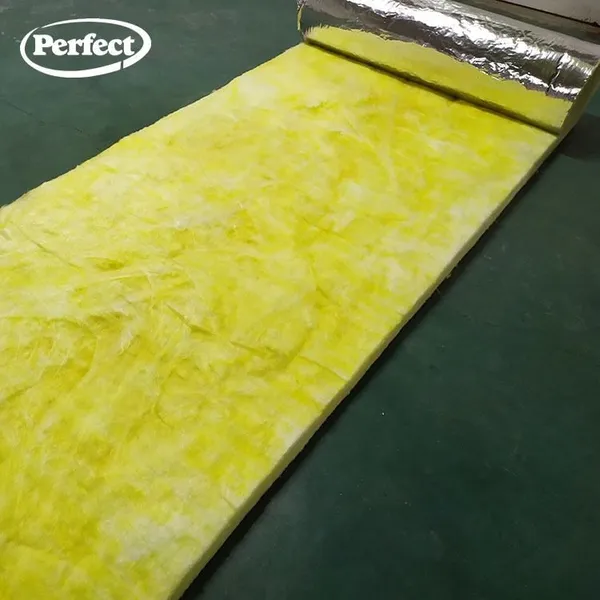
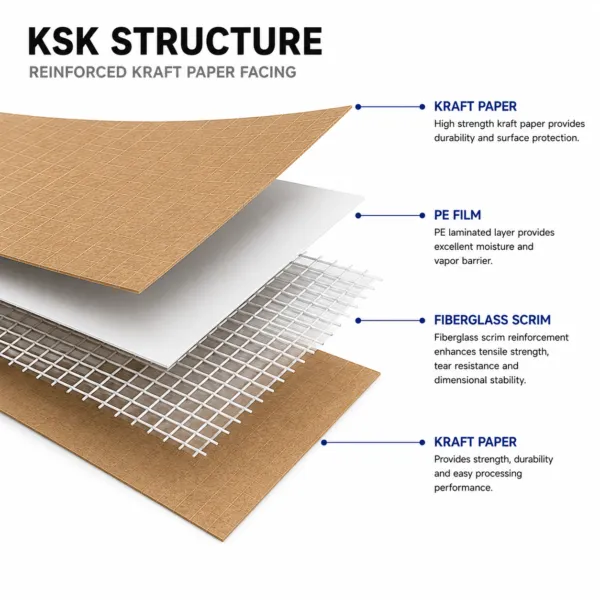
KSK Foil Facing Roll, Laminated Aluminum Foil + Scrim + Kraft Paper, Anti-Tear Thermal Barrier, Suitable for Commercial HVAC and Roof InsulationNegotiableMOQ: 500 Rolls
-
FSK Foil Scrim Kraft, FWF MSK MWV KSK Laminate Foils, Metalized PET MPET Vapor Barrier Facing for Insulation Glasswool RockwoolNegotiableMOQ: 100 Rolls
-
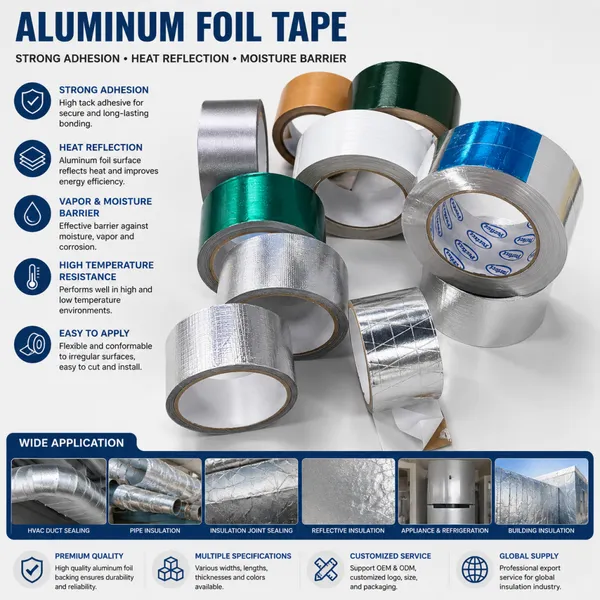
Reinforced Aluminium Foil Tape, Waterproof Anti-aging Tape, Widely Used in HVAC and Building Insulation ProjectsNegotiableMOQ: 500 Cartons
-
HVAC Aluminum Foil Sealing Tape, Strong Adhesion Heat Resistance for Pipe, Glass Wool and Rockwool InsulationNegotiableMOQ: 500 Cartons
-
Factory Supply Metalized PET MPET Laminate Foils, Aluminum Coated PET Film for Roof Wall InsulationNegotiableMOQ: 10000 Cubic Meters
-
Custom MPET Metalized PET Laminate Foils, VMPET Metallized Polyester Facing Film for Thermal InsulationNegotiableMOQ: 10000 Cubic Meters
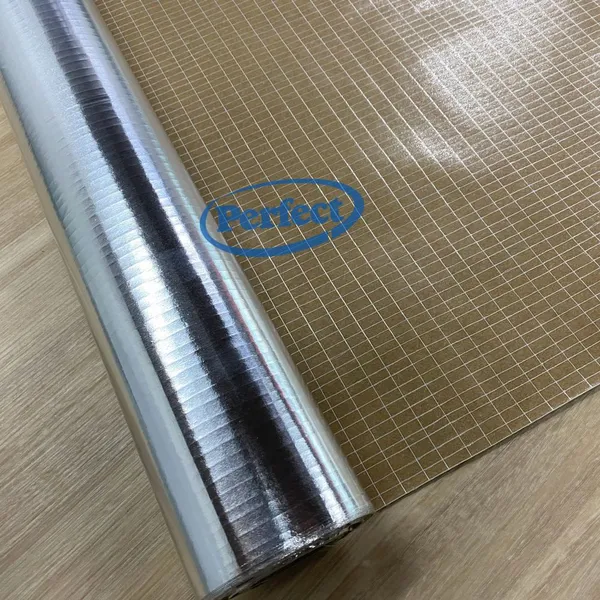
-
Glass Wool Insulation Series, Glasswool With FSK/FWF/MSK/MWV/KSK Facing, Metalized PET Laminate Foils, Heat & Sound Insulation for Commercial BuildingNegotiableMOQ: 100 Rolls
-
Rockwool Blanket With Black Firber GlassNegotiableMOQ: 100 Rolls
-
Glasswool Insulation Blanket & Board, FSK FWF MSK MWV KSK Foil Laminate, MPET Metalized PET Faced Glass Wool for HVAC, Roof, Wall, Air DuctNegotiableMOQ: 100 Rolls
-
Rockwool Insulation Roll, FSK Foil Faced Mineral Wool for Building Thermal & Acoustic Insulation, Fire Resistant Roof Wall Insulation MaterialNegotiableMOQ: 100 Rolls
-
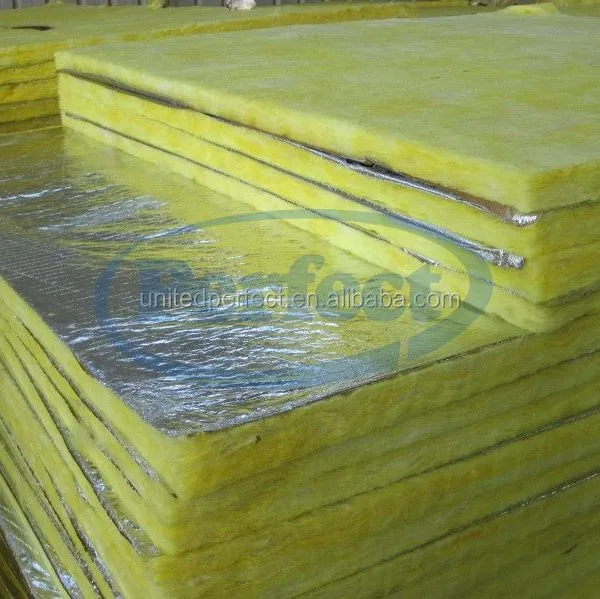
FWF MSK FSK Foil Laminated Rock Wool Glass Wool Blanket, Metalized PET Laminate Foils Faced Insulation for HVAC and ConstructionNegotiableMOQ: 100 Rolls
-
Rockwool Insulation Board, Mineral Wool Rock Wool Slab for Building Thermal & Fire Insulation, Soundproof Rockwool Panel for Roof, Wall, HVAC SystemNegotiableMOQ: 100 Rolls
-
Rockwool Pipe Section, Mineral Wool Rock Wool Tube Insulation, Fire & Heat Resistant Rockwool for Steam Pipes, Industrial Pipeline Insulation ProjectNegotiableMOQ: 100 Rolls
-
Rockwool Board With FSK FacingNegotiableMOQ: 100 Rolls
-
Rockwool Insulation Slab With FSK Facing, Fireproof Rock Wool Board, Thermal & Sound Insulation Rockwool for Roof, Wall and Ductwork ApplicationNegotiableMOQ: 100 Rolls
-
Fireproof Foil Laminated Glass Wool, Laminate Foils MPET Faced Glasswool Insulation Roll & Sheet for Roofing, Wall, Duct and Pipe InsulationNegotiableMOQ: 100 Rolls