
 Business License
Blog Categories

Aluglass vs Fiberglass Cloth: Choosing a Laminated Fabric Facing
A buyer in Australia once specified a glass cloth facing for a duct wrap and then found that the same project called for a vapour barrier on the same surface. The two requirements pulled against each other, and the fix was to move to a foil-faced product that carried both functions in one layer.
An aluglass versus fiberglass cloth decision often comes down to that question of function. A fiberglass cloth laminate carries mechanical strength and heat resistance without a foil layer, while an aluminium foil facing with a glass scrim carries a radiant barrier and a vapour control function that a plain cloth does not. This article compares the two constructions, then sets out the cases in which each one is the correct choice for a laminated fabric facing.
1. What Aluglass and Fiberglass Cloth Each Are
Aluglass is a composite facing built from aluminium foil bonded to a glass fibre scrim. The foil forms the outer surface and reflects radiant heat, and the glass scrim gives the sheet its tear strength and dimensional stability. The two layers are held together with a flame-retardant adhesive, so the aluminum foil facing stays intact when the sheet is cut, folded or wrapped around a duct.
Fiberglass cloth laminate is a different construction. Woven glass yarns form the sheet, and the weave gives the material a high tensile strength and a service temperature that plain foil cannot reach. A fiberglass cloth laminate has no reflective surface unless an aluminium layer is added, and the uncoated version is used where abrasion resistance and thermal endurance matter more than radiant control.
The two products sit on the same supply shelf but serve different jobs. One controls radiation and vapour; the other resists wear and heat. Confusing the two is one of the most common specification errors reported by contractors in North America and Western Europe.
2. Aluglass Versus Fiberglass Cloth on the Reflectivity Question
Radiant heat transfer is where the comparison is clearest. An aluminium foil surface reflects most of the radiant energy that strikes it, and a foil-faced blanket therefore reduces the heat flow into or out of a duct even before the insulation itself is counted. A plain woven cloth absorbs and re-emits radiant heat rather than reflecting it.
The aluglass versus fiberglass cloth choice therefore turns on whether radiant control is part of the requirement. On an HVAC duct in a hot roof space, radiant control is usually the whole point, and the foil layer is what delivers it. On a high-temperature process line where the surrounding air is the main heat path, the cloth version can be the better fit because the weave tolerates higher surface temperatures.
| Property | Aluglass (foil plus glass scrim) | Fiberglass cloth laminate |
|---|---|---|
| Radiant barrier | Yes, aluminium surface | No, unless foil is added |
| Vapour control | Yes, foil acts as a barrier | No, open weave passes vapour |
| Tensile strength | Moderate, scrim reinforced | High, woven yarns |
| Abrasion resistance | Low to moderate | High |
| Service temperature | Foil limits the top end | Higher, glass yarns endure more |
| Typical use | Duct wrap, roof blanket | Equipment wrap, high-temp lagging |
3. Where Laminated Fabric Facing Performance Differs
A laminated fabric facing is judged on three properties: thermal resistance through the assembly, radiant control at the surface, and mechanical survival during installation. The two products rank differently on each one. Aluglass wins on radiant control and on vapour sealing. Fiberglass cloth wins on tensile strength and on abrasion tolerance.
Installation practice exposes the difference quickly. A foil-faced sheet creases if it is pulled too hard around a corner, and a crease can open a path for vapour. A woven cloth tolerates the same pull without creasing but offers no vapour path in the first place. Contractors working in Southeast Asia report that the humid air makes the vapour question decisive far more often than the strength question.
There is also a repair question. A damaged foil facing can be patched with foil tape and the vapour barrier restored. A damaged woven cloth is usually patched with a cloth patch and adhesive, and the repair restores the mechanical layer but not any barrier function. Buyers who expect field damage should weigh which repair is easier on their site.
4. Aluglass Foil Laminate as a Laminated Fabric Facing
Duct wrap is the largest application for the foil-faced product. A foil laminate over a mineral wool or glass wool blanket forms a faced insulation roll, and the facing carries the radiant barrier on the outside of the wrap. This construction suits roof spaces, plant rooms and anywhere the duct surface faces a hot ceiling.
Roof underlayment is the second large application. A foil-faced underlayment laid under a metal roof deck reflects radiant heat back toward the deck and reduces the heat load on the space below. Buyers in Oceania, the Mid East and parts of Africa ask for this construction most often, because the radiant load in those markets is the dominant comfort driver.
The foil layer also acts as a vapour barrier when it is installed on the warm side of the assembly, which is why the same sheet appears in cold-climate wall and roof builds across Northern Europe and Eastern Europe. One product, two functions, and that combination is the reason a laminated foil facing is specified over a plain cloth in most HVAC work.
5. Fiberglass Cloth Laminate in High-Temperature Work
High-temperature equipment wrap is where the woven product earns its place. Glass yarns tolerate surface temperatures that would degrade a thin foil layer, so a fiberglass cloth laminate is used on exhaust runs, engine compartments, and process equipment where the outer skin gets hot. The same product appears as a welding blanket and as a removable insulation pad cover.
Abrasion is the second driver. Woven cloth resists scuffing from tools, foot traffic and vibration far better than foil, and a cloth-faced pad survives repeated handling that would shred a foil surface. Maintenance crews in heavy industry prefer the cloth version for removable pads for exactly this reason.
The limitation is that a cloth-facing alone provides no vapour control and no radiant barrier. Where those functions are also needed, the specification moves to a foil-scrim-cloth build or to a foil laminate applied over the cloth. Buyers should state which functions are required at the surface rather than naming a material, because the surface layer follows from the function.
6. Aluglass Versus Fiberglass Cloth on Cost and Supply
Unit cost is close enough that it rarely decides the choice on its own. Foil-scrim facings and woven glass cloth facings sit in a similar cost band per square metre, and the difference is usually smaller than the difference in installation labour between the two. Buyers who choose on price alone often end up paying more in rework.
Supply and MOQ are more likely to decide. A standard aluglass roll in common widths ships in container quantities, and a stock item is easier to buy at a low minimum than a custom woven cloth in a non-standard width. A buyer who needs 2,000 square metres of a special gauge cloth may face a longer lead time than one ordering a standard foil facing roll.
Sample evaluation is the practical answer. Order a small roll of each construction and run both through the same installation sequence the site will use, including the corners and the seams. The product that installs cleanly in that test is the one to specify, and the test costs far less than a failed installation.
7. Matching Laminated Fabric Facing to the Climate
Climate shifts the balance between the two products. In humid markets such as Southeast Asia and Central America, vapour control matters more, and the foil-facing advantage grows. In hot dry markets such as the Mid East and parts of Africa, radiant control dominates, and again the foil product leads.
Cold markets cut the other way in one respect. In Northern Europe and Eastern Europe the vapour barrier has to sit on the warm side, and a foil facing placed on the warm side of a wall insulation also acts as the barrier. A plain cloth facing placed there would pass moisture into the insulation, which is a common cause of winter condensation complaints.
The climate question should be settled before the material question. Once the buyer knows whether the assembly needs a vapour barrier, a radiant barrier, or neither, the choice between an aluminium foil facing and a fiberglass cloth laminate usually answers itself.
8. Laminated Fabric Facing Supplier Profile
Jinan United Perfect Building Materials Corporation produces foil-scrim facings, foil laminates and cloth-faced insulation sheets from its base in Shandong, China. The company was established in 2017 and supplies building materials to markets including North America, South America, Eastern Europe, Southeast Asia, Africa, Oceania, the Mid East, Eastern Asia, Western Europe, Central America, Northern Europe and Southern Europe.
Product lines include aluglass foil laminates, breathable membranes, laminated foil facings and synthetic underlayments, with widths and roll lengths set to the buyer's application. Jinan United Perfect Building Materials accepts sample requests so that buyers can test a laminated fabric facing against the installation sequence on their own site before committing to a container order.
Buyers comparing an aluglass versus fiberglass cloth specification can send the application details, the surface functions required and the target market, and United Perfect will recommend the facing construction that fits. United Perfect also supports buyers who need the two products compared side by side in a single shipment for a pilot project.
9. FAQ About Aluglass and Fiberglass Cloth
9.1 Can aluglass and fiberglass cloth be used together in one assembly?
Yes, and the combination is common on equipment where both radiant control and abrasion tolerance are needed. The usual build places a fiberglass cloth laminate as the outer wear layer over a foil-scrim facing that provides the vapour and radiant barrier. The cloth takes the handling damage and the foil does the thermal work, and the main requirement is that the two are bonded or mechanically fixed so the facing does not delaminate during service. A supplier can laminate the two in one sheet on request, which removes the separate installation step on site, though buyers should confirm the bond strength if the assembly will see repeated flexing.
9.2 Is an aluglass foil laminate a vapour barrier on its own?
An intact aluminium foil layer acts as a vapour barrier, and a foil-scrim facing therefore performs that function when it is installed continuous and sealed at the joints. The barrier property belongs to the foil, not to the scrim, so any puncture or unsealed lap opens a path for moisture. This is why installation quality decides whether the barrier works in practice, with joints and penetrations usually sealed with foil tape before the finish goes on. In an assembly where a separate vapour barrier is already specified, the foil facing is credited for radiant control while the barrier is credited to the dedicated membrane, so buyers should state which function is being claimed.
9.3 Does fiberglass cloth laminate resist moisture?
A woven glass cloth is dimensionally stable in humid air and does not swell or rot, so it holds its shape where an organic fabric would degrade. It does not, however, block vapour, because the open weave lets moisture pass through the sheet. Where moisture control is required, the assembly needs a separate vapour barrier behind or in front of the cloth, which is why buyers in humid markets usually specify a foil-scrim facing when both functions are needed. The cloth version suits the cases where the surface sees heat and abrasion but the assembly has its barrier elsewhere, and this distinction between dimensional stability and vapour blocking is where most material mix-ups begin.
9.4 Which facing is easier to install around duct corners?
A fiberglass cloth laminate is easier to wrap around a tight corner because the weave tolerates being pulled and folded without tearing. A foil-scrim facing creases more readily and needs careful handling to avoid opening the foil, so corners are usually cut and lapped with tape rather than force-folded. The extra care costs time but preserves the vapour barrier, which is the whole reason for choosing the foil product, and installers in North America often pre-cut corner pieces to keep the fold count down. Buyers should compare the two in a trial installation on a representative corner before setting the labour allowance for a large duct project, because the test takes an hour and prevents an expensive rework.
9.5 How should a buyer specify a laminated fabric facing in an enquiry?
The enquiry should state the surface functions required, the substrate to which the facing is bonded, the service temperature, the roll width and length, and the target market. Stating the functions first lets the supplier choose between a foil-scrim facing and a fiberglass cloth laminate on technical grounds rather than on habit. Naming the market matters because vapour control requirements differ between Europe and North America, and buyers should also state whether the facing is the vapour barrier or whether a separate membrane is present. A supplier with the full picture can quote a laminated fabric facing that installs without on-site workarounds, and Jinan United Perfect Building Materials answers specification enquiries from all listed export markets.
Recently Posted
-
From Felt to Synthetic Underlayment in North American Roofing
November 3, 2026A roofing supplier in North America once kept both felt and synthetic underlayment on the same rack and watched the split shift wi Read More
-
QC Checklist for Synthetic Underlayment Before Shipment
November 3, 2026A buyer in North America once received a shipment in which the lengths on the packing list were correct and the rolls at the centr Read More
-
Synthetic Underlayment Slitting Winding and Roll Diameter Control
November 2, 2026A buyer in North America once rejected a container of synthetic underlayment because the rolls at one end had flattened into an ov Read More
-
Synthetic Underlayment for Tropical and Desert Roofing Projects
November 2, 2026Two projects in the same product family can fail for opposite reasons. A tropical roof underlayment in Southeast Asia can be ruine Read More

Contact Us
Recommended Products
-
 Glasswool Blanket With FSK FacingNegotiableMOQ: 100 Rolls
-
Rockwool Blanket With Wire MeshNegotiableMOQ: 100 Rolls
-
Rockwool Blanket With FSK FacingNegotiableMOQ: 100 Rolls
-
CE Certified Glass Wool Insulation, Glasswool Fiberglass, Low Thermal Conductivity, Noise Reduction for Wall, Roof and Industrial EquipmentNegotiableMOQ: 100 Rolls
-
KSK Foil Facing Roll, Laminated Aluminum Foil + Scrim + Kraft Paper, Anti-Tear Thermal Barrier, Suitable for Commercial HVAC and Roof InsulationNegotiableMOQ: 500 Rolls
-
FSK Foil Scrim Kraft, FWF MSK MWV KSK Laminate Foils, Metalized PET MPET Vapor Barrier Facing for Insulation Glasswool RockwoolNegotiableMOQ: 100 Rolls
-
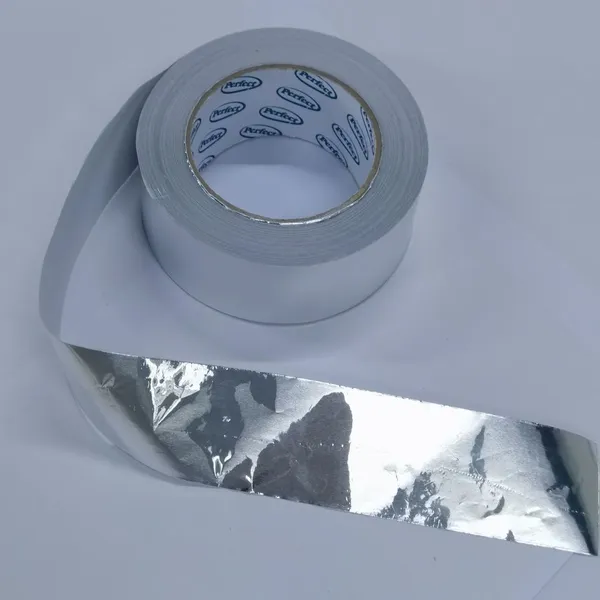
Reinforced Aluminium Foil Tape, Waterproof Anti-aging Tape, Widely Used in HVAC and Building Insulation ProjectsNegotiableMOQ: 500 Cartons
-
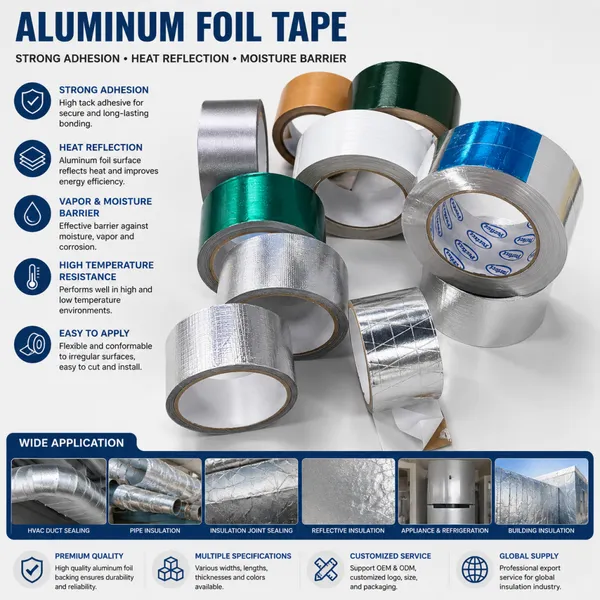
HVAC Aluminum Foil Sealing Tape, Strong Adhesion Heat Resistance for Pipe, Glass Wool and Rockwool InsulationNegotiableMOQ: 500 Cartons
-
Factory Supply Metalized PET MPET Laminate Foils, Aluminum Coated PET Film for Roof Wall InsulationNegotiableMOQ: 10000 Cubic Meters
-
Custom MPET Metalized PET Laminate Foils, VMPET Metallized Polyester Facing Film for Thermal InsulationNegotiableMOQ: 10000 Cubic Meters
-
Glass Wool Insulation Series, Glasswool With FSK/FWF/MSK/MWV/KSK Facing, Metalized PET Laminate Foils, Heat & Sound Insulation for Commercial BuildingNegotiableMOQ: 100 Rolls
-
Rockwool Blanket With Black Firber GlassNegotiableMOQ: 100 Rolls
-
Glasswool Insulation Blanket & Board, FSK FWF MSK MWV KSK Foil Laminate, MPET Metalized PET Faced Glass Wool for HVAC, Roof, Wall, Air DuctNegotiableMOQ: 100 Rolls
-
Rockwool Insulation Roll, FSK Foil Faced Mineral Wool for Building Thermal & Acoustic Insulation, Fire Resistant Roof Wall Insulation MaterialNegotiableMOQ: 100 Rolls
-
FWF MSK FSK Foil Laminated Rock Wool Glass Wool Blanket, Metalized PET Laminate Foils Faced Insulation for HVAC and ConstructionNegotiableMOQ: 100 Rolls
-
Rockwool Insulation Board, Mineral Wool Rock Wool Slab for Building Thermal & Fire Insulation, Soundproof Rockwool Panel for Roof, Wall, HVAC SystemNegotiableMOQ: 100 Rolls
-
Rockwool Pipe Section, Mineral Wool Rock Wool Tube Insulation, Fire & Heat Resistant Rockwool for Steam Pipes, Industrial Pipeline Insulation ProjectNegotiableMOQ: 100 Rolls
-
Rockwool Board With FSK FacingNegotiableMOQ: 100 Rolls
-
Rockwool Insulation Slab With FSK Facing, Fireproof Rock Wool Board, Thermal & Sound Insulation Rockwool for Roof, Wall and Ductwork ApplicationNegotiableMOQ: 100 Rolls
-
Fireproof Foil Laminated Glass Wool, Laminate Foils MPET Faced Glasswool Insulation Roll & Sheet for Roofing, Wall, Duct and Pipe InsulationNegotiableMOQ: 100 Rolls