
 Business License
Blog Categories

Breathable Membrane vs Vapor Barrier: Choosing the Right Layer
A contractor in Central America once asked a supplier for the same membrane throughout a mixed development. Half the buildings were air-conditioned offices, and half were unconditioned storage units in a humid climate. The request was reasonable and the answer was that no single layer would serve both.
The breathable membrane versus vapor barrier question turns on one thing: which direction moisture needs to travel, and which side of the insulation the moisture source sits on. In a cold climate the source is usually inside, and vapour must be stopped from entering the assembly. In a hot humid climate the source is often outside, and the same logic reverses. This article sets out how to choose between the two layers, where each belongs, and what goes wrong when the choice is made by habit.
1. The Difference Between a Breathable Membrane and a Vapor Barrier
Both layers resist moisture, and the difference lies in what they resist and in which direction they permit movement.
| Property | Breathable Membrane | Vapor Barrier |
|---|---|---|
| Vapour movement | Permits diffusion | Resists diffusion |
| Typical position | Cold side of insulation | Warm side of insulation |
| Main job | Let the assembly dry outward | Stop indoor vapour entering |
| Air leakage | Reduced by taping laps | Reduced by sealing joints |
| Common material | Spunbonded polypropylene | Polyethylene sheet |
The vapour resistance of a layer is normally expressed as a diffusion resistance figure or as an Sd value, which describes the equivalent air thickness that would produce the same resistance. A membrane with a low Sd allows vapour through readily, and a barrier with a high Sd blocks it.
The terms are sometimes used loosely, which creates confusion in specifications. A wall membrane vapour control layer is not necessarily a barrier, and a product described as breathable is not necessarily suitable for every position. The layer's function in the assembly depends on where it sits, not on the label on the roll.
The breathable membrane versus vapor barrier comparison is often framed as a choice between two products, and that framing is itself the source of many errors. In a cold-climate wall the two layers work together rather than competing, and the question is which position each one occupies.
2. How the Assembly Direction Decides Breathable Membrane Versus Vapor Barrier
The decision follows from the climate and from the moisture load rather than from the material preference of the designer, and the breathable membrane versus vapor barrier question cannot be answered without both facts.
In a cold climate, indoor air is warm and carries more moisture than outdoor air for most of the year. Vapour pressure drives moisture outward, so a vapour barrier on the warm side prevents moisture from entering the assembly, and a breathable membrane on the cold side lets any moisture that does enter escape.
In a hot humid climate, the drive reverses. Outdoor air carries more moisture, and vapour pressure pushes inward. An inward-facing barrier then sits on the correct side, and a layer that allows diffusion on the outer face lets the assembly dry outward.
In mixed and moderate climates the difficult cases dominate. Where the direction of drive changes through the year, neither layer is clearly correct on its own, and the breathable membrane versus vapor barrier decision usually depends on making the assembly tolerant of some moisture rather than on blocking it entirely.
3. Breathable Membrane Versus Vapor Barrier in Cold Climates
A cold-climate wall normally uses both layers, and they are not alternatives to one another. The barrier goes on the warm side and the breathable membrane on the cold side.
The barrier has to be continuous, because a single unsealed penetration defeats it across the whole bay. Service boxes, top plates and floor junctions are the usual weak points, and they are where most interstitial condensation problems begin.
The breathable membrane on the cold side then serves a different purpose. It stops wind from washing through the insulation and it allows the assembly to dry outward if moisture does get in during construction or through a defect. Where a cold-climate wall has a barrier on both sides, the assembly cannot dry in either direction.
This double-barrier arrangement is the most common serious error in cold-climate construction. It performs well in the first year and deteriorates quietly after that, and the visible symptom usually appears as damp sheathing several years later.
4. Vapor Barrier Wall Membrane Selection Criteria
Selecting a vapour barrier wall membrane is more demanding than selecting a breathable layer, because the barrier carries a larger share of the moisture control duty. A vapour barrier wall membrane also has to remain continuous through more construction stages than a breathable layer, since it is often closed in before services are complete.
Start with the Sd value and the intended position. A barrier with a very high Sd is appropriate on the warm side of a heavily insulated cold-climate wall and inappropriate in a moderate climate where the drive reverses.
Then look at the jointing. A barrier is as good as its joints, and the tape or sealant specified with the barrier matters more than the barrier's own Sd figure in most assemblies. Where a barrier covers a large area, the number of joints is large, and each one is a potential leak. A vapor barrier wall membrane that is taped with the wrong product performs no better than an untaped one.
Then consider mechanical protection. A barrier that is torn during services installation loses its function locally, and the loss is invisible after the lining goes on. Where services run in the wall, a barrier with reinforcement or a protected route for the services reduces the risk.
5. Where Wall Membrane Vapour Control Belongs
Wall membrane vapour control is a system property rather than a layer property. The right question is not which layer to buy but where the control sits within the build-up.
In a timber frame wall with insulation between studs, the control layer normally sits immediately behind the internal lining, on the warm side of the insulation. This puts it where the vapour load is highest and where it can be inspected before the lining is closed.
In a masonry wall with external insulation, the position changes. The control layer may sit on the inner face of the masonry, and the outer insulation is then protected by a breathable layer rather than by a barrier. Getting wall membrane vapour control wrong on a masonry wall is harder to correct than on a framed wall, because the control layer sits behind the masonry rather than behind a lining that can be removed.
In a wall with a service cavity, the control layer moves to the inner face of the service zone, so that penetrations for cables and pipes sit outside the control layer rather than through it. This detail costs little and removes a whole category of leakage.
6. Case Notes on Vapor Barrier Wall Membrane Choices
A developer in Eastern Europe built a row of timber frame houses with a polyethylene barrier on both faces of the wall. The houses had no visible problem in the first winter. By the third year, four of the twelve houses showed elevated moisture readings in the sheathing and damp staining at the floor junction, and the outer vapor barrier wall membrane was identified as the specific error. The assembly had no drying path in either direction, and construction moisture had never been able to leave.
The remedy was to remove the outer barrier and replace it with a breathable membrane. The change cost about 25 percent of the original membrane budget for those houses and required opening the external cladding. The four affected houses had to be re-clad, and the remaining eight were corrected before any damage appeared.
A second project in Southeast Asia used a breathable membrane on both faces of a wall in a hot humid climate. There, the outer layer was correct and the inner layer was wrong: the assembly could dry outward but inward vapour entry was never controlled. Moving the inner layer to a barrier on the conditioned side resolved the condensation pattern within one season.
7. Specifying Wall Membrane Vapour Control Correctly
Ask for the Sd value or the diffusion resistance with the test method stated. A figure quoted without a method cannot be compared across suppliers.
State the position of the layer within the build-up, not just the material. The same roll can be correct on one face and wrong on the other, and a specification that names a product without naming its position leaves the decision to whoever installs it.
State the jointing system for whichever layer is the primary control. Where the barrier is the control layer, name the tape and require it to be tested with the barrier. Where the breathable membrane is the control layer for air leakage, do the same for that layer.
Where the climate is mixed, state the intended drying direction and check that a single layer blocks it. This single check catches the double-barrier error before it reaches site.
8. Where United Perfect Building Materials Corporation Fits
United Perfect Building Materials, part of Jinan United Perfect Building Materials Corporation, supplies both breathable membranes and vapour control layers, which allows a project to specify the pair from one source and to compare their diffusion figures on a consistent basis. The company's range covers roof and wall grades for each type.
Jinan United Perfect Building Materials holds retained samples by production batch, so a delivered roll can be checked against the reference. Buyers working in mixed climates can request the diffusion figures alongside the samples and confirm that a single layer in the assembly is intended to block moisture before the order is placed.
9. FAQ About Breathable Membrane Versus Vapor Barrier
9.1 Can I use a breathable membrane instead of a vapor barrier?
Not in a cold-climate wall where the vapour drive is outward, because the assembly still needs a layer that resists inward moisture. A breathable membrane allows diffusion in both directions, so using one on the warm side removes the control the wall needs. In moderate or hot humid climates the answer differs, and a permeable layer on the inner face may be correct where the drive reverses. The climate and the direction of the moisture drive decide, not the material name alone.
9.2 What happens if a wall has a vapor barrier on both sides?
The assembly loses its drying path in both directions. Moisture that enters during construction, or that reaches the wall through a defect or a service penetration, cannot leave, and it accumulates at the coldest point in the build-up. The problem normally appears several years later as damp sheathing, mould on framing or staining at a floor junction. Correcting it means opening the wall from one side, which is why the arrangement is worth preventing at design stage rather than detecting in service.
9.3 Where should a wall membrane vapour control layer be installed?
On the warm side of the insulation, which in a cold climate is normally the inner face. In a wall with a service cavity, the control layer should sit at the inner face of the service zone so that cable and pipe penetrations fall outside it. In a masonry wall with external insulation the position shifts, and the control layer may sit against the inner face of the masonry. The governing rule is that the control layer sits between the moisture source and the rest of the assembly.
9.4 Does a vapor barrier wall membrane need to be airtight?
It needs to be continuous, which is a related but slightly different requirement. Air leakage carries far more moisture than diffusion in most assemblies, so an unsealed joint or an unsealed penetration defeats the barrier at that point regardless of its Sd value. In practice this means specifying the tape and the sealant with the barrier, and inspecting the joints before the lining goes on. A barrier installed without its jointing system is a barrier with an unknown performance, and its vapour figure describes a sheet that no longer exists as installed.
9.5 How do I decide between the two layers for a moderate climate?
Start by establishing which direction the vapour drive takes for the larger part of the year, then design the assembly so that a single layer blocks that path and the other permits drying. Where the drive genuinely reverses, prefer an assembly that tolerates some moisture rather than one that depends on complete blocking. Where suppliers are part of the building materials sector in China, request diffusion figures for both layers on the same test basis so the comparison is meaningful rather than nominal.
Recently Posted
-
From Felt to Synthetic Underlayment in North American Roofing
November 3, 2026A roofing supplier in North America once kept both felt and synthetic underlayment on the same rack and watched the split shift wi Read More
-
QC Checklist for Synthetic Underlayment Before Shipment
November 3, 2026A buyer in North America once received a shipment in which the lengths on the packing list were correct and the rolls at the centr Read More
-
Synthetic Underlayment Slitting Winding and Roll Diameter Control
November 2, 2026A buyer in North America once rejected a container of synthetic underlayment because the rolls at one end had flattened into an ov Read More
-
Synthetic Underlayment for Tropical and Desert Roofing Projects
November 2, 2026Two projects in the same product family can fail for opposite reasons. A tropical roof underlayment in Southeast Asia can be ruine Read More

Contact Us
Recommended Products
-
 Glasswool Blanket With FSK FacingNegotiableMOQ: 100 Rolls
-
Rockwool Blanket With Wire MeshNegotiableMOQ: 100 Rolls
-
Rockwool Blanket With FSK FacingNegotiableMOQ: 100 Rolls
-
CE Certified Glass Wool Insulation, Glasswool Fiberglass, Low Thermal Conductivity, Noise Reduction for Wall, Roof and Industrial EquipmentNegotiableMOQ: 100 Rolls
-
KSK Foil Facing Roll, Laminated Aluminum Foil + Scrim + Kraft Paper, Anti-Tear Thermal Barrier, Suitable for Commercial HVAC and Roof InsulationNegotiableMOQ: 500 Rolls
-
FSK Foil Scrim Kraft, FWF MSK MWV KSK Laminate Foils, Metalized PET MPET Vapor Barrier Facing for Insulation Glasswool RockwoolNegotiableMOQ: 100 Rolls
-
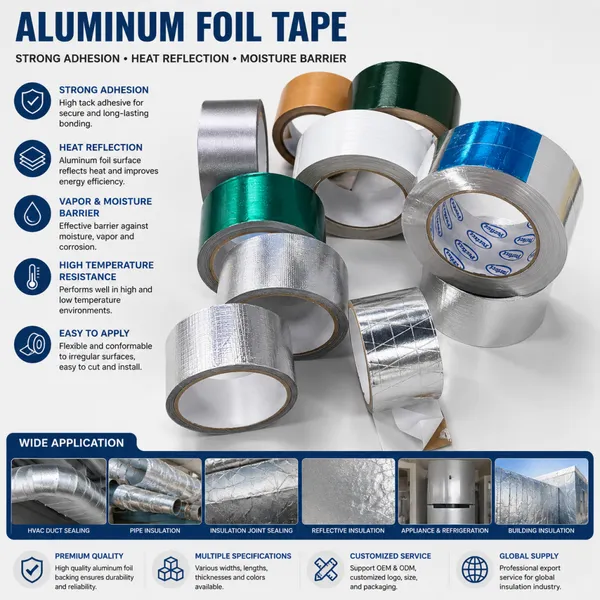
Reinforced Aluminium Foil Tape, Waterproof Anti-aging Tape, Widely Used in HVAC and Building Insulation ProjectsNegotiableMOQ: 500 Cartons
-
HVAC Aluminum Foil Sealing Tape, Strong Adhesion Heat Resistance for Pipe, Glass Wool and Rockwool InsulationNegotiableMOQ: 500 Cartons
-
Factory Supply Metalized PET MPET Laminate Foils, Aluminum Coated PET Film for Roof Wall InsulationNegotiableMOQ: 10000 Cubic Meters
-
Custom MPET Metalized PET Laminate Foils, VMPET Metallized Polyester Facing Film for Thermal InsulationNegotiableMOQ: 10000 Cubic Meters
-
Glass Wool Insulation Series, Glasswool With FSK/FWF/MSK/MWV/KSK Facing, Metalized PET Laminate Foils, Heat & Sound Insulation for Commercial BuildingNegotiableMOQ: 100 Rolls
-
Rockwool Blanket With Black Firber GlassNegotiableMOQ: 100 Rolls
-
Glasswool Insulation Blanket & Board, FSK FWF MSK MWV KSK Foil Laminate, MPET Metalized PET Faced Glass Wool for HVAC, Roof, Wall, Air DuctNegotiableMOQ: 100 Rolls
-
Rockwool Insulation Roll, FSK Foil Faced Mineral Wool for Building Thermal & Acoustic Insulation, Fire Resistant Roof Wall Insulation MaterialNegotiableMOQ: 100 Rolls
-
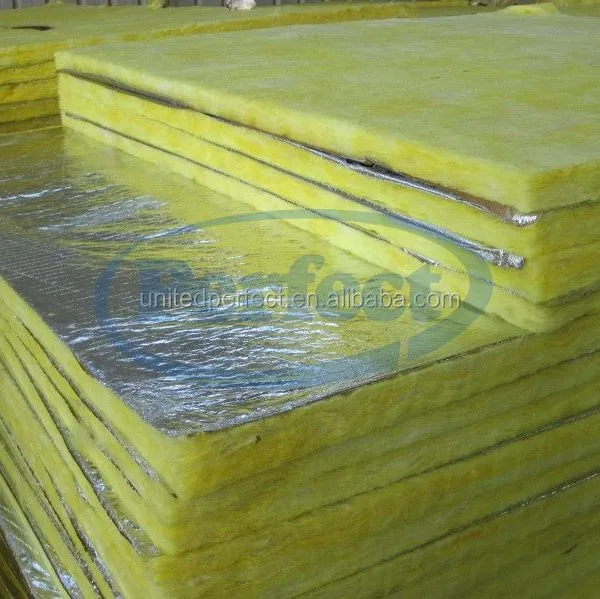
FWF MSK FSK Foil Laminated Rock Wool Glass Wool Blanket, Metalized PET Laminate Foils Faced Insulation for HVAC and ConstructionNegotiableMOQ: 100 Rolls
-
Rockwool Insulation Board, Mineral Wool Rock Wool Slab for Building Thermal & Fire Insulation, Soundproof Rockwool Panel for Roof, Wall, HVAC SystemNegotiableMOQ: 100 Rolls
-
Rockwool Pipe Section, Mineral Wool Rock Wool Tube Insulation, Fire & Heat Resistant Rockwool for Steam Pipes, Industrial Pipeline Insulation ProjectNegotiableMOQ: 100 Rolls
-
Rockwool Board With FSK FacingNegotiableMOQ: 100 Rolls
-
Rockwool Insulation Slab With FSK Facing, Fireproof Rock Wool Board, Thermal & Sound Insulation Rockwool for Roof, Wall and Ductwork ApplicationNegotiableMOQ: 100 Rolls
-
Fireproof Foil Laminated Glass Wool, Laminate Foils MPET Faced Glasswool Insulation Roll & Sheet for Roofing, Wall, Duct and Pipe InsulationNegotiableMOQ: 100 Rolls