
 Business License
Blog Categories

Packaging and Palletizing Breathable Membrane for Sea Freight
A distributor in Oceania opened a container of breathable membrane and found the bottom three pallets crushed. The rolls had been loaded flat, and the weight above had flattened them into oval sections. The material itself was within specification, and the consignment was still unusable at the point where the rolls needed to unwind.
Sea freight is harder on a roll product than most buyers expect. A container is a closed environment with high humidity, temperature swings and several weeks of static load, and a breathable membrane packing arrangement that works for a road shipment can fail at sea. This article covers how membrane palletizing and membrane sea freight handling should be arranged, what goes wrong, and how to write the packing requirement into a purchase order.
1. Why Membrane Sea Freight Differs From Road Freight
A sea voyage exposes a palletized product to conditions that a road shipment does not, and the differences are cumulative rather than dramatic.
Humidity inside a container rises as cargo crosses climate zones, and warm humid air moving into a cooler zone causes condensation on any surface below the dew point. That condensation forms on packaging film, on the container roof and on metal pallets.
Temperature swings are the second factor. A container on deck can see large daily variation, and the packaging film and the membrane respond at different rates. A film that becomes brittle in the cold can crack when the container is handled, which then allows water into the pallet.
| Condition | Effect on the Pallet |
|---|---|
| High container humidity | Condensation on film and metal |
| Temperature cycling | Film embrittlement, cracking |
| Static load over weeks | Crushing of flat-stacked rolls |
| Container movement | Pallet shifting, edge damage |
| Handling at both ends | Forklift contact on film |
The static load point is the one that catches most buyers. A roll is a hollow cylinder, and it carries load far better on its end than on its side. A pallet of rolls standing upright distributes weight through the roll walls. A pallet of rolls lying flat transfers load across the roll diameter, which flattens the section permanently.
2. Breathable Membrane Packaging for Roll Products
A breathable membrane packaging requirement should specify the protection, the containment and the labelling together rather than as separate items.
The primary protection is a film wrap that resists water vapour and handling damage. A stretch or shrink film over the pallet keeps the rolls together and sheds the condensation that forms on the outside. The film does not need to be vapour tight for the product itself, but it should keep the pallet dry.
The containment layer includes edge boards, corner protectors and banding. Roll edges are the most vulnerable part of the product, and a damaged edge cannot be cut straight at the site. Edge protection is inexpensive and it addresses the most frequent damage claim in roll shipments.
The labelling layer matters for the same reason. Each pallet should carry a label that identifies the batch, the grade and the number of rolls, so that a query at destination can be traced to a production run rather than to a container number. A label placed under three layers of film is useless, so the position of the label on the pallet should also be specified, ideally on two faces so that it is readable from either side of a stack.
3. Membrane Palletizing and Load Orientation
Membrane palletizing decisions are made at the loading stage, and the orientation decision is the one with the largest effect.
| Arrangement | Load Path | Risk |
|---|---|---|
| Rolls upright, single layer | Through roll walls | Low |
| Rolls upright, stacked two high | Through roll walls | Moderate, needs a board between layers |
| Rolls flat, single layer | Across roll diameter | Section deformation |
| Rolls flat, stacked | Across roll diameter | Severe crushing at the base |
| Mixed orientation | Uneven | Pallet instability |
Upright loading is the standard practice for a reason, and it should be stated in the purchase order rather than assumed. Where rolls are stacked two high, a rigid board between the layers spreads the load and prevents the upper rolls from settling into the gaps between the lower ones.
Where a roll diameter is small, upright loading limits the number of rolls per pallet, and some shippers switch to flat loading to raise the density. That trade saves freight and risks the product, and the calculation should include the cost of a rejected pallet rather than the freight saving alone.
4. Condensation Control in Membrane Sea Freight Containers
Condensation is the failure mode that most often affects a breathable membrane shipment, and it can be managed rather than merely accepted.
The moisture that condenses comes partly from the cargo itself and partly from the container floor and pallet timber. Wooden pallets are often the largest single source, because timber carries moisture that releases as the container warms. On a long membrane sea freight route, that release continues for weeks.
Specifying heat-treated and dried pallets reduces that source. Where the cargo is sensitive, a desiccant liner or bags absorb moisture that would otherwise condense on the cargo. The liner is a modest cost against the value of a container of membrane.
Where a container is loaded in a humid climate and discharged in a cool one, the condensation risk is highest, and the liner is worth specifying as a default rather than as an option.
5. Case Notes on Membrane Sea Freight Handling
A distributor in Oceania received a container in which the rolls had been loaded flat and stacked three high. The bottom layer had been compressed under the load above, and the rolls would not unwind cleanly at the site. The material was within specification and the claim turned on the packing method rather than on the product. A replacement container was shipped with upright loading and edge boards, and it arrived without damage.
A second shipment to Southeast Asia arrived with condensation staining on the outer wrap of several pallets. The film had not cracked and the product underneath was dry, but the appearance complaint led to a partial credit. Adding a container liner and specifying dried pallets removed the condensation on the following shipments, at a cost well below the credit previously allowed.
Both cases were packing and handling issues rather than product issues, and both were avoidable with a packing requirement stated on the order.
6. Writing a Breathable Membrane Packaging Requirement
State the orientation, the number of rolls per pallet and the maximum stack height. These three items define the load case, and a supplier cannot meet a requirement that is not stated.
State the edge protection and the banding. Where rolls are to be cut on site, an undamaged edge is a functional requirement rather than a cosmetic one.
State the pallet specification, including the treatment and the moisture condition. Where the cargo is sensitive, add a container liner and a desiccant requirement.
State the labelling, including the batch reference and the grade. Where the shipment carries more than one grade, the labels should allow a pallet to be identified without opening the film, which speeds both inspection and any later query.
7. Inspecting a Membrane Palletizing Delivery Before Unloading
An inspection at the destination takes a few minutes and protects both parties, because damage that is found before unloading is a transport matter and damage found later is a dispute.
Check the container doors for water staining and the floor for standing moisture before unloading. A wet floor suggests condensation during the voyage, and that affects the whole container rather than one pallet.
Check the film wrap for cracking and the pallet corners for compression. Then check one pallet per layer for section deformation by sighting along the roll. A membrane palletizing fault shows up clearly in that sight line, because a flattened roll declares itself immediately.
Record the batch labels against the packing list before the pallets are dispersed. Once the pallets are mixed in a warehouse, tracing a batch back to a supply becomes much harder.
8. Breathable Membrane Packaging Supplier Profile
United Perfect Building Materials, part of Jinan United Perfect Building Materials Corporation, produces breathable membranes for roof and wall systems and packs them for export. The company loads rolls upright with edge boards and banding, and supplies pallet labels that carry the batch reference and the grade.
Jinan United Perfect Building Materials holds retained samples by production batch, so a delivered roll can be checked against the reference used at approval, and the batch label on the pallet allows that comparison to be made at the destination. Buyers specifying a breathable membrane packaging requirement that includes a container liner and dried pallets can confirm those items in the order, and United Perfect applies them across roof and wall grades on the same shipment. That keeps the packing consistent where a project orders two grades at once.
9. FAQ About Breathable Membrane Packaging and Palletizing
9.1 Should breathable membrane rolls be shipped upright or flat?
Upright, wherever the geometry allows. A roll standing on its end carries load through its walls, which are strong in compression, while a roll lying flat carries load across its diameter and flattens permanently under a stack. The flattened roll will not unwind cleanly, so the damage is a functional failure rather than a cosmetic one. Where a small roll diameter makes upright loading uneconomical, at least keep the stack shallow and place a rigid board between layers, which spreads the load and keeps the upper rolls out of the gaps in the layer beneath.
9.2 Why does condensation form inside a membrane sea freight container?
Warm humid air inside the container meets a surface below its dew point as the container crosses climate zones, and moisture condenses there. The moisture comes from the air itself, from the cargo and from the timber pallets. Dried pallets remove one large source, and a container liner absorbs the remainder. Where a container is loaded in a humid port and discharged in a cooler one, the risk is highest and the liner is worth specifying as standard rather than as an option.
9.3 How many rolls should be stacked per pallet?
The number follows from the roll diameter, the pallet size and the load the rolls can carry, and it should come from the supplier rather than from the buyer's convenience. A single layer of upright rolls is the safest arrangement. Where two layers are used, a rigid board between them prevents the upper rolls from settling into the gaps between the lower ones. More than two layers of upright rolls raises the centre of gravity and increases the risk of the pallet toppling during handling.
9.4 What edge protection does a membrane palletizing requirement need?
Corner boards or edge protectors on all four vertical corners, plus banding that holds the pallet together without cutting into the rolls. The roll edge is the part of the product that cannot be repaired, because a damaged edge cannot be cut straight at the site. Edge protection is among the least expensive items in the packing list and it addresses the most common damage claim in roll shipments. It should be stated in the purchase order rather than left to the supplier's standard practice.
9.5 What should I check when a membrane shipment arrives?
Check the container for water staining and the floor for moisture before unloading, since a wet floor affects the whole consignment. Then check the film wrap for cracking and the pallet corners for compression. Sight along one roll per layer to confirm that the section is round rather than oval. Finally, record the batch labels against the packing list before the pallets are dispersed, because once they are mixed in a warehouse the traceability that supports a later claim has gone.
Recently Posted
-
From Felt to Synthetic Underlayment in North American Roofing
November 3, 2026A roofing supplier in North America once kept both felt and synthetic underlayment on the same rack and watched the split shift wi Read More
-
QC Checklist for Synthetic Underlayment Before Shipment
November 3, 2026A buyer in North America once received a shipment in which the lengths on the packing list were correct and the rolls at the centr Read More
-
Synthetic Underlayment Slitting Winding and Roll Diameter Control
November 2, 2026A buyer in North America once rejected a container of synthetic underlayment because the rolls at one end had flattened into an ov Read More
-
Synthetic Underlayment for Tropical and Desert Roofing Projects
November 2, 2026Two projects in the same product family can fail for opposite reasons. A tropical roof underlayment in Southeast Asia can be ruine Read More

Contact Us
Recommended Products
-
 Glasswool Blanket With FSK FacingNegotiableMOQ: 100 Rolls
-
Rockwool Blanket With Wire MeshNegotiableMOQ: 100 Rolls
-
Rockwool Blanket With FSK FacingNegotiableMOQ: 100 Rolls
-
CE Certified Glass Wool Insulation, Glasswool Fiberglass, Low Thermal Conductivity, Noise Reduction for Wall, Roof and Industrial EquipmentNegotiableMOQ: 100 Rolls
-
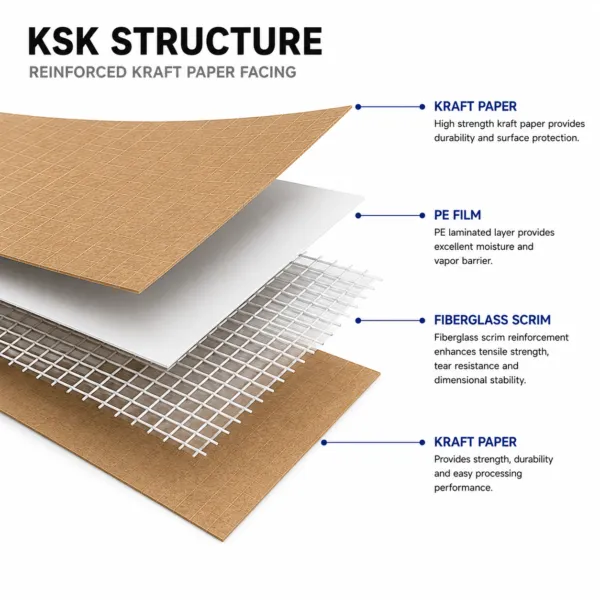
KSK Foil Facing Roll, Laminated Aluminum Foil + Scrim + Kraft Paper, Anti-Tear Thermal Barrier, Suitable for Commercial HVAC and Roof InsulationNegotiableMOQ: 500 Rolls

-
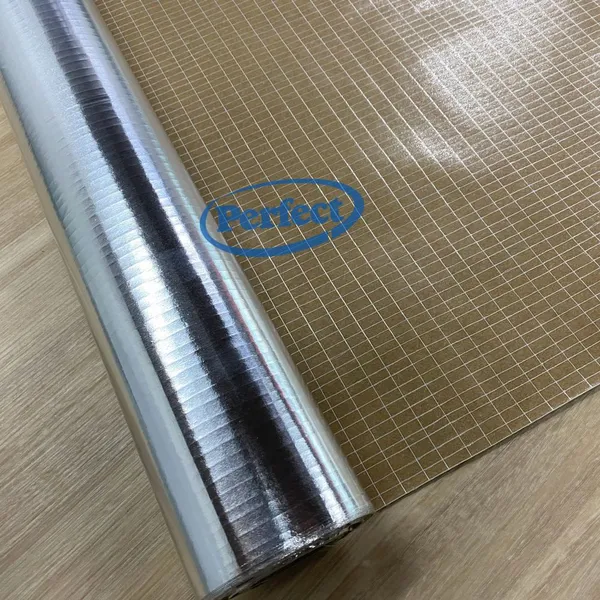
FSK Foil Scrim Kraft, FWF MSK MWV KSK Laminate Foils, Metalized PET MPET Vapor Barrier Facing for Insulation Glasswool RockwoolNegotiableMOQ: 100 Rolls
-
Reinforced Aluminium Foil Tape, Waterproof Anti-aging Tape, Widely Used in HVAC and Building Insulation ProjectsNegotiableMOQ: 500 Cartons
-
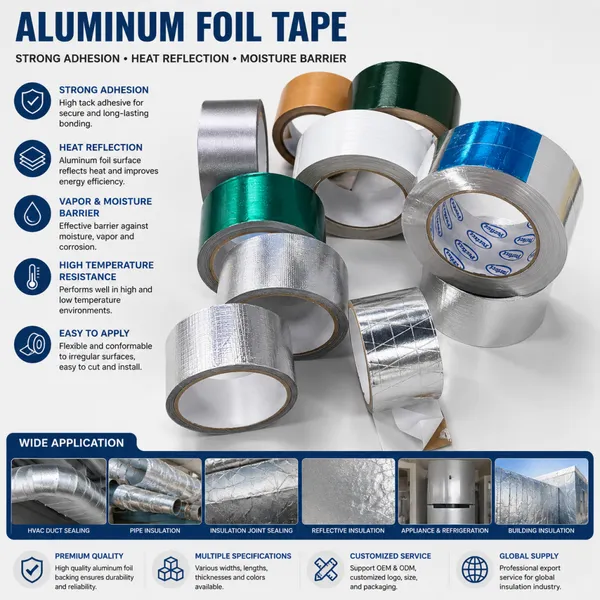
HVAC Aluminum Foil Sealing Tape, Strong Adhesion Heat Resistance for Pipe, Glass Wool and Rockwool InsulationNegotiableMOQ: 500 Cartons
-
Factory Supply Metalized PET MPET Laminate Foils, Aluminum Coated PET Film for Roof Wall InsulationNegotiableMOQ: 10000 Cubic Meters
-
Custom MPET Metalized PET Laminate Foils, VMPET Metallized Polyester Facing Film for Thermal InsulationNegotiableMOQ: 10000 Cubic Meters
-
Glass Wool Insulation Series, Glasswool With FSK/FWF/MSK/MWV/KSK Facing, Metalized PET Laminate Foils, Heat & Sound Insulation for Commercial BuildingNegotiableMOQ: 100 Rolls
-
Rockwool Blanket With Black Firber GlassNegotiableMOQ: 100 Rolls
-
Glasswool Insulation Blanket & Board, FSK FWF MSK MWV KSK Foil Laminate, MPET Metalized PET Faced Glass Wool for HVAC, Roof, Wall, Air DuctNegotiableMOQ: 100 Rolls
-
Rockwool Insulation Roll, FSK Foil Faced Mineral Wool for Building Thermal & Acoustic Insulation, Fire Resistant Roof Wall Insulation MaterialNegotiableMOQ: 100 Rolls
-
FWF MSK FSK Foil Laminated Rock Wool Glass Wool Blanket, Metalized PET Laminate Foils Faced Insulation for HVAC and ConstructionNegotiableMOQ: 100 Rolls
-
Rockwool Insulation Board, Mineral Wool Rock Wool Slab for Building Thermal & Fire Insulation, Soundproof Rockwool Panel for Roof, Wall, HVAC SystemNegotiableMOQ: 100 Rolls
-
Rockwool Pipe Section, Mineral Wool Rock Wool Tube Insulation, Fire & Heat Resistant Rockwool for Steam Pipes, Industrial Pipeline Insulation ProjectNegotiableMOQ: 100 Rolls
-
Rockwool Board With FSK FacingNegotiableMOQ: 100 Rolls
-
Rockwool Insulation Slab With FSK Facing, Fireproof Rock Wool Board, Thermal & Sound Insulation Rockwool for Roof, Wall and Ductwork ApplicationNegotiableMOQ: 100 Rolls
-
Fireproof Foil Laminated Glass Wool, Laminate Foils MPET Faced Glasswool Insulation Roll & Sheet for Roofing, Wall, Duct and Pipe InsulationNegotiableMOQ: 100 Rolls