
 Business License
Blog Categories

Breathable Membrane Technology Trends in Cool and Wet Climates
A specifier in Western Europe once compiled ten years of warranty claims for wall systems and found that the largest single category was not material failure. It was moisture control, and the complaints clustered in cool and wet regions rather than in warm ones.
That pattern explains where the breathable membrane trend is heading. In a cool wet climate, the moisture drive is inward for part of the year and outward for another part, and a layer that resists one direction resists the wrong one for half the time. The technology is moving toward membranes that adapt to changing conditions rather than membranes that block a fixed direction. This article sets out the membrane technology innovation that matters in these climates, and what it means for a specification written today.
1. Why Wet Climate Wall Membrane Design Is the Hard Case
A cool wet climate combines high outdoor humidity with a moderate indoor-outdoor temperature difference, and that combination is harder to design for than either extreme.
In a cold dry climate, the moisture source is clearly inside, and the vapour drive runs outward for most of the year. A vapour control layer on the warm side and a permeable layer on the cold side handle it well.
In a hot humid climate, the source is clearly outside and the drive runs inward. The arrangement reverses, and again a fixed solution works.
A wet climate wall membrane faces both patterns in the same year. Outdoor humidity is high for much of the year, and the indoor-outdoor temperature difference swings with the season rather than staying on one side. That combination is why a wet climate wall membrane specification is harder to write than one for either extreme.
| Climate | Dominant Drive | Fixed Solution |
|---|---|---|
| Cold dry | Outward | Works |
| Hot humid | Inward | Works |
| Cool wet | Reverses seasonally | Marginal |
That reversal is the reason a cool wet climate produces more moisture complaints than a colder one. The assembly cannot rely on a single fixed direction, so it has to tolerate moisture movement in both. Designers working in these regions therefore tend to favour assemblies that can dry in either direction over assemblies that block one direction perfectly.
2. Membrane Technology Innovation Toward Variable Resistance
The most significant membrane technology innovation in this context is the variable resistance membrane, which changes its diffusion resistance with ambient humidity. This membrane technology innovation addresses the one condition that a fixed product cannot handle by design.
A standard membrane has a fixed diffusion figure. A variable resistance membrane has a low figure when the ambient humidity is high and a higher figure when it is low, because its polymer structure responds to moisture.
The effect is that the membrane becomes more permeable when the assembly needs to dry and less permeable when it needs to resist inward vapour movement. In a cool wet climate, that behaviour follows the season rather than fighting it.
For a wet climate wall membrane, the practical consequence is a wider tolerance band. The assembly no longer depends on the design correctly predicting which direction the drive will take in a given month, because the membrane responds to the actual condition rather than to an assumption.
3. Membrane Technology Innovation in Variable Resistance Products
The behaviour of a variable resistance membrane is easiest to understand by comparing it with a fixed product across a seasonal cycle.
| Condition | Fixed Membrane | Variable Resistance Membrane |
|---|---|---|
| High outdoor humidity | Same resistance | Lower resistance |
| Low outdoor humidity | Same resistance | Higher resistance |
| Strong inward drive | No protection change | Slight increase in resistance |
| Strong outward drying need | No resistance change | Lower resistance |
The mechanism depends on the polymer, and it is not the same as a membrane with pores that open and close. The change is in the material's own resistance to vapour movement as it takes up or releases moisture. That kind of membrane technology innovation is incremental rather than dramatic, and it works by shifting the balance across a season rather than by switching between two states.
That distinction matters for specification. A variable resistance membrane is not a better version of a fixed membrane in all conditions, and it is not a substitute for an internal vapour control layer. It is a different behaviour suited to conditions where the drive reverses.
4. The Breathable Membrane Trend Toward System Specification
The second trend is a shift from specifying a membrane as a product to specifying it as part of a system.
Membrane performance in service depends on joints, laps and tapes as much as on the sheet. A fixed or variable resistance figure describes the sheet, and the assembly's air tightness depends on the connections between sheets.
Suppliers have responded by offering membranes with matched tapes, and by publishing system results rather than product results. For a specifier, that shift changes what to ask for: not just the diffusion figure, but the tested assembly. A system result usually covers the tape, the lap width and the substrate, which is exactly the set of variables that a product datasheet leaves open.
The breathable membrane trend in that direction is driven by warranty exposure. A supplier that warrants a system and supplies every part of it has taken responsibility for the connections, and the buyer's risk shifts from the assembly to a single party.
5. Water Resistance and the Breathable Membrane Trend
Water resistance figures have risen alongside the diffusion improvements, and the two have moved independently rather than trading off. That independence is the most useful recent development for a wet climate wall membrane.
Older specifications often assumed a trade-off, and buyers accepted a lower water resistance in exchange for permeability. Current materials combine high water resistance with low diffusion resistance, because the two properties come from different parts of the structure.
The practical effect in a wet climate is a smaller compromise. A membrane can shed driving rain and still let the assembly dry, which removes the choice that older specifications forced. Where a project has been specifying to an older assumption, reviewing the two figures separately can release performance that the specification was giving away.
Where a wall faces driving rain, the water resistance figure is the binding constraint, and it should be stated alongside the diffusion figure rather than instead of it.
6. Case Notes From Cool and Wet Climate Projects
A specifier in Western Europe reviewed warranty claims across a portfolio and found the moisture complaints concentrated in wet regions. Walls built to a single fixed specification had performed well in a dry inland region and poorly near a coast where the humidity stayed high through the year. The specification was revised to allow a variable resistance membrane in the wet regions while keeping the fixed product inland, and claims in the coastal region fell over the following seasons.
A second project in Northern Europe upgraded the water resistance of the membrane without changing the diffusion figure, because the two properties had been reviewed separately. The wall had shown damp patches behind the cladding after driving rain, and the damp pattern stopped after the change. The diffusion performance was unchanged, so the assembly kept the drying path it already had.
Both cases show the same point. The two properties are separate decisions, and treating them separately produced better outcomes than the trade-off assumption had.
7. What These Breathable Membrane Trend Changes Mean for a Specification
State the moisture conditions the wall will actually see, including whether the drive reverses. Where it does reverse, a variable resistance membrane deserves consideration.
State both the water resistance and the diffusion figure, and resist the assumption that they trade off. Modern materials combine both, and the specification should ask for both.
State the system rather than the sheet. Where a supplier offers matched tapes and a system result, ask for the assembly performance rather than the product performance.
State the exposure and the drying path explicitly. In a wet climate, an assembly with a single blocked path is the highest-risk arrangement, and the specification should make the intended path clear enough that a contractor can check it before the lining goes on.
8. Breathable Membrane Trend Supplier Profile
United Perfect Building Materials, part of Jinan United Perfect Building Materials Corporation, produces breathable membranes for roof and wall systems and supplies them with matched jointing tapes. The company quotes water resistance and diffusion resistance on a stated basis, which allows a wet climate wall membrane to be compared against the conditions a project will actually see.
Jinan United Perfect Building Materials holds retained samples by production batch, so a delivered roll can be checked against the reference used at approval. Buyers following the breathable membrane trend toward system specification can order wall and roof grades from one source together with the tapes, which keeps the assembly result consistent across the project. United Perfect can also confirm the diffusion figure in writing where a wall depends on the membrane as its drying path.
9. FAQ About Breathable Membrane Trends and Wet Climates
9.1 What is a variable resistance membrane?
It is a membrane whose resistance to vapour movement changes with the ambient humidity. When the surrounding air is humid, its resistance falls and vapour passes more readily; when the air is drier, its resistance rises. That behaviour suits climates where the vapour drive reverses through the year, because the membrane responds to the actual condition rather than to a fixed assumption. It is a different behaviour rather than an upgraded version of a fixed product, and it does not remove the need for an internal vapour control layer.
9.2 Is the breathable membrane trend toward higher water resistance?
Water resistance figures have risen, and they have risen independently of the diffusion performance rather than at its expense. The two properties come from different parts of the membrane structure, so modern materials combine high water resistance with low diffusion resistance. Older specifications often assumed a trade-off and accepted lower water resistance in exchange for permeability. In a wet climate that assumption is worth revisiting, because it may be forcing a compromise that the current materials no longer require.
9.3 How do I choose a wet climate wall membrane?
Start with the moisture conditions the wall will see, including whether the vapour drive reverses seasonally. Where it does, a variable resistance membrane is worth considering, and where it does not, a fixed product with a low diffusion figure is usually sufficient. Then state the water resistance against the site exposure, and the jointing system that will make the membrane continuous. The three decisions are separate and each affects a different failure mode, which is why they belong in the same specification.
9.4 Should I specify a system or a product?
Where a supplier offers a tested assembly with matched tapes, the system result is more useful than the sheet result, because the air tightness in service depends on the connections. A product result describes the sheet in isolation, and the assembly's performance will be determined by how it is joined. Specifying a system also concentrates responsibility, which simplifies a later claim. Where a system is not available, the specification should at least name the tape and state the lap detail.
9.5 Do these changes make older membranes obsolete?
No. A fixed resistance membrane with a low diffusion figure remains a sound choice where the vapour drive runs in one direction for most of the year, which covers a large share of projects. Variable resistance and higher water resistance extend the range of conditions a membrane can handle, and they matter most in cool wet climates where the drive reverses. Where the conditions are straightforward, the older approach still performs, and the extra cost of a variable product may not be justified.
Recently Posted
-
From Felt to Synthetic Underlayment in North American Roofing
November 3, 2026A roofing supplier in North America once kept both felt and synthetic underlayment on the same rack and watched the split shift wi Read More
-
QC Checklist for Synthetic Underlayment Before Shipment
November 3, 2026A buyer in North America once received a shipment in which the lengths on the packing list were correct and the rolls at the centr Read More
-
Synthetic Underlayment Slitting Winding and Roll Diameter Control
November 2, 2026A buyer in North America once rejected a container of synthetic underlayment because the rolls at one end had flattened into an ov Read More
-
Synthetic Underlayment for Tropical and Desert Roofing Projects
November 2, 2026Two projects in the same product family can fail for opposite reasons. A tropical roof underlayment in Southeast Asia can be ruine Read More

Contact Us
Recommended Products
-
 Glasswool Blanket With FSK FacingNegotiableMOQ: 100 Rolls
-
Rockwool Blanket With Wire MeshNegotiableMOQ: 100 Rolls
-
Rockwool Blanket With FSK FacingNegotiableMOQ: 100 Rolls
-
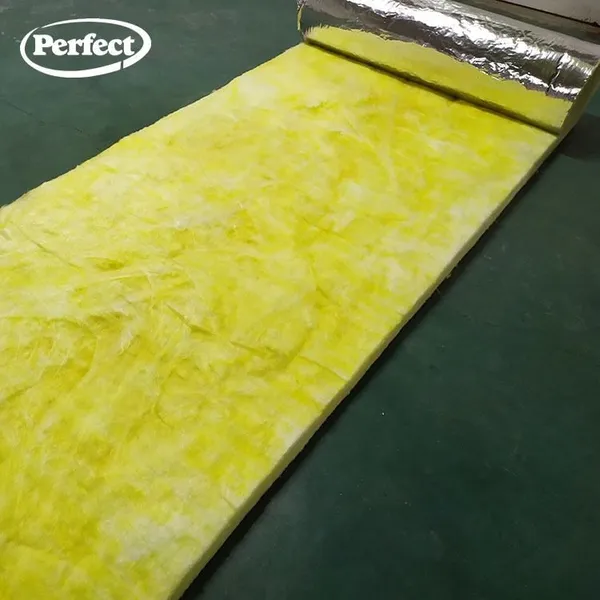
CE Certified Glass Wool Insulation, Glasswool Fiberglass, Low Thermal Conductivity, Noise Reduction for Wall, Roof and Industrial EquipmentNegotiableMOQ: 100 Rolls
-
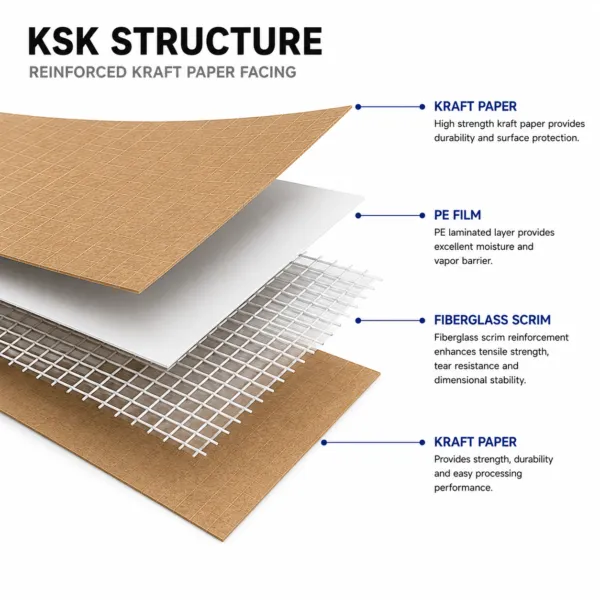
KSK Foil Facing Roll, Laminated Aluminum Foil + Scrim + Kraft Paper, Anti-Tear Thermal Barrier, Suitable for Commercial HVAC and Roof InsulationNegotiableMOQ: 500 Rolls
-
FSK Foil Scrim Kraft, FWF MSK MWV KSK Laminate Foils, Metalized PET MPET Vapor Barrier Facing for Insulation Glasswool RockwoolNegotiableMOQ: 100 Rolls
-
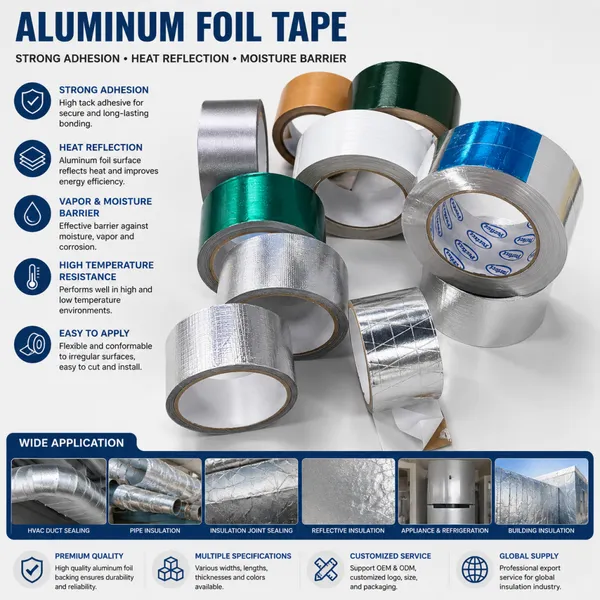
Reinforced Aluminium Foil Tape, Waterproof Anti-aging Tape, Widely Used in HVAC and Building Insulation ProjectsNegotiableMOQ: 500 Cartons
-
HVAC Aluminum Foil Sealing Tape, Strong Adhesion Heat Resistance for Pipe, Glass Wool and Rockwool InsulationNegotiableMOQ: 500 Cartons
-
Factory Supply Metalized PET MPET Laminate Foils, Aluminum Coated PET Film for Roof Wall InsulationNegotiableMOQ: 10000 Cubic Meters
-
Custom MPET Metalized PET Laminate Foils, VMPET Metallized Polyester Facing Film for Thermal InsulationNegotiableMOQ: 10000 Cubic Meters
-
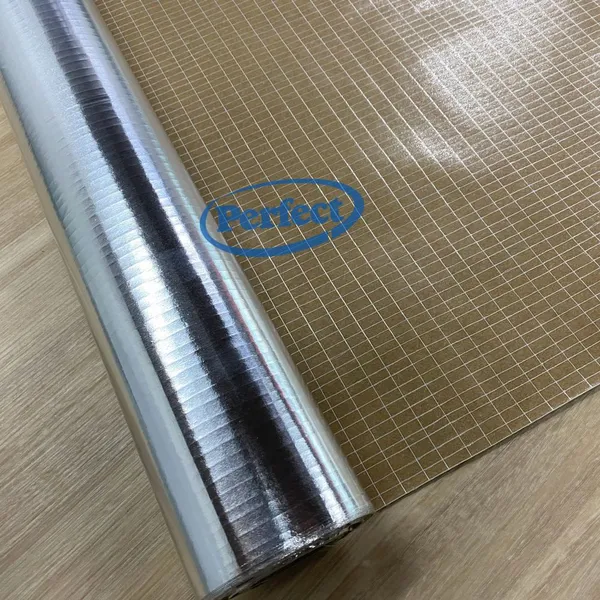
Glass Wool Insulation Series, Glasswool With FSK/FWF/MSK/MWV/KSK Facing, Metalized PET Laminate Foils, Heat & Sound Insulation for Commercial BuildingNegotiableMOQ: 100 Rolls
-
Rockwool Blanket With Black Firber GlassNegotiableMOQ: 100 Rolls
-
Glasswool Insulation Blanket & Board, FSK FWF MSK MWV KSK Foil Laminate, MPET Metalized PET Faced Glass Wool for HVAC, Roof, Wall, Air DuctNegotiableMOQ: 100 Rolls
-
Rockwool Insulation Roll, FSK Foil Faced Mineral Wool for Building Thermal & Acoustic Insulation, Fire Resistant Roof Wall Insulation MaterialNegotiableMOQ: 100 Rolls
-
FWF MSK FSK Foil Laminated Rock Wool Glass Wool Blanket, Metalized PET Laminate Foils Faced Insulation for HVAC and ConstructionNegotiableMOQ: 100 Rolls
-
Rockwool Insulation Board, Mineral Wool Rock Wool Slab for Building Thermal & Fire Insulation, Soundproof Rockwool Panel for Roof, Wall, HVAC SystemNegotiableMOQ: 100 Rolls
-
Rockwool Pipe Section, Mineral Wool Rock Wool Tube Insulation, Fire & Heat Resistant Rockwool for Steam Pipes, Industrial Pipeline Insulation ProjectNegotiableMOQ: 100 Rolls
-
Rockwool Board With FSK FacingNegotiableMOQ: 100 Rolls
-
Rockwool Insulation Slab With FSK Facing, Fireproof Rock Wool Board, Thermal & Sound Insulation Rockwool for Roof, Wall and Ductwork ApplicationNegotiableMOQ: 100 Rolls
-
Fireproof Foil Laminated Glass Wool, Laminate Foils MPET Faced Glasswool Insulation Roll & Sheet for Roofing, Wall, Duct and Pipe InsulationNegotiableMOQ: 100 Rolls