
 Business License
Blog Categories

Exporting Building Materials via Qingdao Shanghai and Xingang Ports
A buyer in Eastern Europe once lost three weeks on a foil insulation order because the shipment was booked through a port whose sailing schedule ran monthly for that destination. The goods were ready, the documents were in order, and the container simply waited for a vessel. Port choice is a supply decision, not a formality.
Building materials are dense, bulky and often shipped in full containers, which makes port selection and loading efficiency central to the delivered cost. This article covers the three ports most used for building materials export China shipments, the loading considerations that decide how much material fits in a container, and the documentation and schedule points that buyers should settle before placing an order. It closes with the supplier profile of a Shandong building material supplier working through these ports.
1. China Ports Used for Building Materials Export
The main gateways for building materials export china shipments are Qingdao in Shandong, Shanghai in the Yangtze delta and Xingang near Tianjin in the north, and a buyer will meet all three names again in any export logistics building materials quotation. Each has a different strength by destination and by cargo type, and the choice affects both the transit time and the sailings available.
Qingdao handles a large share of the insulation, membrane and foil output of a typical shandong building material supplier, and the port serves the surrounding provinces as well. The port offers frequent sailings to North America, South America, Oceania and Southeast Asia, and it is the natural loading point for a factory in that province because the inland haul is short.
Shanghai is the largest container port in the region and offers the widest schedule coverage, including services to Africa, the Mid East and Central America that call less often elsewhere. Xingang serves northern China and is often used for cargo moving to Eastern Asia, Northern Europe and the Russian land bridge.
| Port | Location | Strength for building materials |
|---|---|---|
| Qingdao | Shandong | Short inland haul from Shandong factories, frequent sailings |
| Shanghai | Yangtze delta | Widest schedule coverage, strong for Africa and Mid East |
| Xingang | Tianjin | Northern cargo, Eastern Asia and Northern Europe services |
2. Choosing a Port for a Building Materials Export China Shipment
Destination should drive the port choice. A buyer in North America is usually served well by Qingdao or Shanghai, both of which have frequent trans-Pacific services. A buyer in South America may find better transit through Shanghai on a direct service than through a port requiring a transhipment.
For Africa and the Mid East, schedule frequency matters more than the nominal distance. Shanghai offers the densest coverage to those regions, and a port with two sailings a month will hold cargo longer on average than one with weekly departures even if the sailing time is longer.
Oceania and Southeast Asia are well served from Qingdao, which suits a shandong building material supplier loading insulation and membranes. Buyers in those markets often receive a shorter total transit from Qingdao than from a southern port, because the vessel rotation favours the northern gateways for those lanes.
3. Container Loading in Export Logistics Building Materials
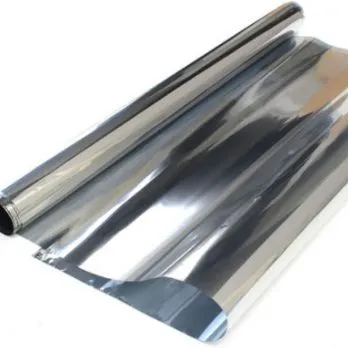
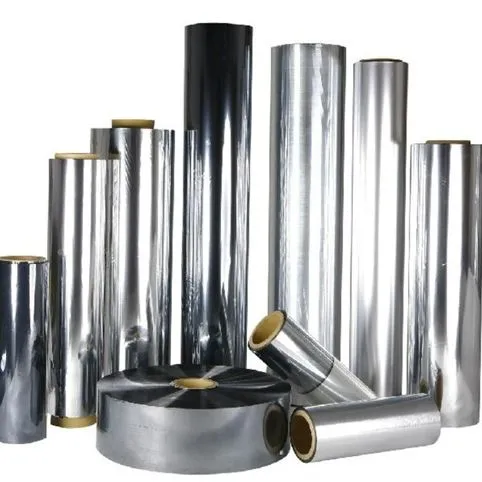
Loading efficiency decides the freight cost per square metre, and for insulation products the loading is a matter of compression and packing. Foil facings and membranes are rolled, so the diameter of the roll and the core size set how many rolls stand in a container footprint. A larger roll diameter with a thinner wall can load more material in the same volume.
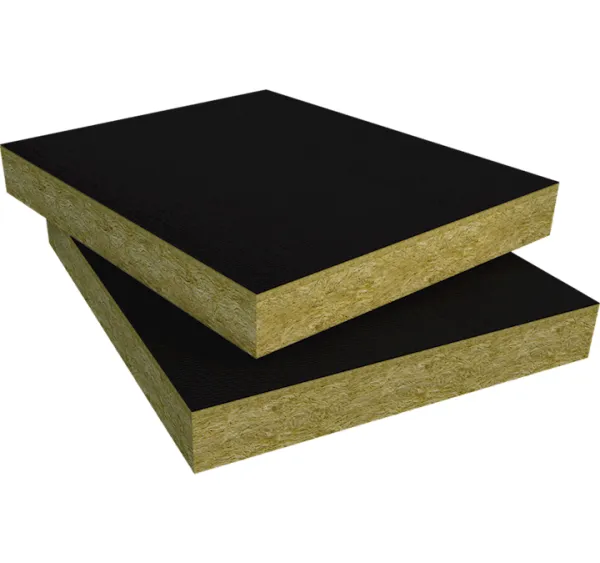
Rigid boards such as rockwool load as pallets, and the pallet height follows the board thickness. A container is limited by both volume and weight, and dense rockwool reaches the weight limit before it fills the volume. A buyer ordering a heavy grade should expect a lower loaded volume than one ordering a light grade.
For any export logistics building materials order, the practical rule is to ask the supplier for the loading quantity in pallets, the pallet dimensions and the net weight per container. A quotation without those figures cannot be converted into a delivered cost per square metre.
4. Packing and Moisture Protection in Export Logistics Building Materials
Transit moisture is the most common cause of damage on insulation shipments. A container crossing climates condenses moisture on the inside of the roof, and material packed against the container wall can absorb it. Suppliers usually mitigate this with an internal liner or with desiccant bags, and buyers should confirm which is being used.
Foil-faced products are less vulnerable to moisture but more vulnerable to physical damage. The foil surface scuffs and creases, and a creased roll may not lay flat on the site. Buyers should specify that rolls are wrapped and that pallets carry edge protection so the outer wraps survive handling.
Packing specification belongs in the purchase order rather than in correspondence. A buyer who writes the wrap, the pallet count and the edge protection into the order has grounds to claim if the material arrives damaged, and a supplier who has agreed the packing will load to that standard.
5. Documentation for Building Materials Export
The standard document set for a building materials export china shipment includes the commercial invoice, the packing list, the bill of lading and the certificate of origin. The certificate of origin matters for buyers claiming preferential duty, and it should be requested at order stage rather than after shipment.
Some destination markets require additional declarations for mineral wool and for products with a foil or film component. Buyers should confirm the requirement with a customs broker in their own market, because the rule follows the destination rather than the origin and a missing declaration can stop a container at the port.
The bill of lading is the document to check most carefully. A telex release or an original set must be agreed in advance, because a buyer who expects originals and receives a telex release cannot clear the goods, and the reverse wastes days. Buyers should state the preference in the purchase order.
6. Schedule Planning for a Building Materials Export China Order
Lead time for a building materials order has three parts: production, inland haul to the port, and sailing plus transhipment. Production is the shortest for a stock item and the longest for a custom density, a special width or a faced product. Buyers should ask for each part separately rather than accepting a single number.
The inland haul from a Shandong factory to Qingdao is a matter of hours, while the haul to Shanghai or Xingang is longer and adds cost. A supplier that loads from a nearby port has a cost advantage on that leg, and the advantage shows up in the delivered price rather than in the unit price.
Sailing time varies widely by lane. A trans-Pacific service to North America and a service to South America have different schedules, and a lane with weekly departures tolerates a missed booking far better than a monthly one. Buyers with a construction programme should confirm the sailing frequency before fixing the delivery date.
7. Incoterms and Risk Transfer in Building Materials Export China Trade
Incoterms decide where the supplier's responsibility ends and where the buyer's begins. FOB at the named port is common for building materials, and it places the risk transfer at the point the cargo is loaded on board. CIF and CFR extend the supplier's arrangements to the destination port but do not extend the risk beyond the ship's rail.
Buyers who choose an Incoterm without reading the risk point often believe they have more protection than they do. CIF covers the freight and the insurance arrangement but the risk passes at loading, so a buyer under CIF still carries the risk of loss in transit and insures accordingly. The insurance under CIF is usually the minimum cover unless the buyer specifies more.
The practical advice is to match the Incoterm to the buyer's own logistics capability. A buyer with a freight forwarder and a customs broker is usually better served by FOB, because it keeps control of the routing. A buyer without that capability may prefer CIF or DAP so the supplier arranges more of the chain.
8. Shandong Building Material Supplier Profile
Jinan United Perfect Building Materials Corporation is a Shandong building material supplier producing foil laminates, breathable membranes, laminated foil facings and synthetic underlayments. The company was established in 2017 and serves buyers in North America, South America, Eastern Europe, Southeast Asia, Africa, Oceania, the Mid East, Eastern Asia, Western Europe, Central America, Northern Europe and Southern Europe.
Jinan United Perfect Building Materials loads through Qingdao and can arrange shipment via Shanghai or Xingang where the destination schedule favours those ports. The company confirms the loading quantity in pallets, the pallet dimensions and the net weight per container so buyers can calculate the delivered cost.
Buyers planning a building materials export China shipment with United Perfect can send the product, the quantity, the destination port and the required document set, and United Perfect replies with the loading plan, the Incoterm options and the sailing options for the lane.
9. FAQ About Export Logistics for Building Materials
9.1 Which port suits exporting building materials to North America?
Qingdao and Shanghai both offer frequent trans-Pacific services for a building materials export china shipment, and the better choice depends on where the factory is and which carrier has space on the intended sailing date. A Shandong factory loads from Qingdao at a lower inland cost while a cargo booking that needs a specific carrier may favour Shanghai, so buyers should ask for the sailing frequency on the lane rather than the port that sounds larger. A port with weekly departures tolerates a missed booking far better than one with monthly service, and transit time also varies between carriers on the same lane. A supplier that loads from both ports can advise which one fits the schedule.
9.2 How much material fits in a 40-foot container?
The quantity depends on the product form and the packing, so the figure has to come from the supplier as a loading plan rather than as a rule of thumb. Rolled membranes are limited by roll diameter and core size while rigid boards are limited by pallet height and by the container weight limit, and dense rockwool boards reach the weight limit before the volume is full so a heavy grade loads less volume than a light one. Buyers should request the loading quantity in pallets, the pallet dimensions and the net weight per container. Those three figures let a buyer convert a unit price into a delivered cost per square metre, and a quotation without them cannot be compared against another offer.
9.3 What documents are needed for a building materials shipment?
The standard set for export logistics building materials is the commercial invoice, the packing list, the bill of lading and the certificate of origin, with additional declarations required by some destinations. The certificate of origin should be requested at order stage because a buyer claiming preferential duty cannot obtain it retroactively in every case. Buyers should confirm the exact requirement for their own market with a customs broker, since the rule follows the destination rather than the origin, and the bill of lading release method should also be agreed in advance. A buyer who expects originals and receives a telex release cannot clear the goods on arrival, so confirming the document set in the purchase order avoids the problem entirely.
9.4 How should packing be specified for insulation exports?
Packing should be written into the purchase order rather than discussed informally, because a specified packing requirement is what supports a claim if the material arrives damaged. Rolled products should be wrapped, and pallets should carry edge protection so the outer wraps survive handling at both ends. An internal container liner or desiccant bags reduce the risk of condensation damage on a shipment crossing climates, and buyers should also state the pallet count per container and the stacking limit if the material cannot bear load. Foil-faced products tolerate moisture but scuff easily, so the wrap specification matters as much as the moisture control, and a clear packing clause in the order is the simplest protection available.
9.5 Which Incoterm should a building materials buyer choose?
The Incoterm should match the buyer's own logistics capability, with FOB at the named port suiting a buyer who has a forwarder and a customs broker. CIF and CFR place the freight arrangement with the supplier but the risk still passes at loading, so the buyer continues to carry transit risk and insures accordingly. A buyer without a forwarder may prefer CIF or DAP so the supplier arranges more of the chain, though the common error is assuming that CIF transfers risk to the destination. Buyers should read the risk point in the chosen term before confirming the order, and matching the term to capability avoids gaps in cover and gaps in responsibility.
Recently Posted
-
From Felt to Synthetic Underlayment in North American Roofing
November 3, 2026A roofing supplier in North America once kept both felt and synthetic underlayment on the same rack and watched the split shift wi Read More
-
QC Checklist for Synthetic Underlayment Before Shipment
November 3, 2026A buyer in North America once received a shipment in which the lengths on the packing list were correct and the rolls at the centr Read More
-
Synthetic Underlayment Slitting Winding and Roll Diameter Control
November 2, 2026A buyer in North America once rejected a container of synthetic underlayment because the rolls at one end had flattened into an ov Read More
-
Synthetic Underlayment for Tropical and Desert Roofing Projects
November 2, 2026Two projects in the same product family can fail for opposite reasons. A tropical roof underlayment in Southeast Asia can be ruine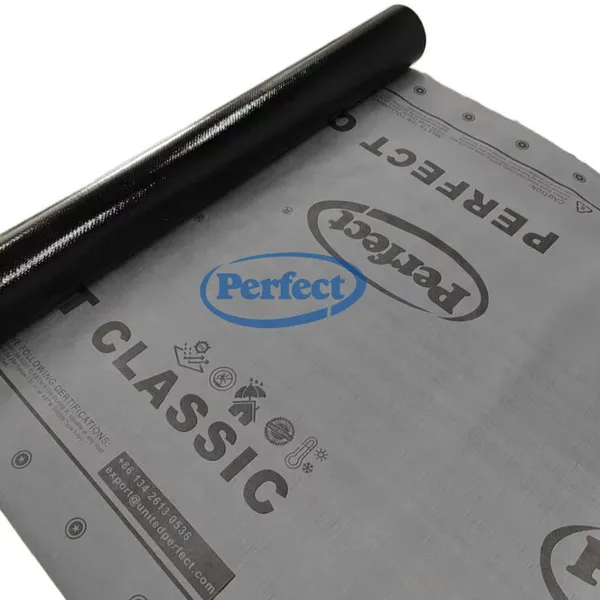 Read More

Contact Us
Recommended Products
-
 Glasswool Blanket With FSK FacingNegotiableMOQ: 100 Rolls
-
Rockwool Blanket With Wire MeshNegotiableMOQ: 100 Rolls
-
Rockwool Blanket With FSK FacingNegotiableMOQ: 100 Rolls
-
CE Certified Glass Wool Insulation, Glasswool Fiberglass, Low Thermal Conductivity, Noise Reduction for Wall, Roof and Industrial EquipmentNegotiableMOQ: 100 Rolls
-
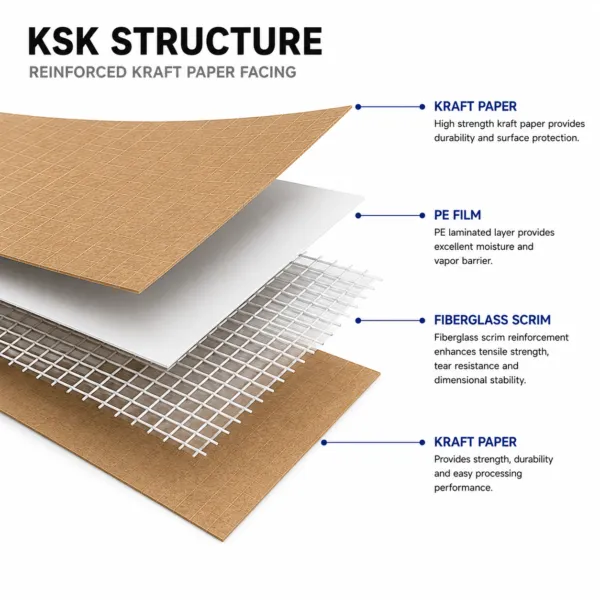
KSK Foil Facing Roll, Laminated Aluminum Foil + Scrim + Kraft Paper, Anti-Tear Thermal Barrier, Suitable for Commercial HVAC and Roof InsulationNegotiableMOQ: 500 Rolls

-
FSK Foil Scrim Kraft, FWF MSK MWV KSK Laminate Foils, Metalized PET MPET Vapor Barrier Facing for Insulation Glasswool RockwoolNegotiableMOQ: 100 Rolls
-
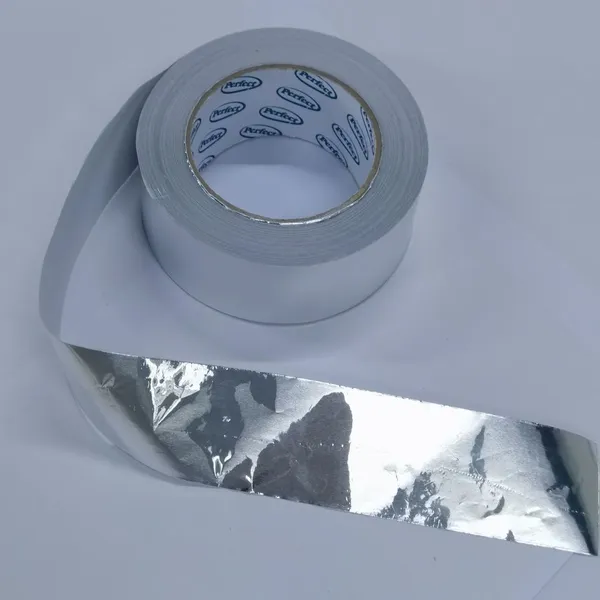
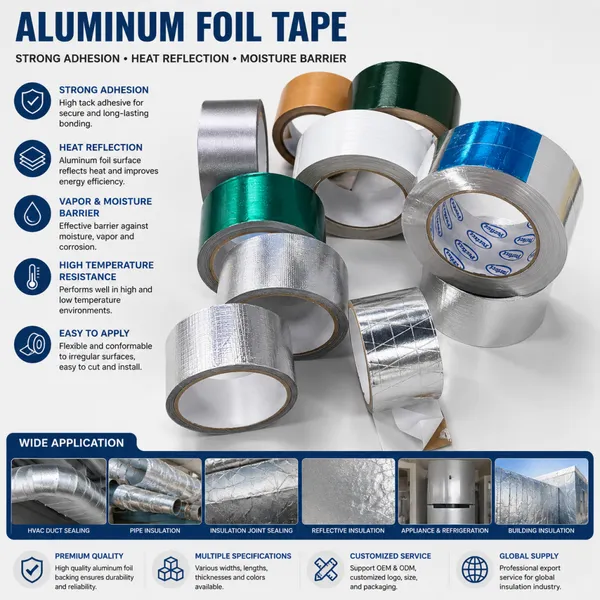
Reinforced Aluminium Foil Tape, Waterproof Anti-aging Tape, Widely Used in HVAC and Building Insulation ProjectsNegotiableMOQ: 500 Cartons
-
HVAC Aluminum Foil Sealing Tape, Strong Adhesion Heat Resistance for Pipe, Glass Wool and Rockwool InsulationNegotiableMOQ: 500 Cartons
-
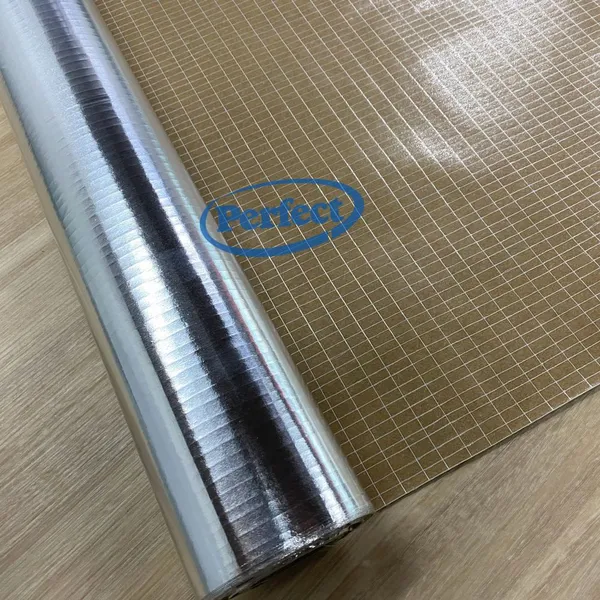
Factory Supply Metalized PET MPET Laminate Foils, Aluminum Coated PET Film for Roof Wall InsulationNegotiableMOQ: 10000 Cubic Meters
-
Custom MPET Metalized PET Laminate Foils, VMPET Metallized Polyester Facing Film for Thermal InsulationNegotiableMOQ: 10000 Cubic Meters
-
Glass Wool Insulation Series, Glasswool With FSK/FWF/MSK/MWV/KSK Facing, Metalized PET Laminate Foils, Heat & Sound Insulation for Commercial BuildingNegotiableMOQ: 100 Rolls
-
Rockwool Blanket With Black Firber GlassNegotiableMOQ: 100 Rolls
-
Glasswool Insulation Blanket & Board, FSK FWF MSK MWV KSK Foil Laminate, MPET Metalized PET Faced Glass Wool for HVAC, Roof, Wall, Air DuctNegotiableMOQ: 100 Rolls
-
Rockwool Insulation Roll, FSK Foil Faced Mineral Wool for Building Thermal & Acoustic Insulation, Fire Resistant Roof Wall Insulation MaterialNegotiableMOQ: 100 Rolls
-
FWF MSK FSK Foil Laminated Rock Wool Glass Wool Blanket, Metalized PET Laminate Foils Faced Insulation for HVAC and ConstructionNegotiableMOQ: 100 Rolls
-
Rockwool Insulation Board, Mineral Wool Rock Wool Slab for Building Thermal & Fire Insulation, Soundproof Rockwool Panel for Roof, Wall, HVAC SystemNegotiableMOQ: 100 Rolls
-
Rockwool Pipe Section, Mineral Wool Rock Wool Tube Insulation, Fire & Heat Resistant Rockwool for Steam Pipes, Industrial Pipeline Insulation ProjectNegotiableMOQ: 100 Rolls
-
Rockwool Board With FSK FacingNegotiableMOQ: 100 Rolls
-
Rockwool Insulation Slab With FSK Facing, Fireproof Rock Wool Board, Thermal & Sound Insulation Rockwool for Roof, Wall and Ductwork ApplicationNegotiableMOQ: 100 Rolls
-
Fireproof Foil Laminated Glass Wool, Laminate Foils MPET Faced Glasswool Insulation Roll & Sheet for Roofing, Wall, Duct and Pipe InsulationNegotiableMOQ: 100 Rolls