
 Business License
Blog Categories

Rockwool Density Thickness and Thermal Conductivity Grades
An engineer in Western Europe once calculated a wall build using a lambda figure copied from an old catalogue, then found that the delivered board was denser and the U value came out slightly worse than the drawing claimed. The arithmetic had been correct; the input had not been checked against the current data sheet.
Rockwool density grade, thickness and thermal conductivity are three parameters that move together, and a buyer who fixes any two of them fixes the third. This article sets out how each one behaves, how the three interact in a specification, and how to check that a quotation is internally consistent before it becomes a purchase order. The aim is a specification where the stated performance follows from the stated dimensions.
1. What a Rockwool Density Grade Means
Rockwool density grade is the mass of the material per unit volume, quoted in kilograms per cubic metre. The figure is not a quality ranking by itself, because a low-density blanket and a high-density board are made for different jobs and both can be correct. Density tells the buyer how much fibre is packed into a cubic metre and, from that, how the board will behave under load.
Common grades for boards run from 40 to 120 kilograms per cubic metre, with 60 and 80 the most widely ordered in general building work. Blankets sit lower, typically between 30 and 100, because a blanket is used where the insulation is not required to carry load and a springy low-density product is easier to install overhead.
Higher density raises compressive strength and lowers the thermal conductivity slightly, but it also raises cost and weight. A buyer who specifies a heavy grade for a cavity that will never see compression buys stiffness that the assembly does not use.
2. Rockwool Thermal Conductivity and Its Temperature Dependence
Rockwool thermal conductivity is stated as a lambda value in watts per metre kelvin, and a typical declared figure for a building board falls in the range of 0.035 to 0.045. The lower the number, the better the material insulates for a given thickness. Declared values are usually quoted at a reference mean temperature of 10 degrees Celsius in Europe and at slightly different reference conditions in other systems.
The figure is not constant across the service range. Conductivity rises as temperature rises, so an insulation layer working at 200 degrees Celsius conducts more heat than the same layer working at 20 degrees. A buyer specifying a hot application should ask for the conductivity curve rather than the single declared figure.
Moisture also moves the number, and this is where a rockwool thermal conductivity figure can mislead if the assembly is not detailed properly. Mineral wool is not moisture sensitive in the way that some cellular foams are, but a wet blanket still conducts more heat than a dry one, so the vapour control detail remains part of the thermal design.
3. Rockwool Thickness Specification and the R Value
A rockwool thickness specification should state a target thermal resistance and let the thickness follow, rather than fixing the thickness and hoping the resistance arrives. Thermal resistance equals thickness divided by conductivity, so a 100 millimetre board at a conductivity of 0.040 reaches a resistance of 2.5 square metres kelvin per watt.
Working the arithmetic in the other direction is just as useful. A buyer who needs a resistance of 3.0 with the same conductivity requires 120 millimetres of product. This is why a specification that names the thickness without naming the conductivity cannot be checked, and why two quotations for the same nominal thickness can deliver different performance.
| Thickness (mm) | Conductivity (W/mK) | Thermal resistance (m2K/W) |
|---|---|---|
| 50 | 0.040 | 1.25 |
| 75 | 0.040 | 1.88 |
| 100 | 0.040 | 2.50 |
| 120 | 0.040 | 3.00 |
| 150 | 0.040 | 3.75 |
4. How Rockwool Density Grade and Rockwool Thermal Conductivity Interact
Density and conductivity are linked, but not in a straight line. Raising the density from 40 to 80 kilograms per cubic metre reduces the conductivity modestly, because the extra fibre cuts the radiative component of heat transfer through the pore structure. Raising it further produces diminishing returns and eventually reverses, since a very dense product has more solid conduction paths.
The practical consequence is that a higher rockwool density grade is usually chosen for mechanical reasons rather than for the rockwool thermal conductivity gain. A buyer who needs a compressive strength for a floor or a render carrier moves to a heavier board and accepts the small thermal benefit as a bonus. A buyer who needs thermal performance alone is usually better served by more thickness at a lower density.
Comparing quotations without holding density constant is a common error. A supplier quoting a lower price per square metre may simply be quoting a lighter board, which delivers less thermal resistance at the same thickness and less compressive strength overall.
5. Selecting a Rockwool Density Grade for Each Application
Application drives the grade more reliably than any rule of thumb. Cavity walls, roof spaces between joists and overhead blankets carry no load, so grades in the 40 to 60 band are normal. Flat roof decks, floor slabs and external render carriers take load or wind suction and call for grades of 80 and above.
Acoustic performance adds a separate target. Sound absorption improves with density and with thickness up to a practical limit, so a party wall or a plant room lining may call for a heavier grade than the thermal calculation alone would justify. Buyers specifying for both thermal and acoustic performance should state both requirements rather than leaving the supplier to guess which governs.
Fire performance is a third consideration that interacts with density, since a denser mineral wool board holds its integrity longer in a fire test. Where a fire rating is required, the assembly as a whole is tested and the board density is one input to that test rather than a substitute for it.
6. Rockwool Thickness Specification for Various Assemblies
Thickness requirements differ by market and by assembly, and the difference is larger than many buyers expect. Wall insulation in Northern Europe and Eastern Europe carries a thicker specification than the same wall in a mild market, because the design temperature difference is greater and the code requirement follows it.
Roof and duct work often specifies thickness for condensation control rather than for energy alone. A duct in a humid climate needs enough thickness to keep the surface above the dew point, and that thickness is set by the internal temperature, the ambient humidity and the surface coefficient rather than by an energy target.
Buyers should state the assembly and the target, not a number copied from a previous project. A thickness that worked on a wall in Southeast Asia may be inadequate for a roof in Northern Europe, and the reverse is equally true.
7. Checking Rockwool Thickness Specification and Conductivity in a Quotation
A quotation can be checked in a few minutes. Multiply the stated conductivity by the stated resistance and confirm that the result matches the stated thickness. If it does not, either the conductivity or the resistance has been copied from a different product, and the buyer should ask before ordering.
The second check is the rockwool density grade. Ask for the density in kilograms per cubic metre and compare it with the density the quotation implies, which is the mass per unit area divided by the thickness. A quotation that names a density and then packs a lighter board will fail this test at inspection.
The third check is the temperature basis. If the application runs above ambient, confirm that the quoted conductivity is valid at the service temperature rather than at the reference condition. A quotation that quietly uses the 10 degree figure for a 200 degree application will overstate the performance.
8. Rockwool Density and Thickness Supplier Profile
Jinan United Perfect Building Materials Corporation produces rockwool boards and blankets in a range of density grades and thicknesses from its base in Shandong, China. The company was established in 2017 and supplies buyers in North America, South America, Eastern Europe, Southeast Asia, Africa, Oceania, the Mid East, Eastern Asia, Western Europe, Central America, Northern Europe and Southern Europe.
Jinan United Perfect Building Materials states density and thermal conductivity on the product data sheet and confirms the rockwool thickness specification against the buyer's target resistance. Buyers can request the conductivity curve at elevated temperature for hot-service applications.
A buyer sending a rockwool density grade enquiry to United Perfect should include the application, the target resistance or U value, the service temperature and the board size. United Perfect replies with a matched density and thickness pair and confirms the loading plan for the container.
9. FAQ About Rockwool Density Thickness and Conductivity
9.1 How do I pick a rockwool density grade for a wall?
The grade follows the load, so a cavity wall or a roof space between joists usually takes a board in the 40 to 60 kilogram band. If the insulation must also carry a render or resist wind suction, the grade rises to 80 and above so the board keeps its shape, and acoustic targets can push it up further because sound absorption improves with density. Buyers should state both the thermal target and the mechanical or acoustic requirement in the enquiry, since the heavier grade serves several functions at once. The lowest grade that meets every stated requirement is the correct specification, since over-specifying raises material cost and freight cost with no benefit to the finished wall.
9.2 Why does rockwool thermal conductivity change with temperature?
Conductivity rises with temperature because the radiative component of heat transfer grows as the temperature difference across the material increases. A declared figure is normally quoted at a reference mean temperature and therefore describes a moderate service condition, so a buyer specifying process insulation, flue work or an exhaust duct should ask for the conductivity curve across the service range instead of the single declared value. Using the reference figure for a hot application overstates the thermal performance and can leave the insulation undersized. Suppliers hold the test data and can provide it on request, and stating the service temperature in the enquiry is the simplest way to get the right basis.
9.3 Is a denser rockwool always better for thermal performance?
A denser board conducts slightly less heat up to a point, but the gain is small and it disappears at high density when solid conduction paths start to dominate. The main reasons to choose a heavier board are mechanical, such as compressive strength under a floor slab or stiffness behind a render. For thermal performance alone, extra thickness at a lower density generally delivers more resistance per unit of cost than extra density at the same thickness, so buyers comparing rockwool thermal conductivity in quotations should hold density constant before comparing price per square metre. A cheaper quote often reflects a lighter board rather than a better price, and the right answer depends on whether the assembly needs stiffness or resistance.
9.4 How is rockwool thickness specification calculated?
Thickness follows from the target thermal resistance and the conductivity, since resistance equals thickness divided by conductivity. A buyer targeting a resistance of 3.0 with a conductivity of 0.040 therefore needs 120 millimetres of product. Working the same arithmetic in reverse lets a buyer check a supplier quotation in under a minute, and if the stated resistance does not match the stated thickness and conductivity then one of the three figures has been copied from a different product. Dimensional tolerance on the delivered board is a separate matter and should be agreed in writing when the material feeds a prefabricated panel, though the calculation itself is simple and worth doing on every quotation.
9.5 What should a rockwool density grade enquiry include?
The enquiry should state the application, the target thermal resistance or U value, the service temperature, the density preference if there is one, and the board dimensions. It should also state the destination market, because wall and roof requirements differ between Europe, North America and the warmer regions. Stating the load condition, such as whether the insulation carries a render or takes foot traffic, lets the supplier propose a grade on mechanical grounds. Buyers who also have an acoustic target should name it so the density is chosen once rather than revised later, and a complete enquiry returns a matched density, thickness and conductivity proposal in a single reply, and Jinan United Perfect Building Materials handles enquiries on exactly this basis.
Recently Posted
-
From Felt to Synthetic Underlayment in North American Roofing
November 3, 2026A roofing supplier in North America once kept both felt and synthetic underlayment on the same rack and watched the split shift wi Read More
-
QC Checklist for Synthetic Underlayment Before Shipment
November 3, 2026A buyer in North America once received a shipment in which the lengths on the packing list were correct and the rolls at the centr Read More
-
Synthetic Underlayment Slitting Winding and Roll Diameter Control
November 2, 2026A buyer in North America once rejected a container of synthetic underlayment because the rolls at one end had flattened into an ov Read More
-
Synthetic Underlayment for Tropical and Desert Roofing Projects
November 2, 2026Two projects in the same product family can fail for opposite reasons. A tropical roof underlayment in Southeast Asia can be ruine Read More

Contact Us
Recommended Products
-
 Glasswool Blanket With FSK FacingNegotiableMOQ: 100 Rolls
-
Rockwool Blanket With Wire MeshNegotiableMOQ: 100 Rolls
-
Rockwool Blanket With FSK FacingNegotiableMOQ: 100 Rolls
-
CE Certified Glass Wool Insulation, Glasswool Fiberglass, Low Thermal Conductivity, Noise Reduction for Wall, Roof and Industrial EquipmentNegotiableMOQ: 100 Rolls
-
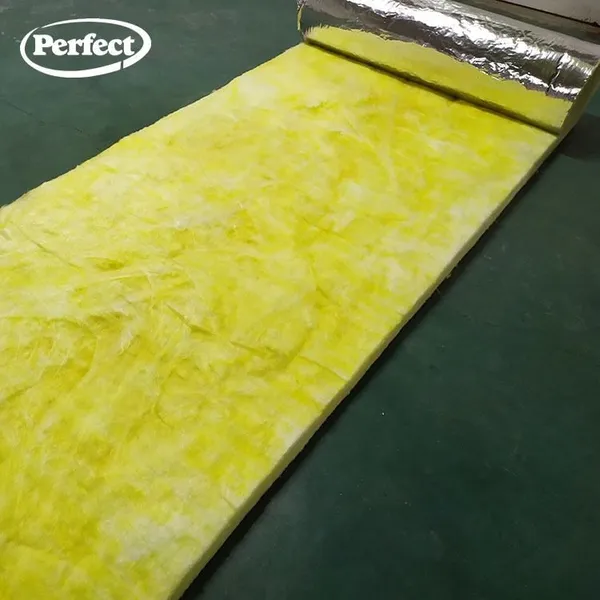
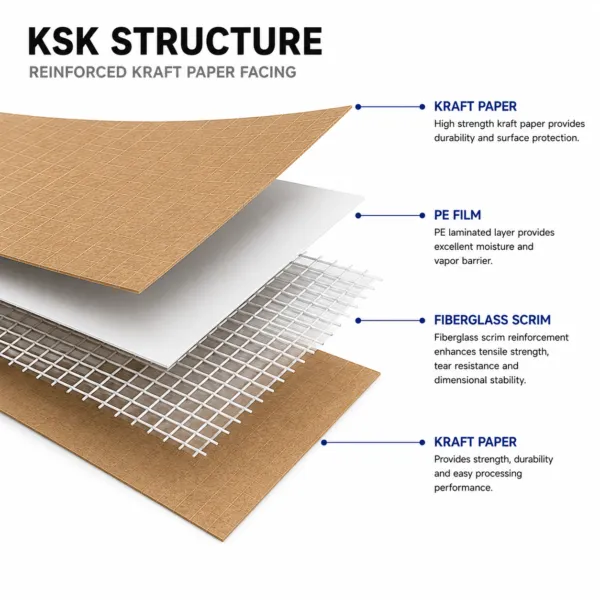
KSK Foil Facing Roll, Laminated Aluminum Foil + Scrim + Kraft Paper, Anti-Tear Thermal Barrier, Suitable for Commercial HVAC and Roof InsulationNegotiableMOQ: 500 Rolls
-
FSK Foil Scrim Kraft, FWF MSK MWV KSK Laminate Foils, Metalized PET MPET Vapor Barrier Facing for Insulation Glasswool RockwoolNegotiableMOQ: 100 Rolls
-
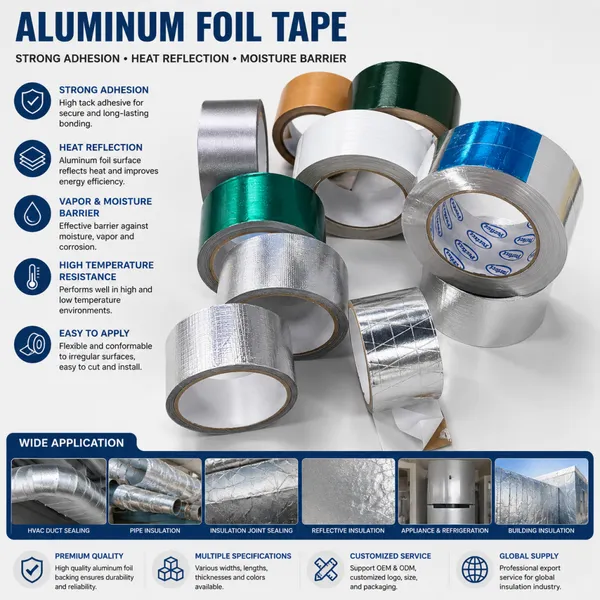
Reinforced Aluminium Foil Tape, Waterproof Anti-aging Tape, Widely Used in HVAC and Building Insulation ProjectsNegotiableMOQ: 500 Cartons
-
HVAC Aluminum Foil Sealing Tape, Strong Adhesion Heat Resistance for Pipe, Glass Wool and Rockwool InsulationNegotiableMOQ: 500 Cartons
-
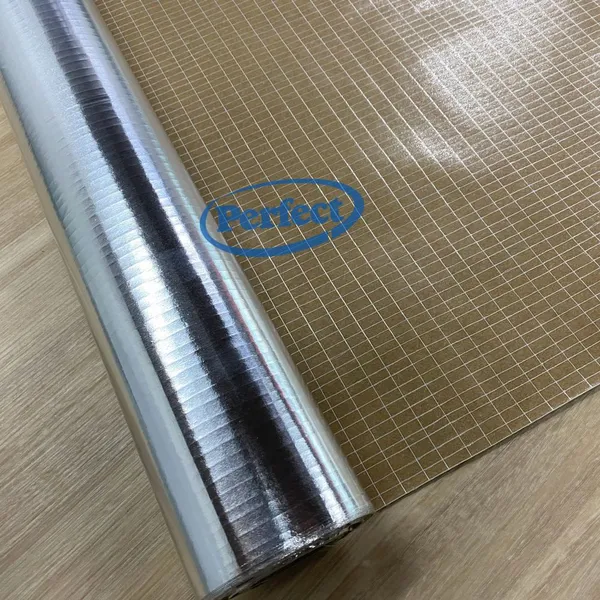
Factory Supply Metalized PET MPET Laminate Foils, Aluminum Coated PET Film for Roof Wall InsulationNegotiableMOQ: 10000 Cubic Meters
-
Custom MPET Metalized PET Laminate Foils, VMPET Metallized Polyester Facing Film for Thermal InsulationNegotiableMOQ: 10000 Cubic Meters
-
Glass Wool Insulation Series, Glasswool With FSK/FWF/MSK/MWV/KSK Facing, Metalized PET Laminate Foils, Heat & Sound Insulation for Commercial BuildingNegotiableMOQ: 100 Rolls
-
Rockwool Blanket With Black Firber GlassNegotiableMOQ: 100 Rolls
-
Glasswool Insulation Blanket & Board, FSK FWF MSK MWV KSK Foil Laminate, MPET Metalized PET Faced Glass Wool for HVAC, Roof, Wall, Air DuctNegotiableMOQ: 100 Rolls
-
Rockwool Insulation Roll, FSK Foil Faced Mineral Wool for Building Thermal & Acoustic Insulation, Fire Resistant Roof Wall Insulation MaterialNegotiableMOQ: 100 Rolls
-
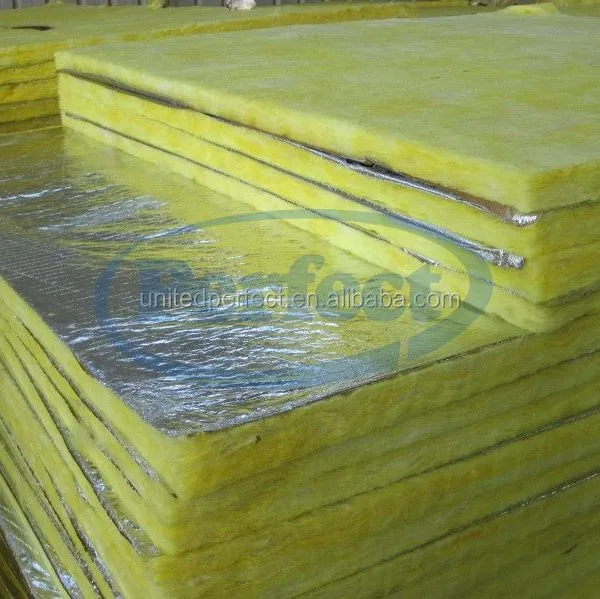
FWF MSK FSK Foil Laminated Rock Wool Glass Wool Blanket, Metalized PET Laminate Foils Faced Insulation for HVAC and ConstructionNegotiableMOQ: 100 Rolls
-
Rockwool Insulation Board, Mineral Wool Rock Wool Slab for Building Thermal & Fire Insulation, Soundproof Rockwool Panel for Roof, Wall, HVAC SystemNegotiableMOQ: 100 Rolls
-
Rockwool Pipe Section, Mineral Wool Rock Wool Tube Insulation, Fire & Heat Resistant Rockwool for Steam Pipes, Industrial Pipeline Insulation ProjectNegotiableMOQ: 100 Rolls
-
Rockwool Board With FSK FacingNegotiableMOQ: 100 Rolls
-
Rockwool Insulation Slab With FSK Facing, Fireproof Rock Wool Board, Thermal & Sound Insulation Rockwool for Roof, Wall and Ductwork ApplicationNegotiableMOQ: 100 Rolls
-
Fireproof Foil Laminated Glass Wool, Laminate Foils MPET Faced Glasswool Insulation Roll & Sheet for Roofing, Wall, Duct and Pipe InsulationNegotiableMOQ: 100 Rolls