
 Business License
Blog Categories

Rockwool for Fire-Safe Commercial Buildings and Ductwork
A facilities manager in the Mid East once inspected a riser after a small fire had been extinguished in an adjacent plant room and found the duct insulation charred but still in place. The foam insulation on the neighbouring duct had melted away and left the shaft open. The difference decided which duct the smoke travelled through.
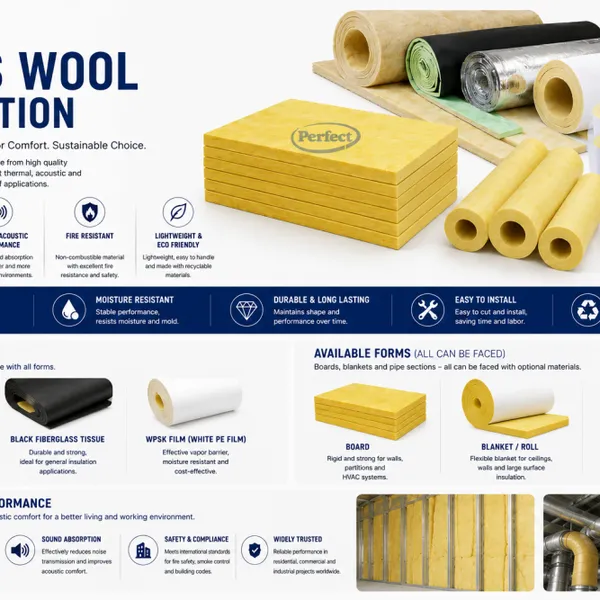
Commercial buildings place two demands on insulation that a dwelling does not, and both are served by mineral wool. The first is fire safety, where a commercial building fire insulation has to hold an assembly together for a rated period. The second is ductwork, where ductwork rockwool has to resist a fire passing through a shaft and has to control noise and condensation at the same time. This article covers how a fire safe insulation board is used in both roles and how it is specified.
1. Commercial Building Fire Insulation Requirements
Commercial building fire insulation is specified against an assembly and a rated period, and it is judged by whether the assembly holds rather than by whether the material burns.
A fire-rated assembly has to resist the passage of fire, of smoke and of heat for a stated period. The insulation contributes by staying in place, by not adding fuel and by forming part of the barrier. An insulation that melts or burns out leaves the cavity open and the rating fails even if the material was slow to ignite.
| Requirement | What the Insulation Must Do |
|---|---|
| Fire resistance | Stay in place for the rated period |
| Non-combustibility | Add no fuel to the fire |
| Smoke control | Produce no significant smoke |
| Integrity | Keep the cavity closed |
| Insulation value | Limit heat transfer through the assembly |
A mineral wool contributes to all five because it is non-combustible and it holds its structure at high temperature. A foam contributes to the insulation value and not to the fire resistance, and in a rated assembly it can be the element that fails first.
The rated period is a property of the whole build-up. Substituting one material in a tested assembly invalidates the test, so the insulation for a rated wall or shaft should be specified from the tested build-up rather than chosen on its own figures.
2. Fire Safe Insulation Board Selection
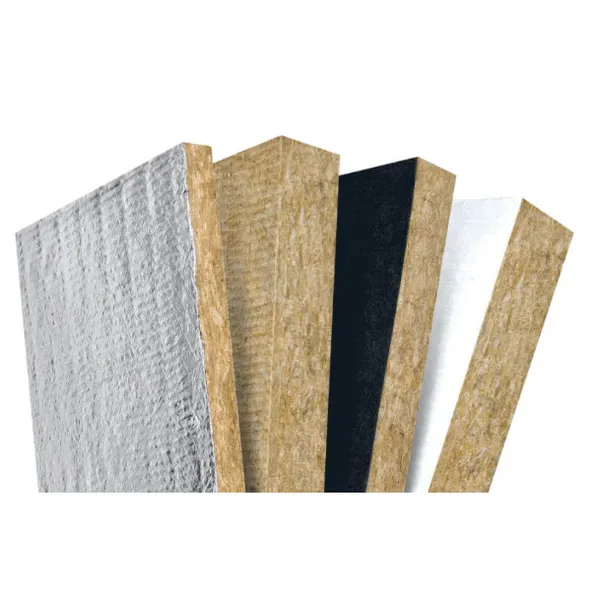
A fire safe insulation board is chosen by density and by form, and the two follow from where the board sits and what it has to do.
In a fire-rated wall or shaft, the board is usually a semi-rigid or a rigid mineral wool at a medium density. It has to fill the cavity fully, because a gap between the board and the frame becomes a path for fire and smoke.
In a duct or a penetration seal, the board may be higher in density, because it has to hold its shape against a pressure difference and against the movement of the duct in a fire.
| Position | Typical Form | Why |
|---|---|---|
| Rated wall cavity | Semi-rigid board | Fills the cavity fully |
| Service shaft | Rigid board | Holds shape, resists pressure |
| Duct lining | Board or wrap | Fits the section, resists fire |
| Penetration seal | High-density board | Holds against pressure and movement |
| Roof or floor | Rigid board | Carries load |
The density also drives the weight and the cost. A high-density board is heavier and more expensive, and where the position does not require it, a medium-density board performs the same fire function at a lower cost. The selection should follow the position rather than a general preference for a higher density.
The facing is the other choice. A foil-faced board gains a vapour and surface function, which is useful in a duct. A facing can reduce the acoustic performance of a wall, so where the assembly has an acoustic requirement, the cavity side is usually left unfaced.
3. Ductwork Rockwool for Fire and Thermal Control
Ductwork rockwool serves three functions at once, and the fire function is the one that decides the material.
A duct that passes through a fire-rated wall or floor has to maintain the integrity of that compartment. Where the duct carries air and the fire is on one side, the duct becomes a path for fire and smoke unless it is protected. A mineral wool wrap or lining resists the passage of heat and holds the duct section together.
| Function | Mechanism |
|---|---|
| Fire protection | Non-combustible layer resists heat |
| Thermal insulation | Reduces heat loss and gain |
| Acoustic control | Absorbs noise in the duct |
| Condensation control | Keeps the duct surface above dew point |
The thermal and acoustic functions are served by the same layer, and they are the reason a duct lining is used even where there is no fire requirement. A mineral wool lining reduces the noise that travels along a duct, which in a commercial building is often the reason the lining is specified in the first place.
The condensation function matters where a duct carries cold air through a warm space. The insulation keeps the duct surface above the dew point of the surrounding air, which prevents condensation on the duct and the drips that follow. In a hot and humid climate that is a routine requirement rather than an occasional one.
4. Fire Safe Insulation Board in Service Shafts
A fire safe insulation board in a service shaft is performing a compartmentation duty, and the details decide whether it works.
A shaft carries ducts, pipes and cables through a building, and each of those penetrates the shaft wall. Each penetration interrupts the barrier, and each has to be sealed with a detail that maintains the rating. A shaft that is insulated correctly in the field and pierced by unsealed penetrations has lost its barrier at those points.
The board has to fill the cavity without gaps. A mineral wool board that is cut slightly small and pushed into place leaves a gap at the edge, and a gap between the board and the frame becomes a path for fire and smoke. The fit should be tight and the board should be uncompressed, because a compressed board can spring back and leave a gap at the other edge.
The fixings also matter. A board that is held with an adhesive alone can fall away in a fire, and the mechanical fixing has to be part of the tested build-up. The fixing pattern should be taken from the tested assembly rather than from the general site practice.
5. Case Notes on Ductwork Rockwool
A facilities manager in the Mid East inspected a riser after a small fire in an adjacent plant room and found the ductwork rockwool charred but still in place. The foam insulation on the neighbouring duct had melted out and left the shaft open, and the smoke had travelled along that duct. The mineral wool duct held its integrity and the foam one did not.
A second project in Western Europe installed a shaft lining with a gap at the edge of every board, because the boards had been cut slightly small. A smoke test found leakage along the edges. Re-cutting the boards for a tight fit and adding the specified fixings closed the leakage, and the board itself was unchanged.
Both cases show the same point. The material has to be non-combustible and it also has to be fitted as the tested assembly describes, and either condition alone is not enough.
6. Specifying a Commercial Building Fire Insulation
Start from the rated assembly and take the insulation from it, including the form, the density and the fixing pattern. A material chosen on its own figures is not a rated assembly.
State the density and the form together, and state the fire requirement against the assembly. A non-combustible board in a non-rated assembly does not produce a rated assembly.
State the penetrations and the seals, and require each one to be detailed. The barrier fails at the penetrations, not in the field.
State the acoustic requirement where the wall or duct has one, and check the facing against it. A foil facing that helps the vapour performance can reduce the acoustic performance of the same assembly.
7. Fire Safe Insulation Board Installation
Installation decides whether a rated assembly performs as tested, and the common failures are all fitting failures rather than material failures.
Board should be cut to a tight fit and fitted without compression. A gap at the edge or a compressed board that springs back both leave a path.
Joints between boards should be staggered and butted tightly, and the fixings should follow the tested pattern. A board held at a wider spacing than the test allows can fall away when the assembly is loaded by a fire.
Penetrations should be sealed at the time the board is installed rather than left to a later trade. An unsealed penetration that is covered by a later finish is the failure that is hardest to find.
8. Fire Safe Insulation Board Supplier Profile
United Perfect Building Materials, part of Jinan United Perfect Building Materials Corporation, supplies mineral wool insulation in board and batt forms and the foil facings used with it. The company quotes the form, density and thickness of each grade, which allows a commercial building fire insulation or a ductwork rockwool lining to be specified against stated figures.
Jinan United Perfect Building Materials holds retained samples by production batch, so a delivered pack can be checked against the reference used at approval. Buyers specifying a fire safe insulation board for a shaft or a duct can confirm the density and the form in writing, and can order the foil facing from the same source where the duct needs a vapour and surface function. United Perfect can also advise on the facing where a wall has both a fire and an acoustic requirement.
9. FAQ About Rockwool for Fire-Safe Buildings
9.1 Why is rockwool used for fire-rated walls?
Because it is non-combustible and it holds its structure at high temperature, so it stays in place for the rated period rather than melting out of the cavity. A foam insulation can have a comparable thermal figure and it contributes fuel to a fire, and it can melt away and leave the cavity open, which fails the integrity of the assembly. A commercial building fire insulation therefore usually means a mineral wool board in a rated wall, with the density and the form taken from the tested build-up.
9.2 What density is needed for a fire-rated board?
It depends on the position rather than on the fire requirement alone. A rated wall cavity usually takes a semi-rigid board at a medium density, which fills the cavity fully. A service shaft or a penetration seal takes a higher density, because the board has to hold its shape against a pressure difference and against movement. The density and the form should be taken from the tested assembly rather than chosen on a general preference, because a substitution invalidates the test.
9.3 Does ductwork insulation need to be fire rated?
It does where the duct passes through a fire-rated wall or floor, because the duct otherwise becomes a path for fire and smoke between compartments. A mineral wool wrap or lining resists the passage of heat and holds the duct section together for the rated period. The same layer also provides the thermal, acoustic and condensation control that a duct lining is used for in any case, so the fire function is added to duties the lining already performs.
9.4 Can a foil facing be used in a fire-rated wall?
Yes, where the tested assembly includes it. The aluminium foil is non-combustible and the facing adds a vapour and surface function that suits a duct or a damp environment. The facing can reduce the acoustic performance of a wall, so where the assembly has an acoustic requirement, the cavity side is usually left unfaced and the facing is used elsewhere in the build-up. The facing should be part of the tested build-up rather than added to a wall afterwards, and a substitution of the facing should be treated as a change to the assembly that has to be checked.
9.5 What causes a rated assembly to fail inspection?
Most failures are fitting failures rather than material failures. A board cut slightly small leaves a gap at the edge, and a gap between the board and the frame is a path for fire and smoke, while a compressed board can spring back and leave a gap at the other edge. Fixings spaced wider than the tested pattern can let the board fall away under load, and an unsealed penetration that is later covered by a finish is the hardest failure to find. Tight, uncompressed, correctly fixed boards are what the rating depends on.
Recently Posted
-
From Felt to Synthetic Underlayment in North American Roofing
November 3, 2026A roofing supplier in North America once kept both felt and synthetic underlayment on the same rack and watched the split shift wi Read More
-
QC Checklist for Synthetic Underlayment Before Shipment
November 3, 2026A buyer in North America once received a shipment in which the lengths on the packing list were correct and the rolls at the centr Read More
-
Synthetic Underlayment Slitting Winding and Roll Diameter Control
November 2, 2026A buyer in North America once rejected a container of synthetic underlayment because the rolls at one end had flattened into an ov Read More
-
Synthetic Underlayment for Tropical and Desert Roofing Projects
November 2, 2026Two projects in the same product family can fail for opposite reasons. A tropical roof underlayment in Southeast Asia can be ruine Read More

Contact Us
Recommended Products
-
 Glasswool Blanket With FSK FacingNegotiableMOQ: 100 Rolls
-
Rockwool Blanket With Wire MeshNegotiableMOQ: 100 Rolls
-
Rockwool Blanket With FSK FacingNegotiableMOQ: 100 Rolls
-
CE Certified Glass Wool Insulation, Glasswool Fiberglass, Low Thermal Conductivity, Noise Reduction for Wall, Roof and Industrial EquipmentNegotiableMOQ: 100 Rolls
-
KSK Foil Facing Roll, Laminated Aluminum Foil + Scrim + Kraft Paper, Anti-Tear Thermal Barrier, Suitable for Commercial HVAC and Roof InsulationNegotiableMOQ: 500 Rolls
-
FSK Foil Scrim Kraft, FWF MSK MWV KSK Laminate Foils, Metalized PET MPET Vapor Barrier Facing for Insulation Glasswool RockwoolNegotiableMOQ: 100 Rolls
-
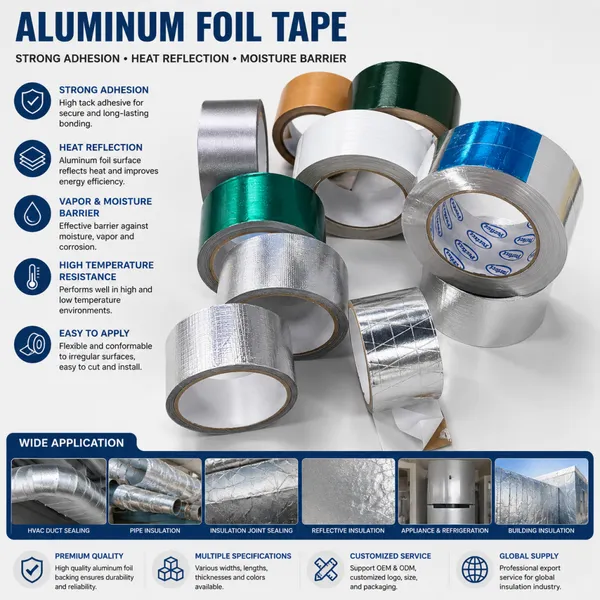
Reinforced Aluminium Foil Tape, Waterproof Anti-aging Tape, Widely Used in HVAC and Building Insulation ProjectsNegotiableMOQ: 500 Cartons
-
HVAC Aluminum Foil Sealing Tape, Strong Adhesion Heat Resistance for Pipe, Glass Wool and Rockwool InsulationNegotiableMOQ: 500 Cartons
-
Factory Supply Metalized PET MPET Laminate Foils, Aluminum Coated PET Film for Roof Wall InsulationNegotiableMOQ: 10000 Cubic Meters
-
Custom MPET Metalized PET Laminate Foils, VMPET Metallized Polyester Facing Film for Thermal InsulationNegotiableMOQ: 10000 Cubic Meters
-
Glass Wool Insulation Series, Glasswool With FSK/FWF/MSK/MWV/KSK Facing, Metalized PET Laminate Foils, Heat & Sound Insulation for Commercial BuildingNegotiableMOQ: 100 Rolls
-
Rockwool Blanket With Black Firber GlassNegotiableMOQ: 100 Rolls
-
Glasswool Insulation Blanket & Board, FSK FWF MSK MWV KSK Foil Laminate, MPET Metalized PET Faced Glass Wool for HVAC, Roof, Wall, Air DuctNegotiableMOQ: 100 Rolls
-
Rockwool Insulation Roll, FSK Foil Faced Mineral Wool for Building Thermal & Acoustic Insulation, Fire Resistant Roof Wall Insulation MaterialNegotiableMOQ: 100 Rolls
-
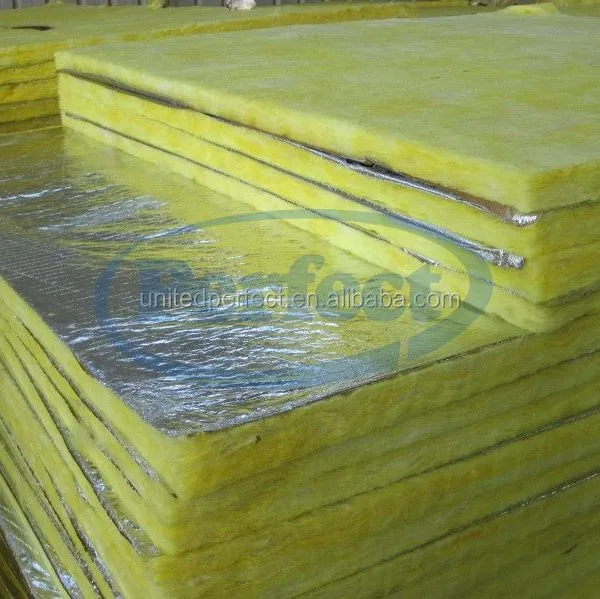
FWF MSK FSK Foil Laminated Rock Wool Glass Wool Blanket, Metalized PET Laminate Foils Faced Insulation for HVAC and ConstructionNegotiableMOQ: 100 Rolls
-
Rockwool Insulation Board, Mineral Wool Rock Wool Slab for Building Thermal & Fire Insulation, Soundproof Rockwool Panel for Roof, Wall, HVAC SystemNegotiableMOQ: 100 Rolls
-
Rockwool Pipe Section, Mineral Wool Rock Wool Tube Insulation, Fire & Heat Resistant Rockwool for Steam Pipes, Industrial Pipeline Insulation ProjectNegotiableMOQ: 100 Rolls
-
Rockwool Board With FSK FacingNegotiableMOQ: 100 Rolls
-
Rockwool Insulation Slab With FSK Facing, Fireproof Rock Wool Board, Thermal & Sound Insulation Rockwool for Roof, Wall and Ductwork ApplicationNegotiableMOQ: 100 Rolls
-
Fireproof Foil Laminated Glass Wool, Laminate Foils MPET Faced Glasswool Insulation Roll & Sheet for Roofing, Wall, Duct and Pipe InsulationNegotiableMOQ: 100 Rolls