
 Business License
Blog Categories

Rockwool Compression Moisture Protection and Container Loading
A buyer in Oceania once opened a container of mineral wool boards and found the packs at the door with damp edges and a musty smell after a long sea leg. The boards had been loaded dry and the moisture had arrived in transit, because the packs were not lined and the container was not treated.
Mineral wool travels well in most respects and it has two specific vulnerabilities in transit: it compresses under load, and it takes up moisture if the conditions are wrong. Rockwool compression packaging is chosen to manage the first, rockwool moisture protection manages the second, and both come together in mineral wool container loading. This article covers the three and how they are planned as one operation.
1. Rockwool Compression Packaging and Recovery
Rockwool compression packaging reduces the shipped volume by compressing the product in the pack, and the product recovers its thickness when the pack is opened.
A mineral wool board or batt is compressible, and a pack that is compressed to a fraction of its free thickness is cheaper to ship. The compression is applied in a controlled press and held by the wrapping, and the product is designed to recover when the wrapping is removed.
| Compression Ratio | Effect on Shipping | Recovery |
|---|---|---|
| Light | Small volume saving | Full |
| Moderate | Good volume saving | Full over a short time |
| Heavy | Large volume saving | Slower, may be incomplete |
| Excessive | Maximum saving | Incomplete, permanent set |
The recovery is the figure that matters to the buyer rather than the compression. A product compressed beyond its elastic limit does not recover to the stated thickness, and a board that stays thinner than specified leaves a gap in the cavity or reduces the thermal performance.
The recovery should therefore be stated by the supplier as a thickness after a stated time out of the pack. A buyer who orders on the compressed thickness alone has bought a pack and not a product, because the thickness that matters is the one in the wall.
2. Rockwool Moisture Protection in Transit
Rockwool moisture protection is largely about keeping liquid water off the product, because the material is water-repellent and not waterproof.
A mineral wool board resists the uptake of liquid water and it can dry out if it gets wet, which is why rockwool moisture protection concentrates on keeping the product dry for the whole voyage rather than on sealing it completely. The problem in transit is not a brief wetting but a long period in a humid or a wet environment, where the product takes up moisture and the pack holds it.
| Source of Moisture | Control |
|---|---|
| Rain during handling | Covered loading, dry storage |
| Condensation in the container | Container liners, desiccants |
| Wet pallets | Dry pallets, slip sheets |
| Sea air humidity | Sealed or lined packs |
| Wet at loading | Inspection before loading |
Container condensation is the source that catches buyers out. A container moves between climates on a sea leg, and the air inside it condenses on the cooler surfaces, which is often the cargo or the container wall. A liner or a desiccant manages that moisture, and a shipment that crosses climates without one can arrive damp even though it was loaded dry and the container never leaked.
The product should also be dry at loading. A pack that is wet when it is loaded cannot be dried in the container, and the moisture stays with the product for the whole voyage.
3. Mineral Wool Container Loading
Mineral wool container loading is a packing exercise that has to satisfy three constraints at once: the volume, the load and the moisture.
The volume constraint is met by the compression ratio and by the pack dimensions, which should be chosen to fill the container without leaving large voids. A partly filled container leaves space for the cargo to move, and moving cargo damages the packs and the product inside them.
| Constraint | What It Requires |
|---|---|
| Volume | Pack dimensions matched to the container |
| Load | Stack height within the compression limit |
| Moisture | Liner or desiccant, dry product |
| Movement | Filled container, secured cargo |
| Handling | Accessible packs at the door |
The load constraint is met by limiting the stack height. A pack of mineral wool can carry a load, and a tall stack compresses the packs at the bottom beyond their recovery limit, which is a rockwool compression packaging question rather than a shipping one. The stack height for the shipment should be set against the recovery figure rather than against the container height.
The packing should also leave the packs that will be unloaded first at the door. In a mixed shipment of boards and pipe sections, the mineral wool container loading order follows the unloading order rather than the packing convenience.
4. Rockwool Compression Packaging Limits and Stack Height
The compression limit sets the maximum stack height, and it is a figure that should be requested with the quotation rather than assumed.
A mineral wool pack under a sustained load compresses to a new thickness. Where the load is within the elastic range, the product recovers when the load is removed. Where the load exceeds it, part of the compression is permanent, and the packs at the bottom of a tall stack are the ones that see the greatest load.
| Stack Position | Load | Outcome |
|---|---|---|
| Top | Light | Full recovery |
| Middle | Moderate | Full recovery if within limit |
| Bottom | Highest | Permanent set if over limit |
The stack height should be calculated for the compression limit of the specific grade rather than applied as a general rule. A high-density board resists compression better than a low-density batt, and the two do not share a stack height.
The duration also matters. A load applied for a short time is more recoverable than the same load applied for the duration of a sea voyage. A stack that is acceptable for a road delivery may exceed the limit for a sea freight shipment of the same cargo.
5. Case Notes on Rockwool Compression Packaging
A buyer in Oceania received a container of mineral wool boards with damp edges at the door end of the container. The packs had been loaded dry and the container had not leaked. The moisture had condensed inside the container during the sea leg, and the packs nearest the door, where the temperature changed most, took it up. A liner and a desiccant on the next shipment removed the problem.
A second shipment arrived with the boards at the bottom of the stack thinner than the specification. The stack height had been set to fill the container, and the packs at the bottom had been compressed beyond recovery. Reducing the stack height left a small void and the boards recovered to the stated thickness. The product was correct and the stack was not.
Both cases show the same point. Compression and moisture are managed in the packing plan, and both are decided before the container is loaded.
6. Planning a Mineral Wool Shipment
State the compressed thickness and the recovery as two separate figures, and order against the recovered thickness that the wall needs.
State the compression limit and calculate the stack height from it, allowing for the duration of the voyage rather than for a short delivery.
Specify the moisture control for the route. A shipment that crosses climates needs a liner or a desiccant even where the container is sound and the product is dry at loading.
Plan the loading order with the unloading order, so that the packs for the first site are at the door and the stack is filled rather than partly empty.
7. Verifying a Mineral Wool Delivery
Verifying a delivery of mineral wool means checking the product after it has recovered rather than at the moment it is unpacked.
Open a pack and allow the product to recover for the stated time, then measure the thickness against the specification. A measurement taken immediately after unpacking will be low even where the product is correct.
Check for moisture along the edges and at the pack ends, particularly in the packs that were nearest the door and the container walls. A musty smell is a sign of prolonged moisture, and a product that has been wet for a long period should be assessed before it is installed.
Check the packs at the bottom of the stack for permanent set, which appears as a reduced thickness that does not recover. Those packs are the ones that were loaded hardest, and a reduced thickness is a permanent loss of performance.
8. Rockwool Compression Packaging Supplier Profile
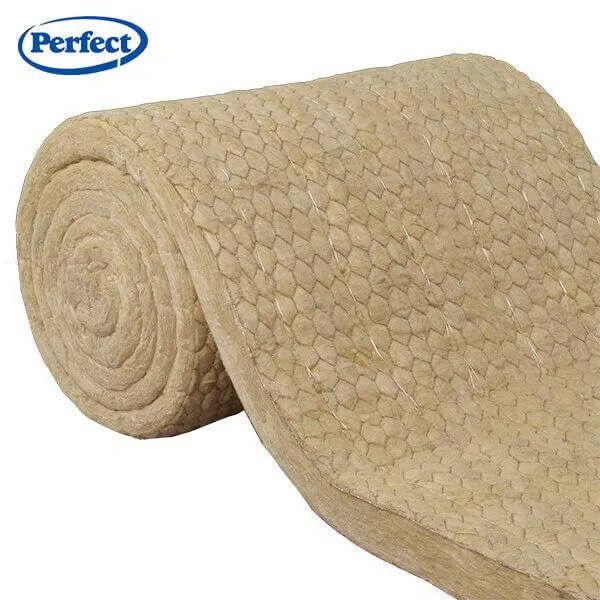
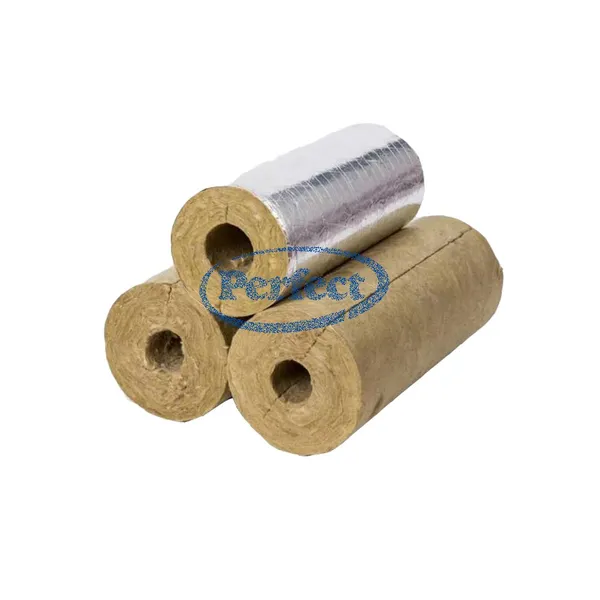
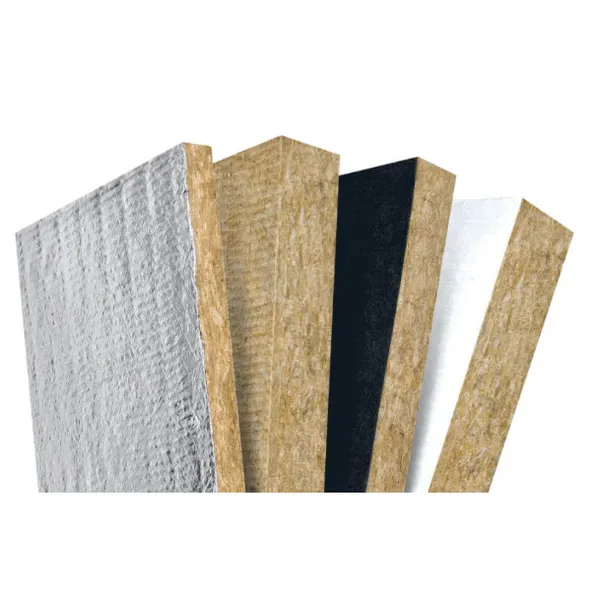
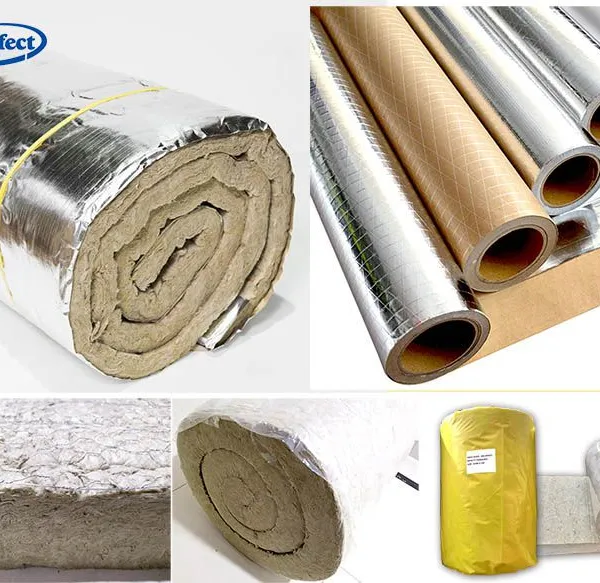
United Perfect Building Materials, part of Jinan United Perfect Building Materials Corporation, supplies mineral wool in board, blanket and pipe section forms and quotes the rockwool compression packaging and the recovery for each grade. The company states the compressed thickness and the recovered thickness separately, which allows a buyer to order against the thickness the wall requires.
Jinan United Perfect Building Materials advises on rockwool moisture protection and on mineral wool container loading for each destination, including the liner or desiccant requirement for a route that crosses climates. The company holds retained samples by production batch, so a delivered pack can be checked against the reference. United Perfect can also confirm the compression limit and the recommended stack height where a shipment is to be stacked to the container height.
9. FAQ About Rockwool Packaging and Loading
9.1 Does compression damage mineral wool?
Not within its elastic range, and it does damage the product beyond it. A mineral wool pack is designed to be compressed for shipping and to recover when the wrapping is removed, and the recovery is the figure that matters rather than the compression. A product compressed beyond its elastic limit takes a permanent set and does not recover to the stated thickness, which leaves a gap in a cavity or reduces the thermal performance. The compression limit and the recovery should both be requested from the supplier.
9.2 How is moisture controlled in a container?
By keeping liquid water off the product and by managing the moisture that condenses inside the container in transit. The product should be dry at loading, the pallets should be dry and the loading should be covered so that rain does not reach the packs at the moment they are loaded. For a sea leg that crosses climates, a container liner or a desiccant manages the condensation that forms on the cooler surfaces, which is a common cause of a damp delivery even where the container never leaked.
9.3 What stack height is safe?
It follows from the compression limit of the specific grade rather than from a general rule. A high-density board resists compression better than a low-density batt, so the two do not share a stack height. The stack height should be calculated so that the packs at the bottom stay within the elastic range for the duration of the voyage, because a load applied over a long sea leg is less recoverable than the same load applied briefly. The recommended height should be requested with the quotation.
9.4 How do I check for moisture damage on arrival?
Check the edges and the pack ends for dampness, with particular attention to the packs that were nearest the door and the container walls, because those surfaces see the greatest temperature change in transit. A musty smell indicates prolonged moisture rather than a brief wetting. Where a pack has been wet for a long period, the product should be assessed before it is installed, because the thermal performance falls while the material is wet and a product that has been wet for months may not return to its original figure.
9.5 Can I order against the compressed thickness?
No, because the compressed thickness is a shipping figure and the thickness in the wall is the recovered one. A buyer who orders on the compressed thickness alone has bought a pack and not a product, and the wall will then receive whatever the product recovers to. The compression should be stated so that the volume and the cost can be calculated, and the recovered thickness should be stated separately so that the specification and the inspection are both made against the figure that the installation requires.
Recently Posted
-
From Felt to Synthetic Underlayment in North American Roofing
November 3, 2026A roofing supplier in North America once kept both felt and synthetic underlayment on the same rack and watched the split shift wi Read More
-
QC Checklist for Synthetic Underlayment Before Shipment
November 3, 2026A buyer in North America once received a shipment in which the lengths on the packing list were correct and the rolls at the centr Read More
-
Synthetic Underlayment Slitting Winding and Roll Diameter Control
November 2, 2026A buyer in North America once rejected a container of synthetic underlayment because the rolls at one end had flattened into an ov Read More
-
Synthetic Underlayment for Tropical and Desert Roofing Projects
November 2, 2026Two projects in the same product family can fail for opposite reasons. A tropical roof underlayment in Southeast Asia can be ruine Read More

Contact Us
Recommended Products
-
 Glasswool Blanket With FSK FacingNegotiableMOQ: 100 Rolls
-
Rockwool Blanket With Wire MeshNegotiableMOQ: 100 Rolls
-
Rockwool Blanket With FSK FacingNegotiableMOQ: 100 Rolls
-
CE Certified Glass Wool Insulation, Glasswool Fiberglass, Low Thermal Conductivity, Noise Reduction for Wall, Roof and Industrial EquipmentNegotiableMOQ: 100 Rolls
-
KSK Foil Facing Roll, Laminated Aluminum Foil + Scrim + Kraft Paper, Anti-Tear Thermal Barrier, Suitable for Commercial HVAC and Roof InsulationNegotiableMOQ: 500 Rolls
-
FSK Foil Scrim Kraft, FWF MSK MWV KSK Laminate Foils, Metalized PET MPET Vapor Barrier Facing for Insulation Glasswool RockwoolNegotiableMOQ: 100 Rolls
-
Reinforced Aluminium Foil Tape, Waterproof Anti-aging Tape, Widely Used in HVAC and Building Insulation ProjectsNegotiableMOQ: 500 Cartons
-
HVAC Aluminum Foil Sealing Tape, Strong Adhesion Heat Resistance for Pipe, Glass Wool and Rockwool InsulationNegotiableMOQ: 500 Cartons
-
Factory Supply Metalized PET MPET Laminate Foils, Aluminum Coated PET Film for Roof Wall InsulationNegotiableMOQ: 10000 Cubic Meters
-
Custom MPET Metalized PET Laminate Foils, VMPET Metallized Polyester Facing Film for Thermal InsulationNegotiableMOQ: 10000 Cubic Meters
-
Glass Wool Insulation Series, Glasswool With FSK/FWF/MSK/MWV/KSK Facing, Metalized PET Laminate Foils, Heat & Sound Insulation for Commercial BuildingNegotiableMOQ: 100 Rolls
-
Rockwool Blanket With Black Firber GlassNegotiableMOQ: 100 Rolls
-
Glasswool Insulation Blanket & Board, FSK FWF MSK MWV KSK Foil Laminate, MPET Metalized PET Faced Glass Wool for HVAC, Roof, Wall, Air DuctNegotiableMOQ: 100 Rolls
-
Rockwool Insulation Roll, FSK Foil Faced Mineral Wool for Building Thermal & Acoustic Insulation, Fire Resistant Roof Wall Insulation MaterialNegotiableMOQ: 100 Rolls
-
FWF MSK FSK Foil Laminated Rock Wool Glass Wool Blanket, Metalized PET Laminate Foils Faced Insulation for HVAC and ConstructionNegotiableMOQ: 100 Rolls
-
Rockwool Insulation Board, Mineral Wool Rock Wool Slab for Building Thermal & Fire Insulation, Soundproof Rockwool Panel for Roof, Wall, HVAC SystemNegotiableMOQ: 100 Rolls
-
Rockwool Pipe Section, Mineral Wool Rock Wool Tube Insulation, Fire & Heat Resistant Rockwool for Steam Pipes, Industrial Pipeline Insulation ProjectNegotiableMOQ: 100 Rolls
-
Rockwool Board With FSK FacingNegotiableMOQ: 100 Rolls
-
Rockwool Insulation Slab With FSK Facing, Fireproof Rock Wool Board, Thermal & Sound Insulation Rockwool for Roof, Wall and Ductwork ApplicationNegotiableMOQ: 100 Rolls
-
Fireproof Foil Laminated Glass Wool, Laminate Foils MPET Faced Glasswool Insulation Roll & Sheet for Roofing, Wall, Duct and Pipe InsulationNegotiableMOQ: 100 Rolls