
 Business License
Blog Categories

What Is Synthetic Roofing Underlayment? A Complete Introduction
A roofer in North America once pulled back a section of roof covering that had been in place for eleven years and found the synthetic roofing underlayment beneath it still pliable. The same roof had a strip of the old felt at one gable end, and that strip had cracked. The difference was the material, not the installation.
Synthetic roofing underlayment sits between the roof deck and the covering, and its job is to shed any water that reaches the deck and to protect the deck while the covering is being installed. It has largely replaced asphalt-saturated felt in North America, and the reason is a change in the material rather than a change in the function. This article explains what a roofing underlayment membrane is made from, how it works, the figures that matter, and how a synthetic underlayment roll is specified.
1. What Synthetic Roofing Underlayment Is
A synthetic roofing underlayment is a manufactured sheet that replaces the older asphalt-saturated felt as the secondary water-shedding layer under a roof covering.
The word synthetic describes the material rather than the function. The older product was a felt saturated with asphalt, and its properties followed from the asphalt. The modern product is a woven or non-woven polymer sheet, usually polypropylene or a polyester composite, and its properties follow from the fibre structure and the coating applied to it.
The change matters because the two materials fail differently. Felt becomes brittle as the asphalt ages and splits at the point where it is bent or walked on. A polymer sheet does not contain the same ageing asphalt, so it retains flexibility over a longer period and resists tearing at the fasteners.
| Aspect | Asphalt Felt | Roofing Underlayment Membrane |
|---|---|---|
| Base material | Saturated organic felt | Woven or non-woven polymer |
| Behaviour over time | Brittle, cracks | Retains flexibility |
| Weight | Heavy per square | Light per square |
| Tear resistance | Low | High |
| Exposure tolerance | Limited | Extends working time |
The light weight is a practical consequence. A synthetic underlayment roll covers a larger area per unit of weight than the equivalent felt, so a crew carries fewer rolls up a ladder for the same roof. That reduces the time spent on access as well as the load placed on the deck during the work.
2. Materials in a Roofing Underlayment Membrane
A roofing underlayment membrane is built from a carrier and a coating, and the two together determine how the sheet behaves.
The carrier is the fibre layer. A woven carrier is made from flat tapes interlaced in two directions, which gives the sheet its tensile strength. A non-woven carrier is made from bonded fibres in a random orientation, which gives the sheet a softer hand and a different tear behaviour.
The coating is applied to one or both faces. The coating provides the water resistance and often the surface friction that keeps a worker from sliding on a pitched deck. Some products also add a mineral or a textured surface for grip.
| Layer | What It Contributes |
|---|---|
| Woven or non-woven carrier | Tensile strength, tear resistance |
| Polymer coating | Water resistance, surface grip |
| Textured surface | Footing on a pitched roof |
| Printing or marking | Lap alignment, installation guidance |
The construction also decides how the sheet behaves at a detail. Where a membrane is folded into a valley or around a penetration, it is the carrier that resists the tear and the coating that keeps the water out. A sheet with a strong carrier and a weak coating sheds water until it is folded, and a sheet with a heavy coating and a weak carrier resists water and tears at the fastener.
The specification should therefore name the carrier and the coating rather than the product family alone. Two roofing underlayment membranes in the synthetic family can differ substantially in both figures.
3. How a Synthetic Underlayment Roll Sheds Water
A synthetic underlayment roll is installed in horizontal courses with the upper course lapping over the lower one, so water runs down the laps and onto the covering below.
The sheet is not a waterproof barrier in the way a membrane under a tile is. It is the secondary layer beneath the primary covering, and it collects the water that gets past the covering, through the laps, or around a failed flashing. The water then drains down the slope on the surface of the sheet.
That role explains the lap direction. Where the laps are laid with the upper sheet over the lower one, water cannot reach the deck at the lap. Where the laps are reversed, water enters at every lap, and the underlayment converts a secondary defence into a path to the deck.
The laps are also the reason mechanical fastening matters. The sheet is held with cap nails or with a self-adhering strip, and the fastening pattern keeps the laps closed under wind uplift. A sheet that is loose at the lap opens as the pressure beneath it rises, and the water path appears at the point that matters most.
4. Synthetic Underlayment Roll Weight and Strength Figures
The figures that distinguish one synthetic underlayment roll from another are the weight per unit area, the tensile strength and the tear resistance.
| Figure | What It Governs | Why It Matters |
|---|---|---|
| Weight per square | Handling, coverage | Fewer rolls to the roof |
| Tensile strength | Resistance to pulling | Holds under wind uplift |
| Tear resistance | Resistance to a cut | Survives fasteners and traffic |
| Water resistance | Head of water held | Handles ponding at a low slope |
| Exposure period | Time before covering | Sets the site programme |
Tensile strength and tear resistance are different figures and are often confused. Tensile strength describes the load the sheet carries before it stretches and fails. Tear resistance describes the load that starts a cut and propagates it. A sheet can be strong in tension and weak in tear, which means it resists a pull along its length and splits at a fastener that nicks the edge.
Because a roof underlayment is fastened through its surface and walked on during installation, tear resistance is usually the figure that decides how a product performs on site. The tensile figure matters at the laps and under wind uplift, where the whole sheet is loaded rather than a single point.
5. Why a Roofing Underlayment Membrane Replaced Felt
The change from felt to a roofing underlayment membrane was driven by two practical failures of the older product, and both appear as a service problem rather than as a construction problem.
The first failure is brittleness. Felt depends on the asphalt for its flexibility, and the asphalt oxidises as it ages. A felt that is brittle splits where it is bent, and the split appears at the ridge, at a valley or wherever the sheet has to follow a change of plane. A polymer sheet does not rely on a volatile binder in the same way, so it retains flexibility over the exposure period that matters.
The second failure is tearing at the fasteners. A felt is relatively weak in tear, so a fastener that nicks the edge of the sheet starts a tear that grows as the sheet moves. A woven carrier resists that propagation, so the same fastening pattern holds.
The exposure period is the third practical difference. A felt that is left exposed over a wet season can be damaged before the covering arrives, while a synthetic underlayment roll is usually rated for a longer exposure and gives the site programme more room. That does not remove the need to cover the roof, and the stated period should still be respected.
6. Case Notes on a Synthetic Underlayment Roll
A roofing contractor in North America replaced the felt on a low-slope porch roof with a synthetic underlayment roll and used the same lap direction that had been used with the felt. Water appeared at the deck after the first storm. The laps on the synthetic sheet had been laid with the lower sheet over the upper one, which reversed the drainage path. Reversing the laps corrected the problem, and the material was not at fault.
A second project used a light synthetic sheet on a steep roof in a windy region. The sheet held against the wind, but it tore at the fasteners during installation, and a crew replaced several courses. A heavier grade with a higher tear resistance was used on the exposed slope, and the tearing stopped. The two sheets were in the same product family, and nothing but the grade and the tear figure distinguished them.
Both cases point to the same conclusion. The underlayment works when the laps drain and the sheet resists the tear at the fastener, and those two conditions are set by the installation and the grade rather than by the brand.
7. Specifying a Roofing Underlayment Membrane
State the weight per square and the tear resistance together. A weight without a tear figure leaves the on-site performance undefined.
State the exposure period, because it sets the programme for the roof. A sheet rated for a short period constrains the time between the underlayment and the covering, and that constraint belongs in the schedule rather than in the site instruction.
State the lap width and the fastening pattern, and require the laps to drain. The lap direction is not a detail that can be left to the crew, because a reversed lap converts the secondary layer into a path to the deck.
State the water resistance in terms of the head of water the sheet holds, particularly on a low slope where ponding is possible. On a steep roof the water sheds quickly and the figure is less critical.
8. Synthetic Roofing Underlayment Supplier Profile
United Perfect Building Materials, part of Jinan United Perfect Building Materials Corporation, produces synthetic roofing underlayment for sloped and low-slope roofs and supplies buyers in North America. The company quotes the weight, tensile strength and tear resistance of each grade, which allows a synthetic underlayment roll to be compared on the same figures as any other supplier's product.
Jinan United Perfect Building Materials holds retained samples by production batch, so a delivered roll can be checked against the reference used at approval. Buyers specifying a roofing underlayment membrane for a project that mixes steep and low-slope areas can order the appropriate grades from one source. United Perfect can also confirm the exposure period in writing where the roof programme depends on it.
9. FAQ About Synthetic Roofing Underlayment
9.1 Is synthetic underlayment better than felt?
It performs differently rather than simply better, and the difference favours the synthetic sheet in most modern roofs. Felt becomes brittle as its asphalt ages and splits where it is bent, and it tears easily at a fastener. A synthetic roofing underlayment keeps its flexibility over a longer period and resists the tear that starts at a fastener or a walkway. Felt remains adequate in some dry, steep applications, and the choice should follow the exposure period, the slope and the traffic the roof will see during construction.
9.2 How is a synthetic underlayment roll installed?
It is rolled out in horizontal courses working up the slope, with each upper course lapping over the lower one so that water runs down the laps rather than into them. The sheet is fastened along the laps and field with cap nails or a self-adhering strip, and the laps are kept closed against wind uplift. On a steep roof a textured or printed surface helps the crew keep footing. The lap width and the fastening pattern should follow the manufacturer's instructions.
9.3 What weight should I choose?
It depends on the slope, the wind exposure and the traffic the roof will receive. A heavier roofing underlayment membrane resists tearing better and holds up under foot traffic, while a lighter sheet is easier to handle and covers more area per roll. On an exposed slope or a roof that will be walked on during construction, the heavier grade usually pays for itself in avoided repairs. On a sheltered, steep roof installed quickly, a lighter grade may be adequate.
9.4 Can underlayment be left exposed?
Yes, for the stated exposure period, which varies by grade and should be confirmed with the supplier before the order. A synthetic underlayment roll is generally rated for a longer exposure than felt, which gives a site programme more room between wrapping the deck and installing the covering. That does not make the sheet a permanent roof. UV exposure degrades the polymer over time, so exceeding the stated period risks a failure that appears before the covering is installed and is then hidden under the new roof.
9.5 Does underlayment replace the need for ice and water shield?
No, and the two serve different areas of the same roof. A roofing underlayment membrane covers the field of the roof and sheds water that passes the covering. An ice and water shield is a self-adhering membrane used at the eaves, in valleys and around penetrations, where water can back up under the covering. The shield is specified at those details in addition to the field underlayment, and the two products are usually ordered together as one package for the roof rather than as alternatives to each other.
Recently Posted
-
From Felt to Synthetic Underlayment in North American Roofing
November 3, 2026A roofing supplier in North America once kept both felt and synthetic underlayment on the same rack and watched the split shift wi Read More
-
QC Checklist for Synthetic Underlayment Before Shipment
November 3, 2026A buyer in North America once received a shipment in which the lengths on the packing list were correct and the rolls at the centr Read More
-
Synthetic Underlayment Slitting Winding and Roll Diameter Control
November 2, 2026A buyer in North America once rejected a container of synthetic underlayment because the rolls at one end had flattened into an ov Read More
-
Synthetic Underlayment for Tropical and Desert Roofing Projects
November 2, 2026Two projects in the same product family can fail for opposite reasons. A tropical roof underlayment in Southeast Asia can be ruine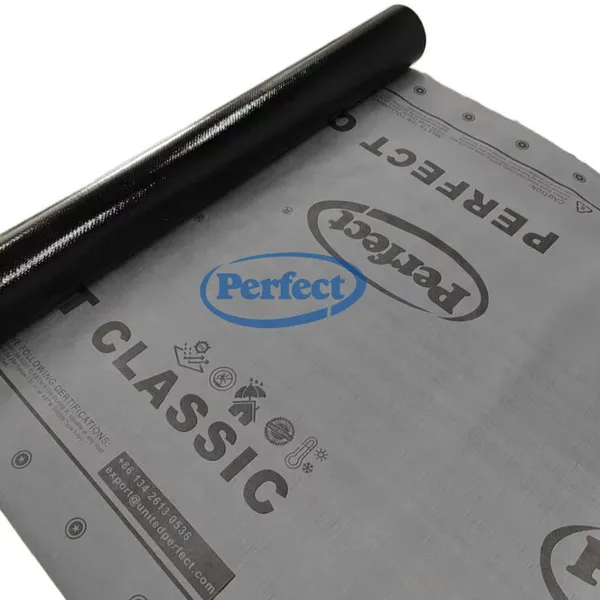 Read More

Contact Us
Recommended Products
-
 Glasswool Blanket With FSK FacingNegotiableMOQ: 100 Rolls
-
Rockwool Blanket With Wire MeshNegotiableMOQ: 100 Rolls
-
Rockwool Blanket With FSK FacingNegotiableMOQ: 100 Rolls
-
CE Certified Glass Wool Insulation, Glasswool Fiberglass, Low Thermal Conductivity, Noise Reduction for Wall, Roof and Industrial EquipmentNegotiableMOQ: 100 Rolls
-
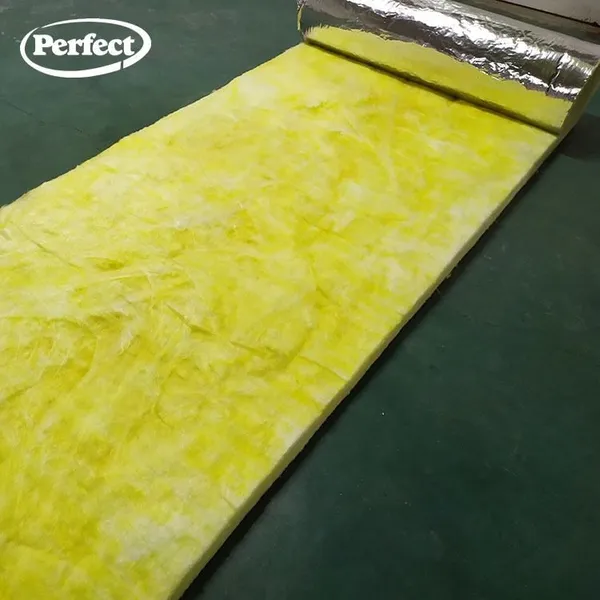
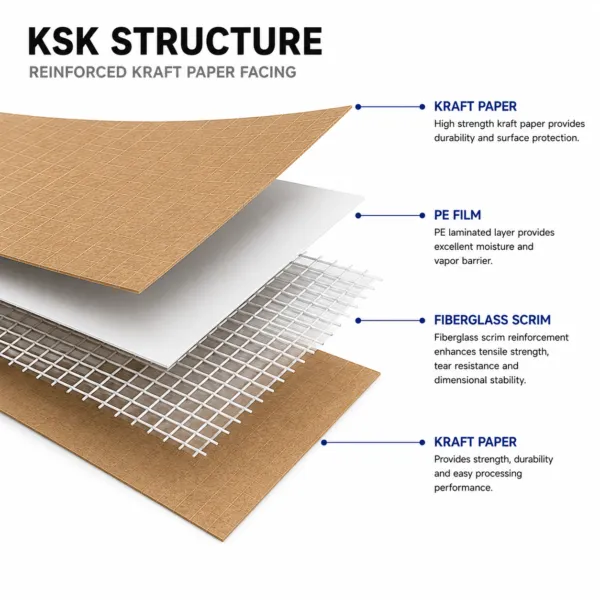
KSK Foil Facing Roll, Laminated Aluminum Foil + Scrim + Kraft Paper, Anti-Tear Thermal Barrier, Suitable for Commercial HVAC and Roof InsulationNegotiableMOQ: 500 Rolls
-
FSK Foil Scrim Kraft, FWF MSK MWV KSK Laminate Foils, Metalized PET MPET Vapor Barrier Facing for Insulation Glasswool RockwoolNegotiableMOQ: 100 Rolls
-
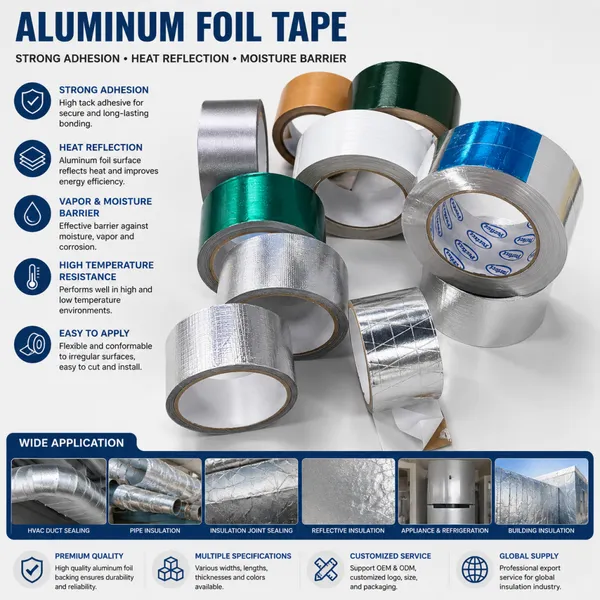
Reinforced Aluminium Foil Tape, Waterproof Anti-aging Tape, Widely Used in HVAC and Building Insulation ProjectsNegotiableMOQ: 500 Cartons
-
HVAC Aluminum Foil Sealing Tape, Strong Adhesion Heat Resistance for Pipe, Glass Wool and Rockwool InsulationNegotiableMOQ: 500 Cartons
-
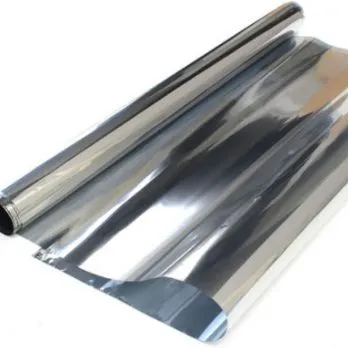
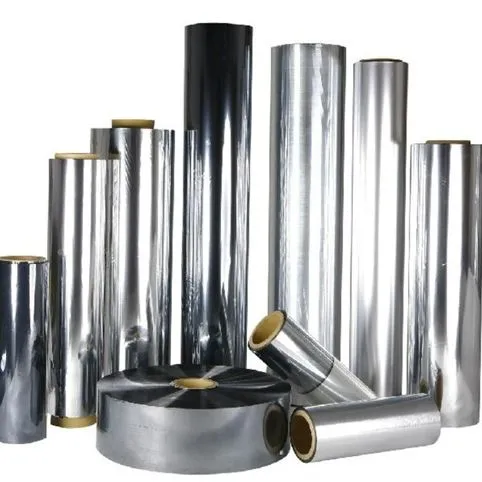
Factory Supply Metalized PET MPET Laminate Foils, Aluminum Coated PET Film for Roof Wall InsulationNegotiableMOQ: 10000 Cubic Meters
-
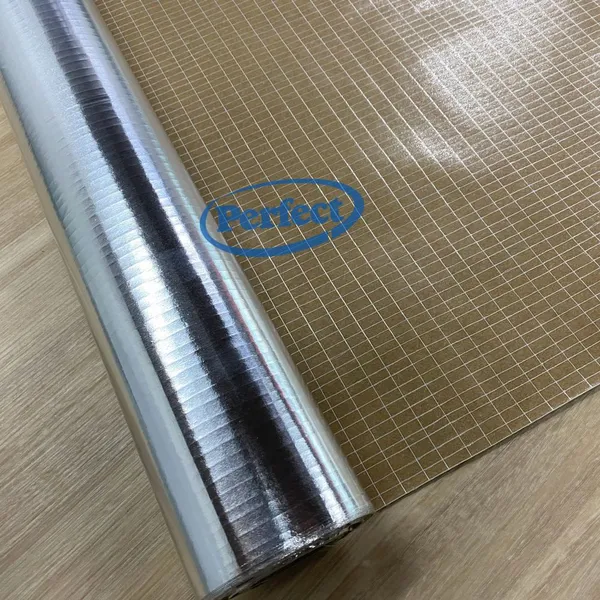
Custom MPET Metalized PET Laminate Foils, VMPET Metallized Polyester Facing Film for Thermal InsulationNegotiableMOQ: 10000 Cubic Meters
-
Glass Wool Insulation Series, Glasswool With FSK/FWF/MSK/MWV/KSK Facing, Metalized PET Laminate Foils, Heat & Sound Insulation for Commercial BuildingNegotiableMOQ: 100 Rolls
-
Rockwool Blanket With Black Firber GlassNegotiableMOQ: 100 Rolls
-
Glasswool Insulation Blanket & Board, FSK FWF MSK MWV KSK Foil Laminate, MPET Metalized PET Faced Glass Wool for HVAC, Roof, Wall, Air DuctNegotiableMOQ: 100 Rolls
-
Rockwool Insulation Roll, FSK Foil Faced Mineral Wool for Building Thermal & Acoustic Insulation, Fire Resistant Roof Wall Insulation MaterialNegotiableMOQ: 100 Rolls
-
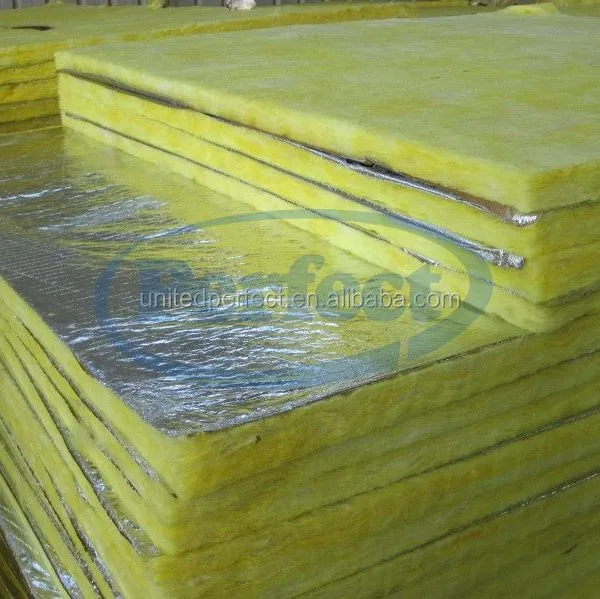
FWF MSK FSK Foil Laminated Rock Wool Glass Wool Blanket, Metalized PET Laminate Foils Faced Insulation for HVAC and ConstructionNegotiableMOQ: 100 Rolls
-
Rockwool Insulation Board, Mineral Wool Rock Wool Slab for Building Thermal & Fire Insulation, Soundproof Rockwool Panel for Roof, Wall, HVAC SystemNegotiableMOQ: 100 Rolls
-
Rockwool Pipe Section, Mineral Wool Rock Wool Tube Insulation, Fire & Heat Resistant Rockwool for Steam Pipes, Industrial Pipeline Insulation ProjectNegotiableMOQ: 100 Rolls
-
Rockwool Board With FSK FacingNegotiableMOQ: 100 Rolls
-
Rockwool Insulation Slab With FSK Facing, Fireproof Rock Wool Board, Thermal & Sound Insulation Rockwool for Roof, Wall and Ductwork ApplicationNegotiableMOQ: 100 Rolls
-
Fireproof Foil Laminated Glass Wool, Laminate Foils MPET Faced Glasswool Insulation Roll & Sheet for Roofing, Wall, Duct and Pipe InsulationNegotiableMOQ: 100 Rolls