
 Business License
Blog Categories

Sourcing Synthetic Underlayment for North American Roofing
A distributor in Texas once switched supplier to save four per cent on a synthetic underlayment order and then spent the following season handling callbacks, because the new roll tore at the eave on every third roof. The saving did not survive the first warranty claim.
Sourcing synthetic underlayment for North America is a different exercise from sourcing many building products, because the market has established expectations about weight, tear strength and roll format. This article covers what a North American buyer looks for, how to qualify a synthetic underlayment supplier, and how to run underlayment import buying so that the landed cost is compared on a like-for-like basis rather than on unit price alone.
1. What North American Buyers Expect from Synthetic Underlayment
The North American roofing market has converged on a heavy non-woven or woven synthetic sheet as the standard underlayment for steep-slope roofs. The product replaced asphalt felt in most new work, and the expectations that grew up around felt have carried over to the synthetic version, including a strong preference for a heavy sheet that resists wind uplift.
Builders in the region also expect the product to be walkable while the roof is being finished. A sheet that tears under foot traffic during installation generates callbacks, and a callback costs far more than the price difference between a light and a heavy roll.
The third expectation is format. Rolls are handled by crews who have a preferred width and weight, and a supplier who ships a non-standard roll width adds labour on the roof. Roll width and roll length should be confirmed against the buyer's normal practice before the first container is booked.
2. Synthetic Underlayment North America Standards and Testing
A synthetic underlayment north america specification usually references the test methods that the market recognises rather than a single national standard, because underlayment is commonly qualified through a combination of product data and installation approvals. Buyers should ask for the test data behind each claim rather than for a marketing summary.
The properties that matter most in a synthetic underlayment north america submission are tear strength, tensile strength and water resistance. Tear strength is tested on a sample with a prepared nick, and the result is quoted in force units per unit thickness or as an absolute force. A buyer comparing two suppliers should confirm that both are quoting the same test method, because the numbers are not comparable across different methods.
UV exposure resistance is the other figure to pin down. Roofs are often left uncovered for days or weeks, and the underlayment has to survive that exposure without degrading. The exposure period claimed by the supplier should be confirmed in writing, along with the conditions under which it applies.
| Property | What to ask for | Why it matters |
|---|---|---|
| Tear strength | Test method and value | Resists damage at eaves and during walking |
| Tensile strength | Machine and cross direction | Resists wind uplift and installation pull |
| Water resistance | Test method and result | Protects the deck before cladding is fixed |
| UV exposure | Claimed period, in writing | Survives the interval before roofing |
| Roll format | Width, length, weight | Matches crew practice, controls labour |
3. Qualifying a Synthetic Underlayment Supplier
Qualification starts with the ability to restate the specification. A synthetic underlayment supplier who can quote the test method behind each figure is more likely to hold those figures in production than one who answers with adjectives. Buyers should ask for the data sheet, the test reports and a production sample before discussing price.
The second question is production control. A supplier who laminates or coats the sheet in house controls the weight and the coating thickness directly, while a trader passes the requirement upstream. Buyers should establish which of the two they are dealing with, because it sets how quickly a variation can be corrected.
The third question is the record with the destination market. A synthetic underlayment north america shipment also benefits from a supplier who already knows the packing preferences, the document requirements and the roll format expectations of the region. A supplier new to the market may deliver a technically correct product in a format the buyer's crews do not want.
4. Underlayment Import Buying Price and Landed Cost
Underlayment import buying decisions should be made on landed cost per square metre rather than on unit price. Landed cost includes the goods, the freight, the insurance, the duty and the inland move, and for a bulky product the freight component is large enough to reverse a unit price advantage.
The loading quantity is the key input. Rolls are cylindrical, and the number that fits in a container depends on the roll diameter and the core size as much as on the sheet weight. A supplier whose rolls load more efficiently delivers a lower freight cost per square metre at the same unit price, and the difference can be several per cent.
Buyers should ask for the loading plan in rolls, the roll dimensions and the net weight per container. With those figures a buyer can put two quotations on the same basis in a few minutes, and the comparison then reflects what actually arrives at the warehouse.
5. Specification Checklist for a Synthetic Underlayment Supplier Order
The first item on the checklist is the weight per unit area, usually quoted in grams per square metre or in the market's own unit. Weight correlates with tear strength and with cost, and it is the single figure that most reliably distinguishes one grade from another.
The second item is the reinforcement type. A woven scrim carries a different tear profile from a spunbond non-woven, and the two are not substitutes in every application. Buyers should state which they require rather than leaving it to the supplier's standard.
The remaining items are the roll width and length, the core diameter, the printing or branding requirement if any, and the packaging. Buyers planning to sell under their own label should settle the print and the packaging before the order, because both add a step and a lead time.
6. Common Problems in Underlayment Import Buying
The most common problem is a weight that does not match the sample. A buyer who approves a sample and then orders on unit price can receive a lighter sheet, because weight is the parameter most easily reduced without changing the appearance. Buyers should write the weight into the purchase order with a tolerance.
The second problem is moisture in transit. A roll that absorbs moisture during a long sea voyage can develop a musty smell and, in some products, a change in the coating. An internal container liner or desiccant arrangement is cheap insurance on a first shipment.
The third problem is a roll format that does not match the crew. A supplier who ships a wider or heavier roll than the buyer's normal product adds handling time on every roof, and the cost of that time is invisible in the invoice but real in the labour budget.
7. Building a Reliable Synthetic Underlayment Supplier Chain from Asia
A reliable supply chain from Asia rests on a small number of qualified suppliers rather than on the lowest quote available each season. Buyers who switch supplier every order to chase a few per cent lose the production consistency that makes a roofing product dependable, and consistency is what protects the installer relationship.
The practical structure is two qualified suppliers with the same specification, one carrying the bulk of the volume and the other held as a second source. The second source should receive regular small orders so the relationship and the product stay current, which avoids a scramble if the primary supplier has a production problem.
Stock planning is the other half. A buyer who holds four to six weeks of stock in the destination market can absorb a delay in the sailing without stopping a roofing crew, and the carrying cost of that stock is usually less than the cost of a site shutdown.
8. Synthetic Underlayment Supplier Profile
Jinan United Perfect Building Materials Corporation produces synthetic underlayments, foil laminates, breathable membranes and laminated foil facings from its base in Shandong, China. The company was established in 2017 and supplies buyers in North America, South America, Eastern Europe, Southeast Asia, Africa, Oceania, the Mid East, Eastern Asia, Western Europe, Central America, Northern Europe and Southern Europe.
Jinan United Perfect Building Materials supplies synthetic underlayment north america buyers in the roll formats common to the region and states the weight per unit area with a tolerance on the purchase order. The company provides test data and production samples so a buyer can qualify the product before committing to a container.
Buyers evaluating underlayment import buying with United Perfect should send the target weight, the reinforcement type, the roll format and the destination port. United Perfect replies with a matched specification and the loading plan for the container.
9. FAQ About Sourcing Synthetic Underlayment
9.1 How do I qualify a synthetic underlayment supplier?
Qualification starts with the supplier's ability to restate the specification and quote the test method behind each figure, because a supplier who can do that is more likely to hold the figures in production. Ask for the data sheet, the test reports and a production sample rather than a swatch. Establish whether the supplier laminates or coats the sheet in house or trades it, since in-house control allows faster correction of a variation, and ask about the shipping record to the destination market, since a supplier already serving the region understands the roll formats and packing preferences, and confirm the weight per unit area in writing with a tolerance before ordering. A supplier who answers all of these in one reply is ready for a trial container, and nothing further is needed at that stage.
9.2 What weight should I specify for a North American roof?
The weight should follow the exposure of the installation and the practice of the crews who will fit it, so the buyer's own market knowledge matters as much as the supplier's advice. Steep-slope roofing in North America generally uses a heavier sheet than flat or low-slope work, because the sheet is walked on more and faces more wind uplift. Buyers should state the target weight in the unit their crews recognise, writing it into the purchase order with a tolerance and comparing suppliers on the same unit and test basis. A lighter sheet reduces cost and freight but raises the risk of callbacks, so the lowest weight that the crews accept without complaint is usually the right choice.
9.3 How is the landing cost calculated for underlayment imports?
Landed cost combines the goods value, the freight, the insurance, the duty and the inland move to the buyer's warehouse, all divided by the delivered area. For a bulky rolled product the freight component is a large share of the total, so a unit price advantage can disappear once the loading efficiency is counted, and buyers should request the loading plan in rolls with the dimensions and net weight for every quotation. Those figures allow a comparison on landed cost per square metre rather than on unit price. A supplier with well-packed rolls can offer a lower total despite a slightly higher unit price, and comparing on unit price alone is the most frequent error in underlayment import buying.
9.4 Which properties matter most for a roofing underlayment?
Tear strength, tensile strength and water resistance are the three properties that decide how a roofing underlayment performs, and UV exposure resistance decides whether it survives the interval before the cladding goes on. Tear strength resists damage at the eaves and under foot traffic while tensile strength resists wind uplift and the pull of installation, and water resistance protects the deck while the roof is open so the exposure claim should be confirmed in writing. Buyers should confirm that both suppliers quote the same test method before comparing values, because the numbers are not transferable between methods. Roll format and weight per unit area then decide the handling cost, because a product that passes the tests but arrives in an awkward format still costs money.
9.5 Should I use one supplier or several for underlayment?
A structure of two qualified suppliers usually works better than either a single source or a different supplier for every order. One supplier carries the bulk of the volume while the other is held as a second source for continuity, and that second source should receive small regular orders so the relationship and the product specification stay current and a switch can be made quickly. Switching supplier every season to chase a few per cent sacrifices the production consistency that makes a roofing product dependable. Consistency protects the installer relationship, which is worth more than the price difference, and buyers should also hold four to six weeks of stock to absorb a sailing delay without stopping a crew.
Recently Posted
-
From Felt to Synthetic Underlayment in North American Roofing
November 3, 2026A roofing supplier in North America once kept both felt and synthetic underlayment on the same rack and watched the split shift wi Read More
-
QC Checklist for Synthetic Underlayment Before Shipment
November 3, 2026A buyer in North America once received a shipment in which the lengths on the packing list were correct and the rolls at the centr Read More
-
Synthetic Underlayment Slitting Winding and Roll Diameter Control
November 2, 2026A buyer in North America once rejected a container of synthetic underlayment because the rolls at one end had flattened into an ov Read More
-
Synthetic Underlayment for Tropical and Desert Roofing Projects
November 2, 2026Two projects in the same product family can fail for opposite reasons. A tropical roof underlayment in Southeast Asia can be ruine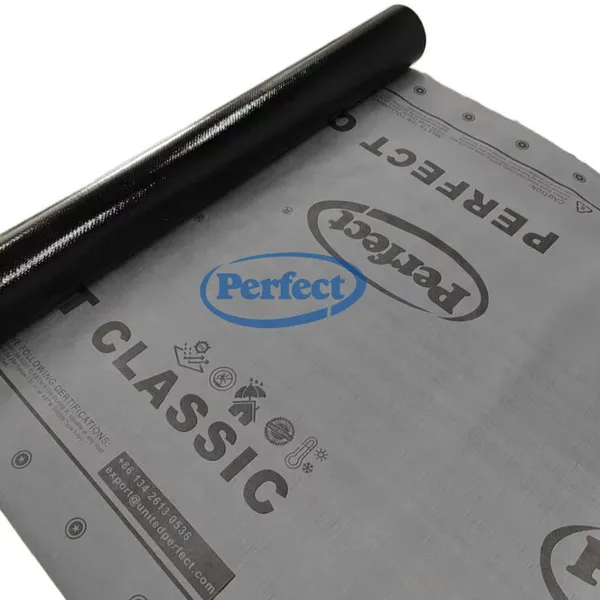 Read More

Contact Us
Recommended Products
-
 Glasswool Blanket With FSK FacingNegotiableMOQ: 100 Rolls
-
Rockwool Blanket With Wire MeshNegotiableMOQ: 100 Rolls
-
Rockwool Blanket With FSK FacingNegotiableMOQ: 100 Rolls
-
CE Certified Glass Wool Insulation, Glasswool Fiberglass, Low Thermal Conductivity, Noise Reduction for Wall, Roof and Industrial EquipmentNegotiableMOQ: 100 Rolls
-
KSK Foil Facing Roll, Laminated Aluminum Foil + Scrim + Kraft Paper, Anti-Tear Thermal Barrier, Suitable for Commercial HVAC and Roof InsulationNegotiableMOQ: 500 Rolls
-
FSK Foil Scrim Kraft, FWF MSK MWV KSK Laminate Foils, Metalized PET MPET Vapor Barrier Facing for Insulation Glasswool RockwoolNegotiableMOQ: 100 Rolls
-
Reinforced Aluminium Foil Tape, Waterproof Anti-aging Tape, Widely Used in HVAC and Building Insulation ProjectsNegotiableMOQ: 500 Cartons
-
HVAC Aluminum Foil Sealing Tape, Strong Adhesion Heat Resistance for Pipe, Glass Wool and Rockwool InsulationNegotiableMOQ: 500 Cartons
-
Factory Supply Metalized PET MPET Laminate Foils, Aluminum Coated PET Film for Roof Wall InsulationNegotiableMOQ: 10000 Cubic Meters
-
Custom MPET Metalized PET Laminate Foils, VMPET Metallized Polyester Facing Film for Thermal InsulationNegotiableMOQ: 10000 Cubic Meters
-
Glass Wool Insulation Series, Glasswool With FSK/FWF/MSK/MWV/KSK Facing, Metalized PET Laminate Foils, Heat & Sound Insulation for Commercial BuildingNegotiableMOQ: 100 Rolls
-
Rockwool Blanket With Black Firber GlassNegotiableMOQ: 100 Rolls
-
Glasswool Insulation Blanket & Board, FSK FWF MSK MWV KSK Foil Laminate, MPET Metalized PET Faced Glass Wool for HVAC, Roof, Wall, Air DuctNegotiableMOQ: 100 Rolls
-
Rockwool Insulation Roll, FSK Foil Faced Mineral Wool for Building Thermal & Acoustic Insulation, Fire Resistant Roof Wall Insulation MaterialNegotiableMOQ: 100 Rolls
-
FWF MSK FSK Foil Laminated Rock Wool Glass Wool Blanket, Metalized PET Laminate Foils Faced Insulation for HVAC and ConstructionNegotiableMOQ: 100 Rolls
-
Rockwool Insulation Board, Mineral Wool Rock Wool Slab for Building Thermal & Fire Insulation, Soundproof Rockwool Panel for Roof, Wall, HVAC SystemNegotiableMOQ: 100 Rolls
-
Rockwool Pipe Section, Mineral Wool Rock Wool Tube Insulation, Fire & Heat Resistant Rockwool for Steam Pipes, Industrial Pipeline Insulation ProjectNegotiableMOQ: 100 Rolls
-
Rockwool Board With FSK FacingNegotiableMOQ: 100 Rolls
-
Rockwool Insulation Slab With FSK Facing, Fireproof Rock Wool Board, Thermal & Sound Insulation Rockwool for Roof, Wall and Ductwork ApplicationNegotiableMOQ: 100 Rolls
-
Fireproof Foil Laminated Glass Wool, Laminate Foils MPET Faced Glasswool Insulation Roll & Sheet for Roofing, Wall, Duct and Pipe InsulationNegotiableMOQ: 100 Rolls